
Daily News Analysis
Our daily news analysis consists of two integral parts — Daily News Analysis and Important Editorials curated rigorously from The Hindu, The Indian Express, LiveMint, PIB, and Sansad TV debates. Content is mapped directly to UPSC CSE and State PCS syllabi.

Ghana's BRICS Membership Bid 2026: Strategic Importance, India–Africa Relations & World Geography for UPSC
India's wildlife conservation efforts are showing encouraging signs of recovery, with notable developments involving Asiatic lions, vultures, Nilgiri tahrs and dugongs. A rare natural hatching of a Great Indian Bustard chick in Gujarat has renewed attention to endangered species protection. Explore India's conservation achievements, ecological challenges, legal frameworks, community participation and sustainable solutions through a comprehensive UPSC Prelims and Mains GS Paper III analysis.
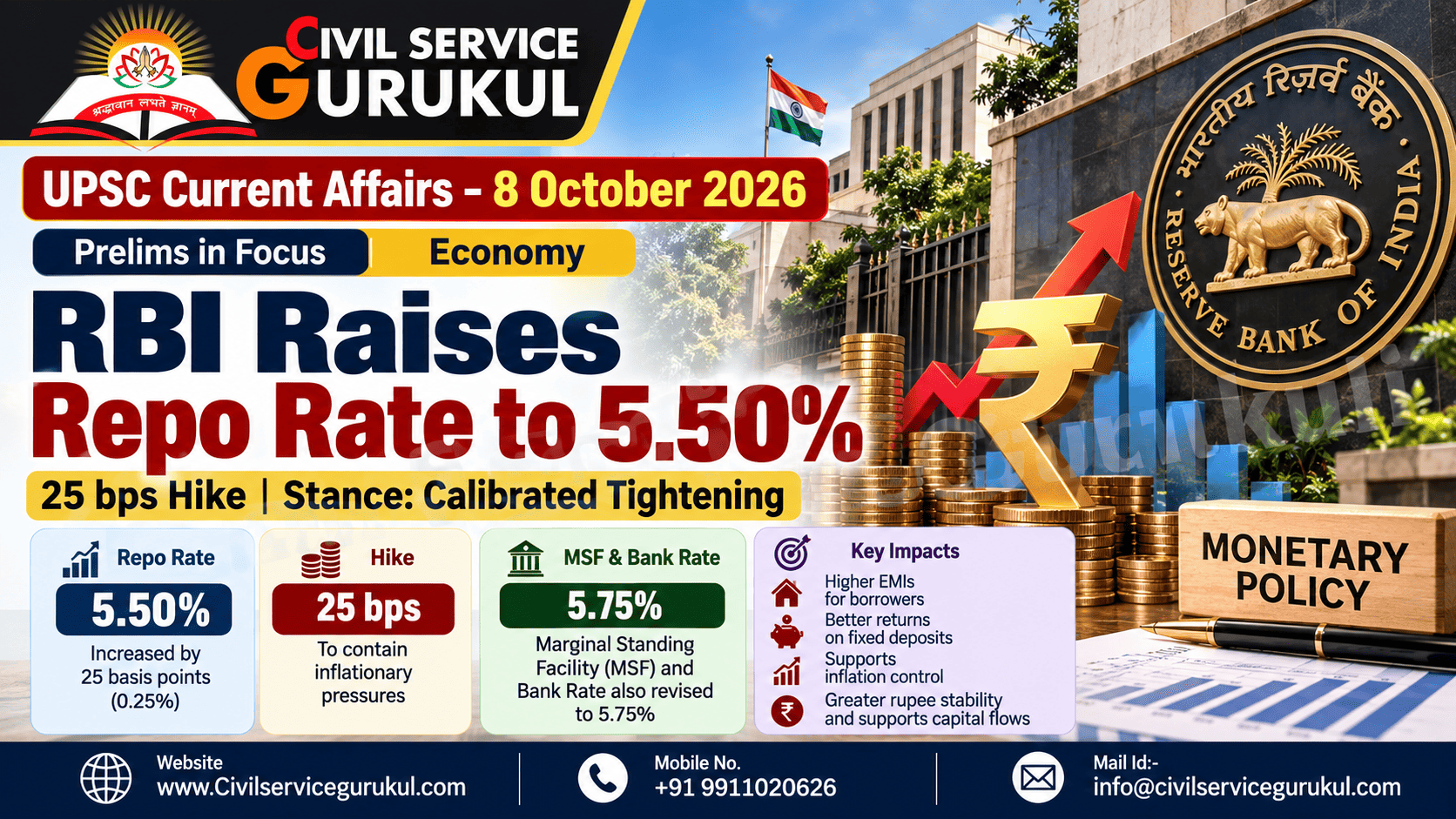
RBI Raises Repo Rate to 5.50%: What It Means for Inflation, Loans and India’s Economy
The RBI has raised the repo rate by 25 basis points to 5.50% and shifted its policy stance from neutral to calibrated tightening amid rising inflation risks. The decision can increase borrowing costs, influence EMIs and investment, moderate aggregate demand and support price and currency stability, making it an important topic for UPSC Indian Economy preparation. The Economic Times

India's Wildlife Conservation Success Story 2026: Endangered Species Recovery, Biodiversity Challenges & UPSC GS-3 Analysis
Explore India's wildlife conservation success story in 2026, highlighting the recovery of endangered species such as Asiatic lions, vultures, Nilgiri tahrs, dugongs and the Great Indian Bustard. Understand biodiversity protection, habitat fragmentation, conservation challenges, government initiatives and sustainable wildlife management. A comprehensive, exam-focused analysis for UPSC Prelims and Mains GS Paper III (Environment & Ecology), presented by Civil Service Gurukul.
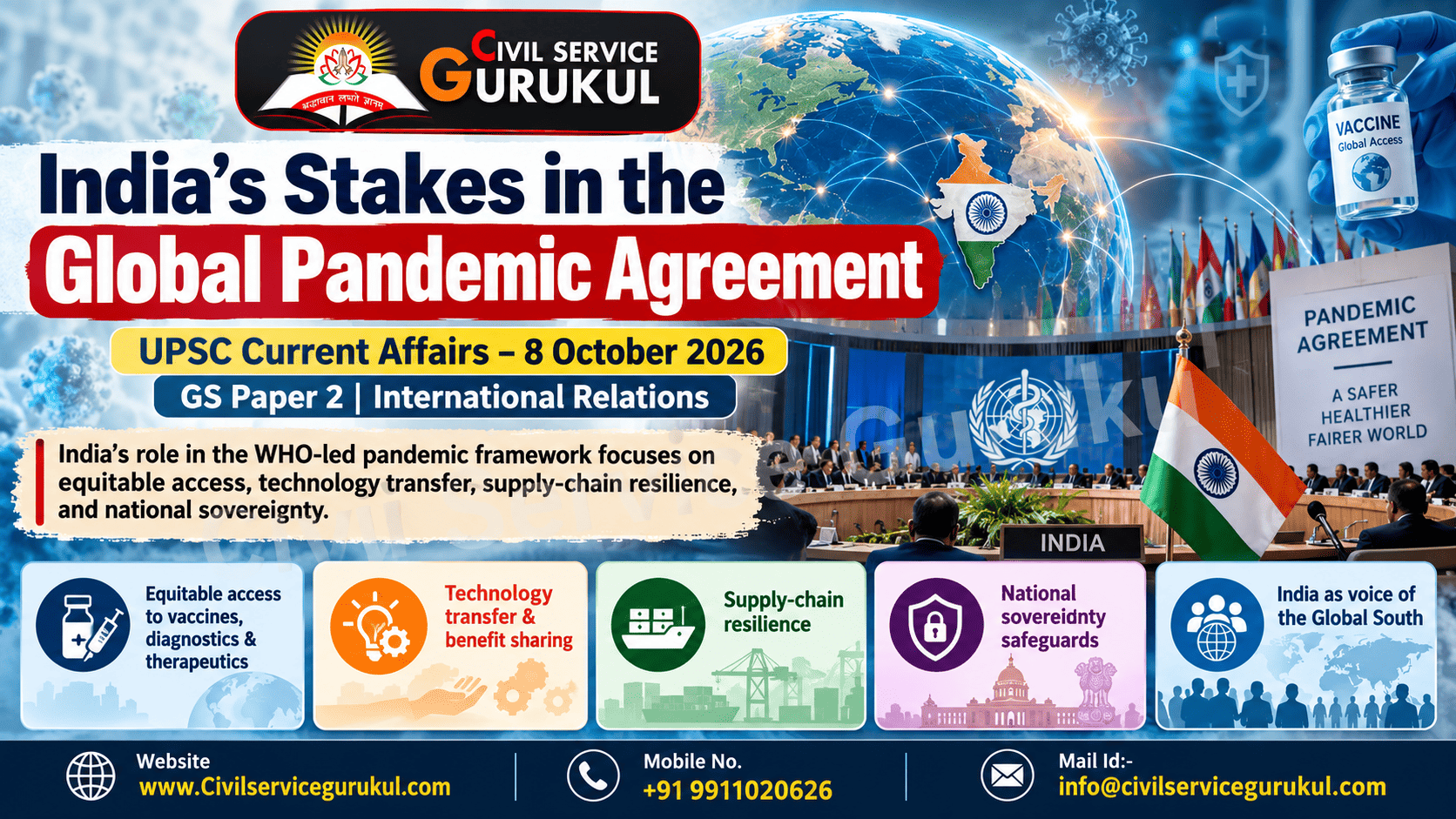
India and the WHO Pandemic Agreement: Equity, Sovereignty and Global Health Diplomacy
The WHO Pandemic Agreement seeks to strengthen global pandemic prevention, preparedness and response while ensuring fair access to vaccines, diagnostics and therapeutics. For India, the key stakes include equitable pathogen benefit-sharing, technology transfer, resilient pharmaceutical supply chains, protection of national sovereignty and leadership of the Global South in shaping a fairer global health architecture.