
Daily News Analysis
Our daily news analysis consists of two integral parts — Daily News Analysis and Important Editorials curated rigorously from The Hindu, The Indian Express, LiveMint, PIB, and Sansad TV debates. Content is mapped directly to UPSC CSE and State PCS syllabi.
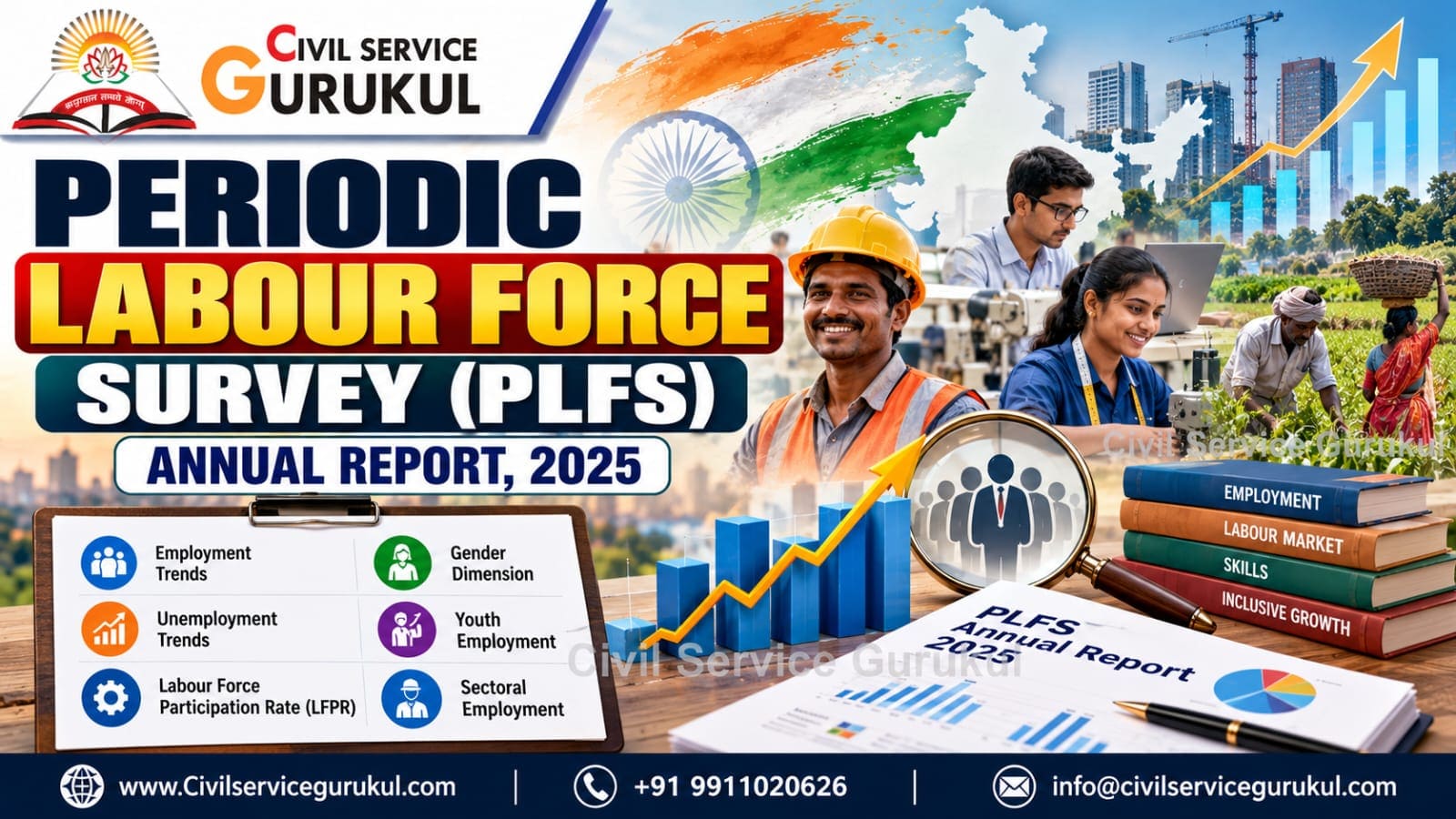
PLFS Annual Report 2025 – UPSC Mains 2027
Explore the PLFS Annual Report 2025 with key findings on unemployment, LFPR, WPR, women workers, youth employment, self-employment, manufacturing, vocational education and the challenges of job quality in India. Complete UPSC Mains 2027 notes by Civil Service Gurukul.

Creative Industries in India – UPSC Mains 2027
Explore India's Orange Economy and the rise of creative industries as engines of growth, employment and global influence. Understand AVGC-XR, gaming, cinema, design, digital creators, intellectual property, WAVES 2025, IICT and Budget 2026–27 initiatives through comprehensive UPSC Mains 2027 notes by Civil Service Gurukul.
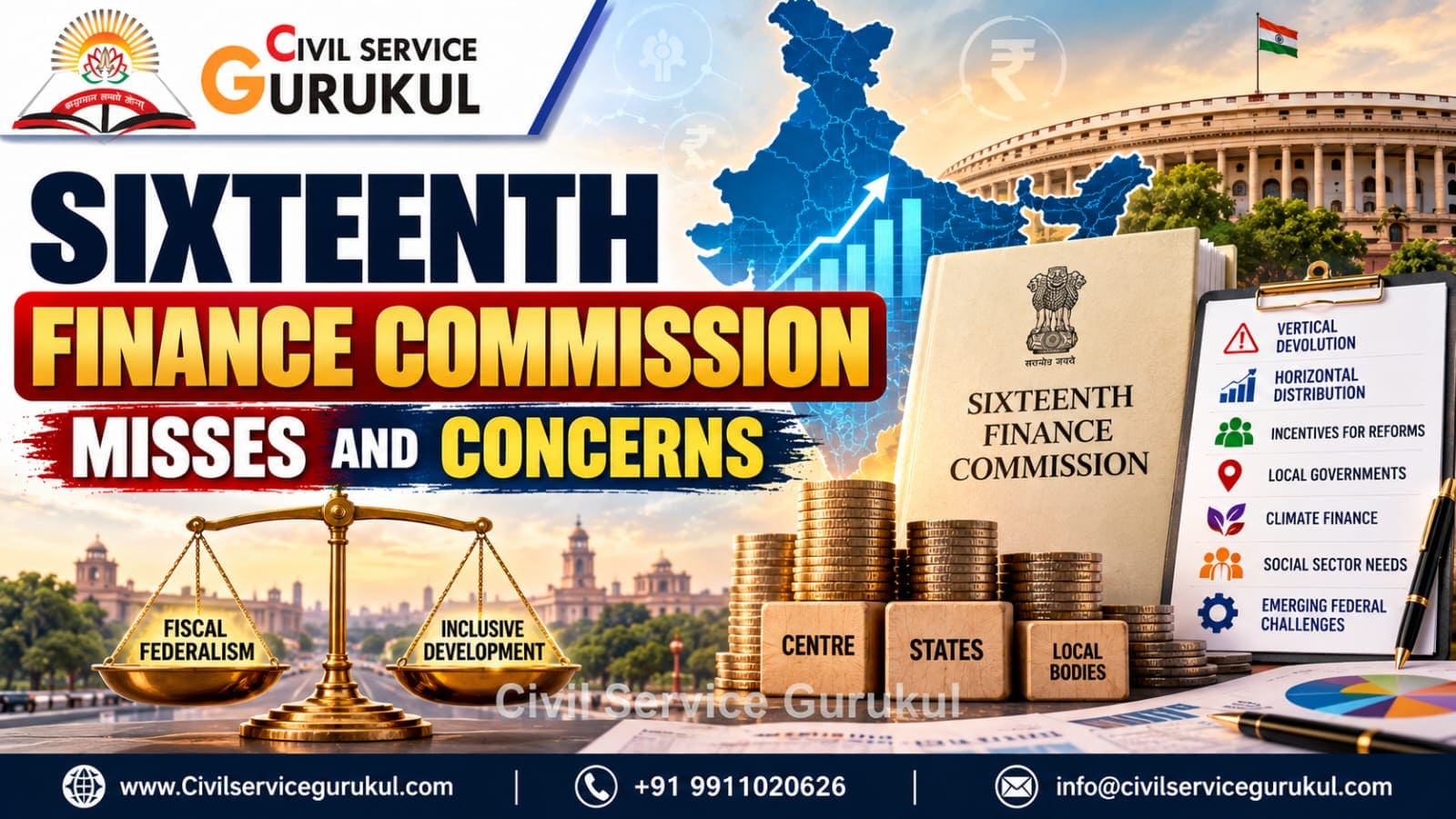
16th Finance Commission: Concerns – UPSC 2027
Analyse the Sixteenth Finance Commission's 2026–31 recommendations, including 41% tax devolution, GDP contribution criteria, changes in grants, cesses and surcharges, State fiscal autonomy and the equity-versus-efficiency debate. Original UPSC Mains 2027 notes by Civil Service Gurukul.

Labour Protests in India – Causes & Reforms UPSC 2027
Explore labour protests in India, their economic and social causes, wage insecurity, trade unions, gig workers, industrial relations and the implementation of four Labour Codes. Comprehensive UPSC Mains 2027 notes on labour rights, social protection, constitutional safeguards and the future of industrial harmony by Civil Service Gurukul.

State Fiscal Space in India – UPSC Mains 2027
Why are Indian States facing fiscal pressure despite rising economic activity? Explore the 16th Finance Commission, tax devolution, cesses and surcharges, State debt, revenue deficits, borrowing limits, fiscal federalism and reforms for restoring State fiscal space. Comprehensive UPSC Mains 2027 notes by Civil Service Gurukul.
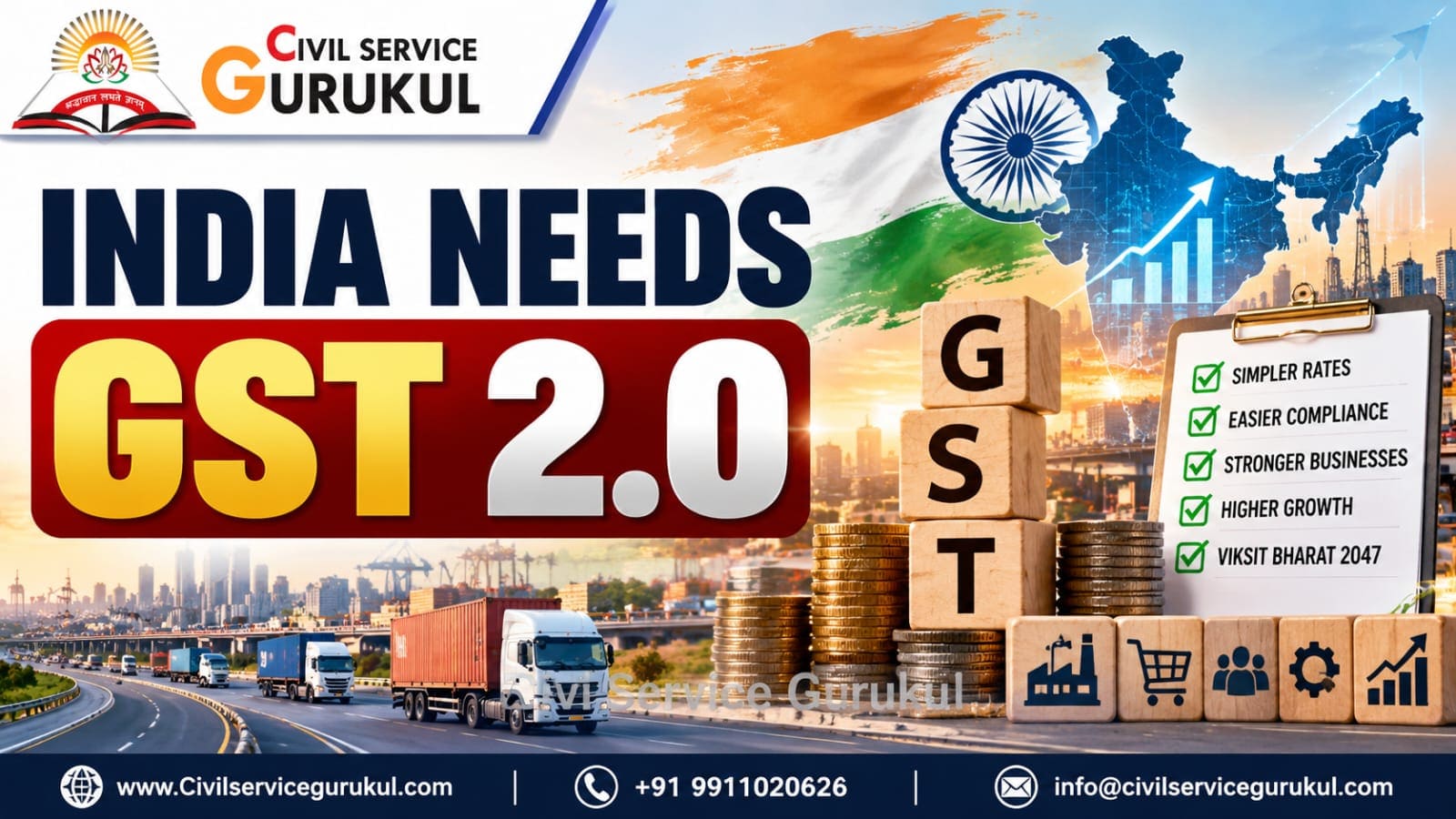
GST 2.0 Reforms in India 2026 – UPSC Notes
Explore India's GST 2.0 reforms after the 56th and 57th GST Council meetings. Understand tax-rate rationalisation, input tax credit, automated refunds, MSME compliance, cooperative federalism, GSTAT, economic benefits and remaining policy challenges through comprehensive UPSC Mains 2027 notes by Civil Service Gurukul.

Productivity Growth in India | UPSC Mains 2027
Why is productivity more important than GDP growth alone for India's Viksit Bharat 2047 vision? Explore Total Factor Productivity, labour productivity, manufacturing reforms, MSMEs, structural transformation, innovation, infrastructure and policy solutions through comprehensive UPSC Mains 2027 notes by Civil Service Gurukul.

AI-Powered Financial Inclusion in India – UPSC 2027
Discover how Artificial Intelligence is reshaping financial inclusion in India through intelligent credit scoring, digital banking, fraud detection, personalised financial services and multilingual financial assistance. Explore India's Digital Public Infrastructure, UPI, RBI's FREE-AI framework, regulatory challenges and policy solutions with comprehensive UPSC Mains 2027 notes by Civil Service Gurukul.
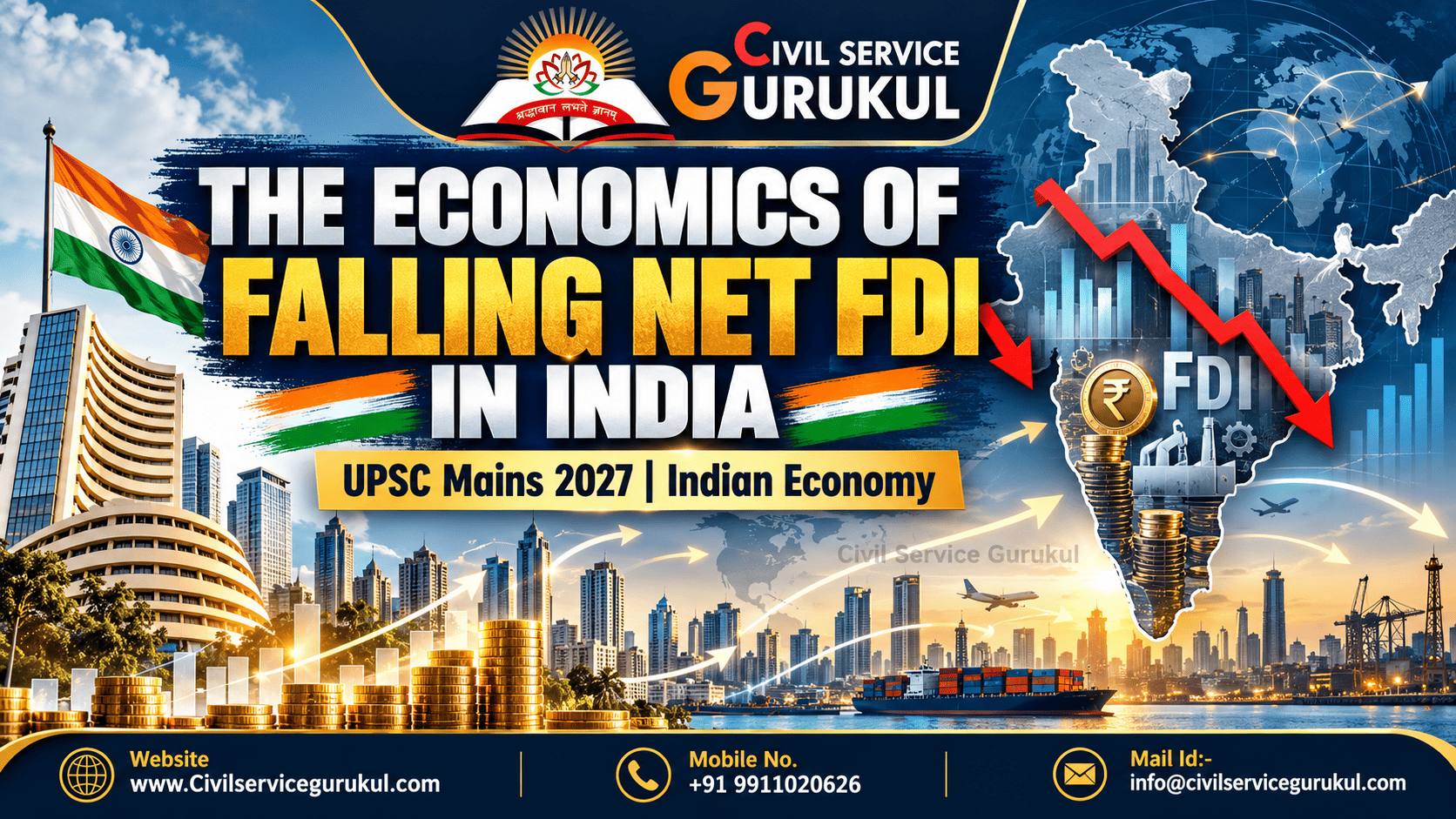
Falling Net FDI in India: Causes & Impact – UPSC 2027
Why is India's net FDI weak despite substantial foreign investment inflows? Explore gross versus net FDI, investor repatriation, overseas investment, India's balance of payments, manufacturing competitiveness, policy challenges and solutions in comprehensive UPSC Mains 2027 notes by Civil Service Gurukul.

Ease of Doing Business in India | UPSC Mains 2027
Explore India's Ease of Doing Business reforms for UPSC Mains 2027, including BRAP, Jan Vishwas Acts, NSWS, digital governance, MSME challenges, investment climate, and the roadmap to Viksit Bharat 2047. Comprehensive GS Paper III notes by Civil Service Gurukul.
Non-Performing Assets: Meaning, Types & Solutions | UPSC
Understand NPAs, the 90-day rule, asset classification, and their impact on India’s banking system. Explore recovery mechanisms and UPSC practice questions. Non-performing assets reflect repayment stress in a bank’s loan portfolio. These notes explain NPA identification, classification, key ratios, economic consequences, and resolution mechanisms, including the distinction between a technical write-off and a loan waiver.

Duopolies in India: Telecom, Food Delivery & Aviation | UPSC
Why do a few firms dominate India’s telecom, food delivery, and aviation markets? Explore market concentration, consumer impacts, and competition policy for UPSC. This article distinguishes duopoly from oligopoly and examines the benefits, risks, and regulatory responses.

Gig Workers in India: Rights, Challenges & UPSC Notes
Understand gig workers in India, their economic role, social security framework and workplace challenges. Explore policy developments and key UPSC takeaways. Gig work creates income opportunities through flexible, task-based arrangements but raises concerns about earnings, safety and social protection. This article examines gig and platform workers, India’s policy framework, implementation challenges, and measures to promote decent work.

Startup India: Objectives, Schemes & 2026 Updates | UPSC
Explore Startup India’s objectives, DPIIT recognition, funding schemes, and revised 2026 eligibility framework. Prepare for UPSC with key facts, challenges, and practice questions. Startup India promotes innovation, entrepreneurship and employment through regulatory support, funding mechanisms and incubation. This article explains its objectives, revised recognition framework, major schemes, economic significance and implementation challenges.
CPI Revision 2026: New Base Year, Basket & UPSC Notes
Understand India’s revised Consumer Price Index with base year 2024, updated consumption weights, and a broader basket. Explore its significance for inflation measurement and UPSC. India’s revised CPI series updates the base year from 2012 to 2024 and uses household expenditure data from 2023–24. The article explains changes in coverage, classification, and weights, along with their implications for inflation analysis, policymaking and competitive examinations.

Global Carbon Coalition: Why India Should Engage | UPSC
Should India join the Open Coalition on Compliance Carbon Markets? Explore its benefits, risks, links with India’s carbon market and CBAM, and UPSC takeaways. The Open Coalition on Compliance Carbon Markets offers a platform for cooperation on carbon pricing, emissions accounting, and market integrity. India’s engagement could strengthen its domestic carbon market and influence international standards, provided it safeguards development priorities, environmental integrity, and policy autonomy.

Satellite Radiation: Blocking the View | UPSC Guide
Discover how satellite radiation and reflected sunlight disrupt astronomy. Explore the science, research findings, India’s concerns and UPSC exam takeaways. Satellite constellations expand internet access but can interfere with astronomical observations through radio emissions and reflected sunlight. This exam-oriented article explains the science, implications for India, governance challenges, and measures to protect dark and quiet skies.