
Daily News Analysis
Our daily news analysis consists of two integral parts — Daily News Analysis and Important Editorials curated rigorously from The Hindu, The Indian Express, LiveMint, PIB, and Sansad TV debates. Content is mapped directly to UPSC CSE and State PCS syllabi.

Prasar Bharati Autonomy UPSC 2026: Complete Notes
Understand Prasar Bharati's role in India's democracy, its statutory autonomy under the Prasar Bharati Act, 1990, and the challenges of editorial independence. Explore public service broadcasting, constitutional principles, institutional reforms, UPSC Prelims facts, MCQs and GS Paper II Mains analysis.
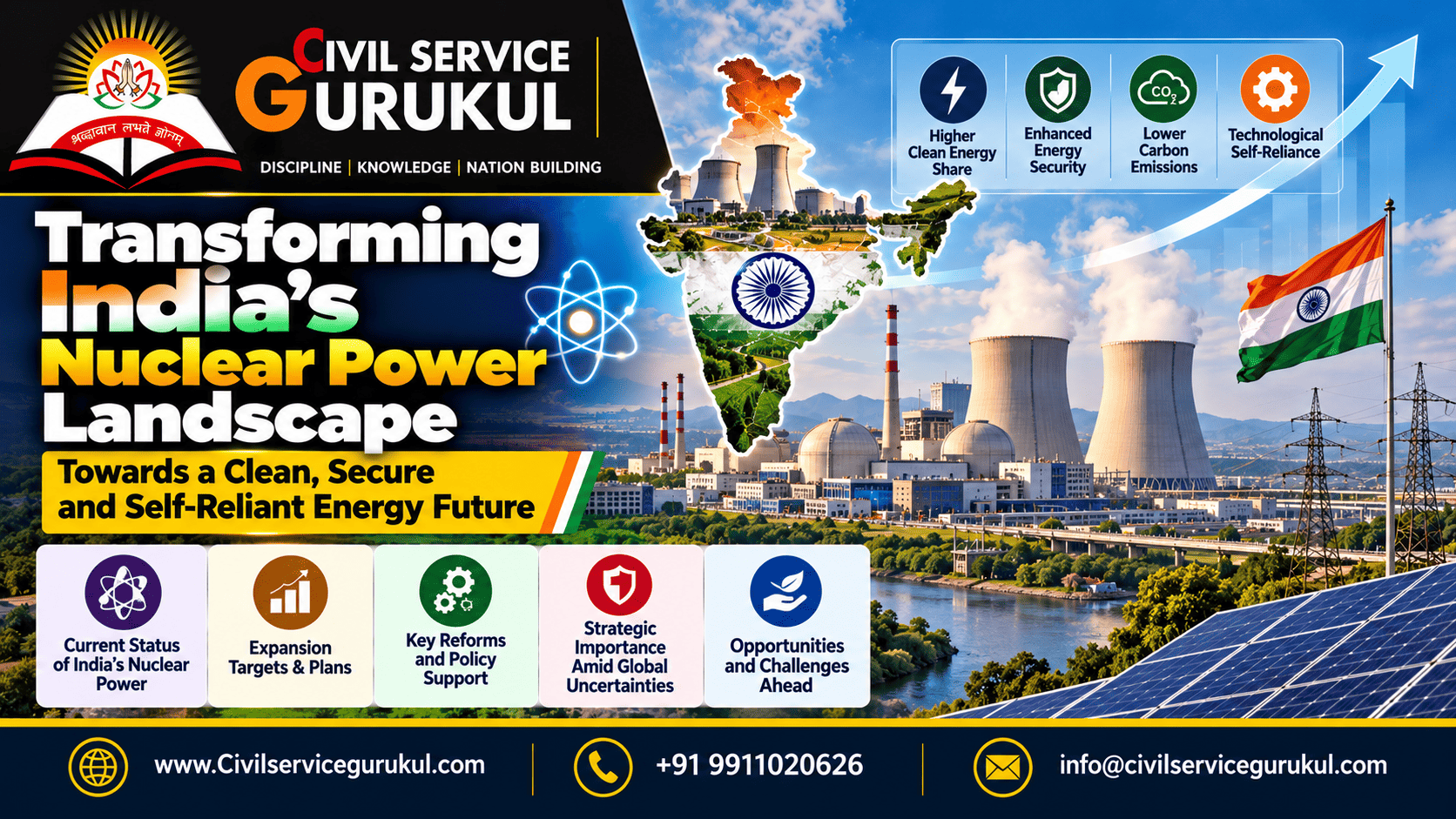
India's Nuclear Power Transformation: UPSC 2026
India's nuclear power sector is undergoing a major transformation through ambitious capacity expansion, Small Modular Reactor development, indigenous Pressurised Heavy Water Reactors and changes to the legal and investment framework. The Nuclear Energy Mission announced in Union Budget 2025–26, the 100 GW nuclear capacity vision for 2047 and India's three-stage nuclear programme highlight the strategic importance of atomic energy for reliable low-carbon electricity. This comprehensive UPSC article examines nuclear technologies, the roles of DAE, NPCIL and AERB, nuclear safety, uranium and thorium resources, legal reforms, energy security, environmental implications and the challenges of scaling nuclear power.
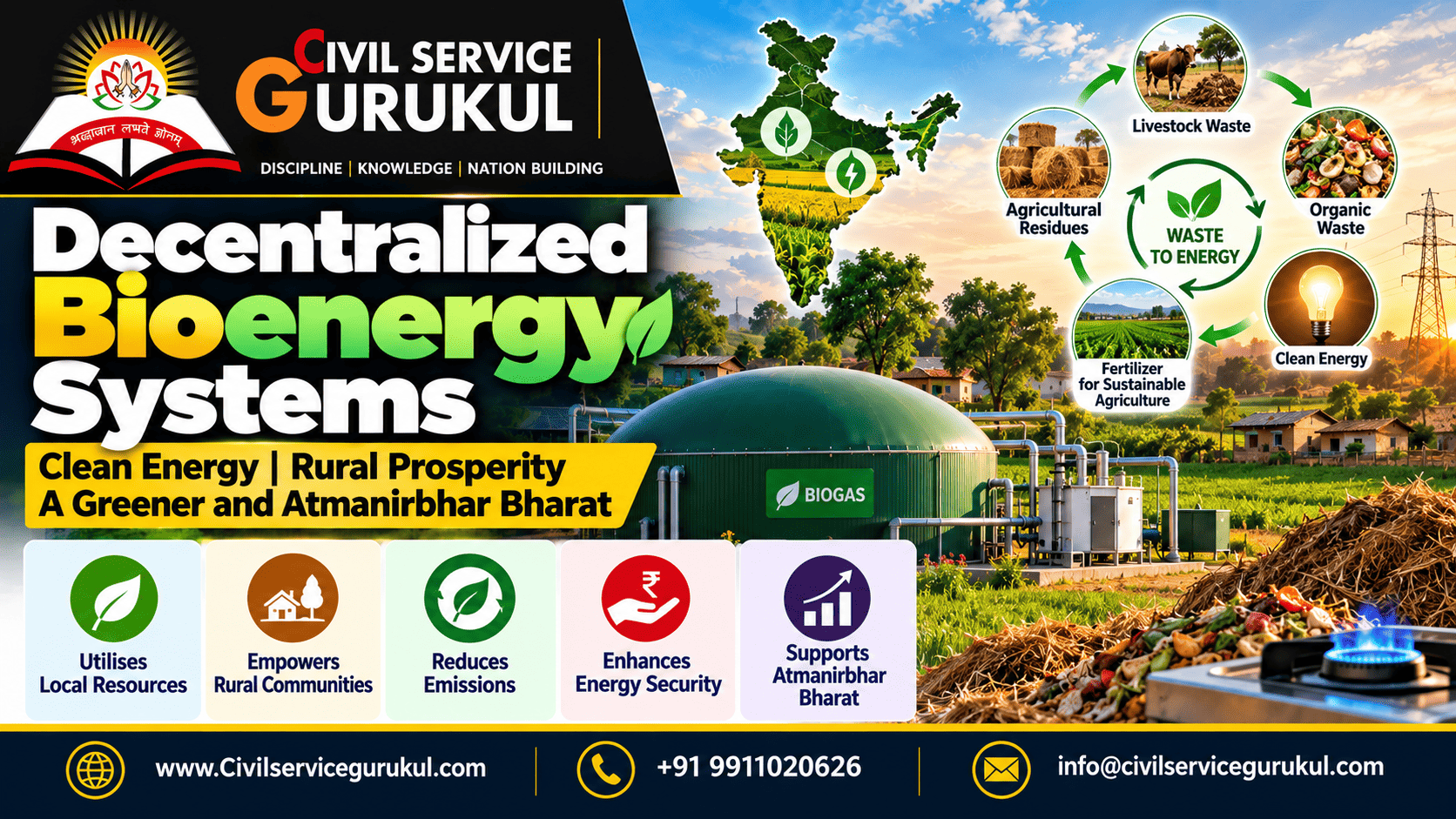
Decentralized Bioenergy Systems: UPSC Notes 2026
Decentralized bioenergy systems convert locally available organic waste into useful energy through biogas plants, compressed biogas facilities, biomass gasifiers and other conversion technologies. For India, these systems can help address agricultural residue burning, rural energy shortages, organic waste disposal and dependence on imported fossil fuels. Government initiatives such as GOBARdhan, SATAT, the National Bioenergy Programme and the Biomass Programme support the development of bioenergy infrastructure. This comprehensive Civil Service Gurukul UPSC guide examines technologies, benefits, challenges, government schemes, environmental safeguards, rural business models, Prelims questions and a GS Paper III Mains model answer.
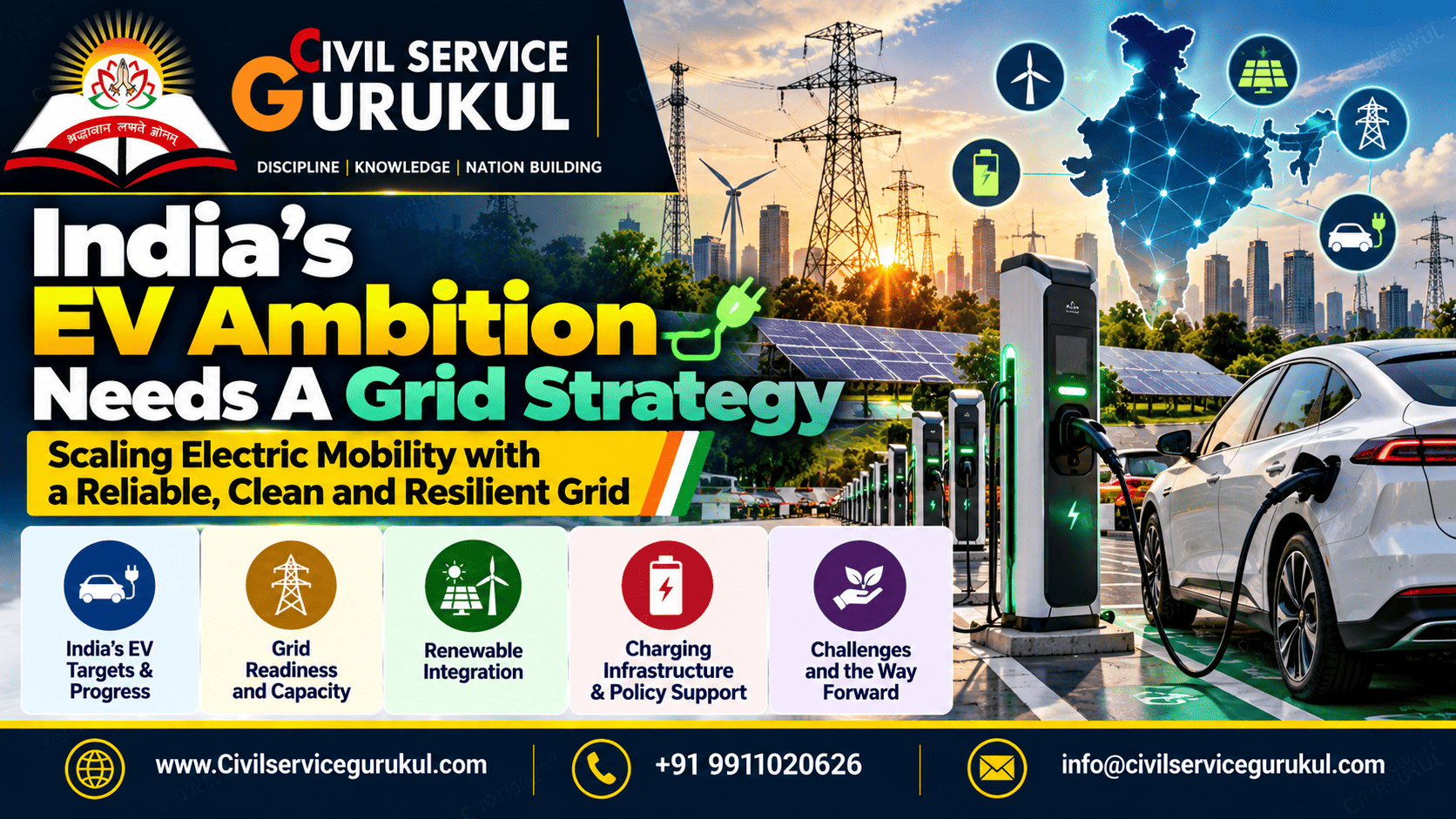
India's EV Grid Strategy 2026: Complete UPSC Notes
India's electric vehicle revolution requires far more than affordable EVs and charging stations. Large-scale transport electrification could substantially increase electricity demand, particularly from heavy commercial vehicles, freight corridors and simultaneous urban charging. A comprehensive grid strategy must integrate smart charging, time-of-day electricity tariffs, renewable energy, battery storage, DISCOM reforms and high-capacity transmission networks. This Civil Service Gurukul UPSC guide examines the electricity demand implications of EV adoption, government schemes including PM E-DRIVE and RDSS, grid challenges, environmental concerns, policy solutions, Prelims questions and GS Paper III Mains analysis.
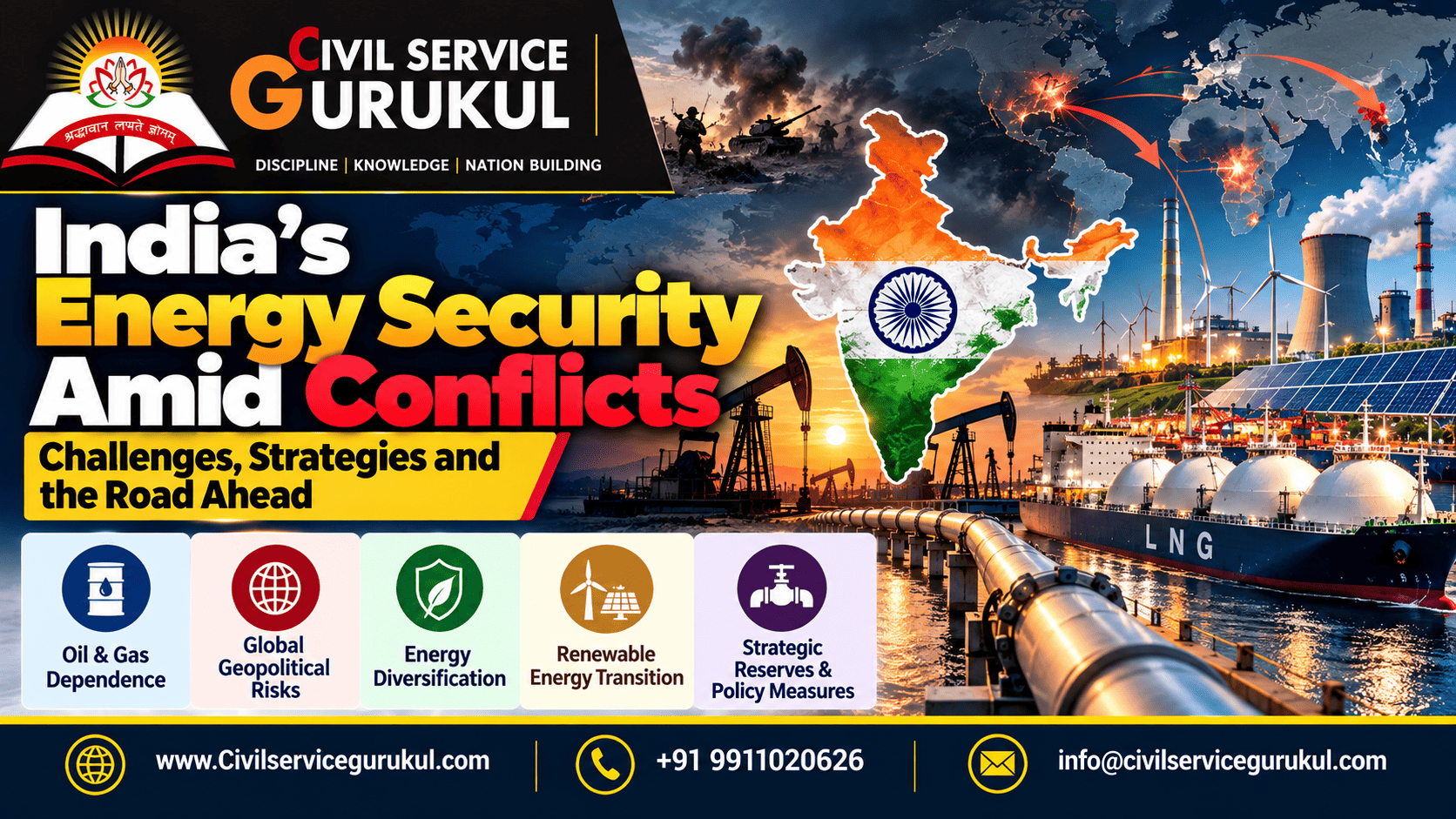
India's Energy Security Amid Conflicts: UPSC 2026
India's growing energy requirements and dependence on imported crude oil make the country vulnerable to geopolitical conflicts, maritime disruptions, price shocks and supply-chain uncertainty. Tensions in West Asia, the Russia–Ukraine conflict and risks around the Strait of Hormuz highlight the strategic importance of diversified energy imports, strategic petroleum reserves, maritime security and domestic energy production. This Civil Service Gurukul UPSC guide examines India's energy import dependence, oil diplomacy, LNG supplies, renewable energy transition, critical minerals, government initiatives, economic implications and the way forward, with Prelims MCQs and a GS Paper III Mains model answer.
Infrastructure-Led Nation Building: UPSC Notes 2026
Infrastructure-led nation building has emerged as a central pillar of India's development strategy, connecting public capital expenditure with economic growth, logistics efficiency, job creation and national integration. Initiatives such as PM Gati Shakti, the National Logistics Policy, Bharatmala, Sagarmala, railway modernisation, renewable energy expansion and Digital Public Infrastructure aim to strengthen India's productive capacity. This comprehensive Civil Service Gurukul article explains the economic rationale, major government initiatives, infrastructure financing, challenges, environmental sustainability and policy reforms, with UPSC Prelims questions and GS Paper III Mains model answers.
Fiscal Health Index 2026: Complete UPSC Notes
NITI Aayog's Fiscal Health Index 2026 assesses the financial performance of 28 Indian states using five pillars: Quality of Expenditure, Revenue Mobilisation, Fiscal Prudence, Debt Index and Debt Sustainability. Odisha ranked first among 18 major states with a score of 73.1, followed by Goa and Jharkhand, while Arunachal Pradesh led the separately assessed North-Eastern and Himalayan group. This comprehensive UPSC guide explains the index methodology, complete state rankings, fiscal terminology, constitutional provisions, policy implications, Mains analysis and practice questions for UPSC CSE 2026–27.