AI Regulation, Deepfakes & the DPDP Act: A UPSC GS-3 & GS-4 Current Affairs Guide
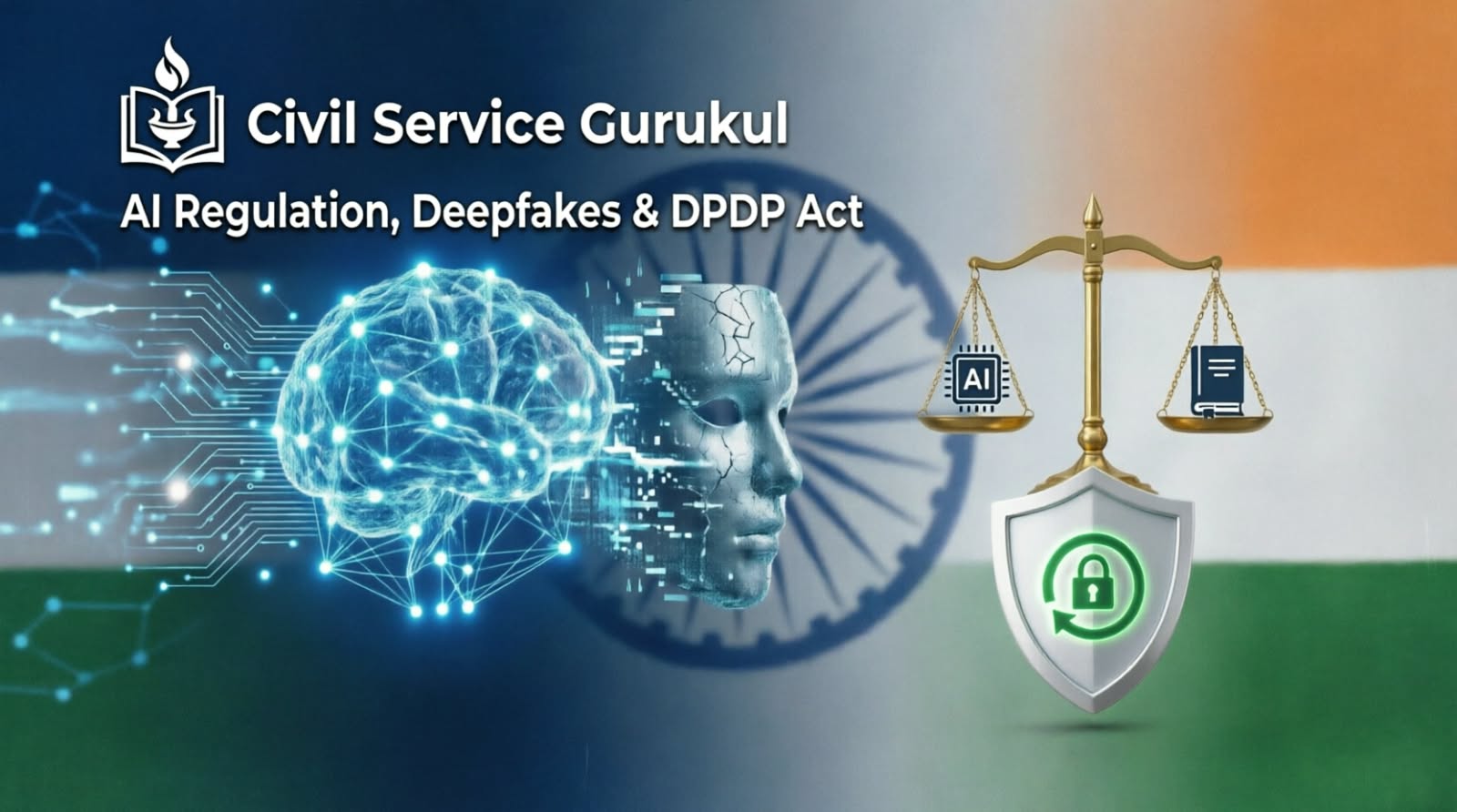
As we navigate late 2026, Generative AI and Deepfake technology have transcended the realm of science fiction to become pressing administrative, legal, and ethical challenges. For UPSC aspirants, AI is no longer just a GS-3 (Science & Technology) topic; it is a profound GS-4 (Ethics) dilemma and a GS-2 (Governance) governance challenge.
At Civil Services Gurukul, we teach you how to convert volatile current affairs into structured, high-scoring Mains answers. Here is your comprehensive breakdown of the AI regulation landscape in India.
The Governance Challenge: Deepfakes & Electoral Integrity
Deepfakes—hyper-realistic AI-generated audio or video—pose a severe threat to informational integrity, particularly during elections. The Election Commission of India (ECI) has had to invoke the Model Code of Conduct and mandate AI-generated content watermarks.
- UPSC Application: In GS-2, discuss the challenge of regulating "lawful but harmful" speech. In GS-3, analyze the threat of deepfakes to national security and public order.
The Legal Framework: DPDP Act & IT Rules
India’s approach to AI regulation is currently "risk-based" and relies on a combination of existing and new laws:
- Digital Personal Data Protection (DPDP) Act: Crucial for addressing deepfakes, as they often rely on the non-consensual processing of personal data (voice and visual biometrics). Aspirants must understand the concept of "Data Principal" rights and the obligations of "Data Fiduciaries".
- IT Rules (2021) & Advisories: The Ministry of Electronics and IT (MeitY) have mandated intermediaries to deploy AI-driven moderation tools and ensure traceability of originators for harmful content.
- Global Context: Contrast India’s approach with the EU’s comprehensive "AI Act" (which categorizes AI by risk levels) and the US’s executive orders on AI safety.
The GS-4 Ethics Angle: Truth, Consent, and Empathy
This is where toppers score extra marks. When writing about AI, integrate GS-4 ethical frameworks:
- Probity & Integrity: How does AI-generated misinformation erode the social contract and administrative transparency?
- Emotional Intelligence & Empathy: Deepfakes used for harassment or fraud violate the fundamental ethical principle of human dignity and consent.
- Thinkers to Quote: Reference Immanuel Kant’s "Categorical Imperative" (treating humanity as an end, not a means) when discussing the non-consensual use of a person's likeness for AI training.
Watch our GS-4 faculty break down a 2026-style Ethics case study on "An AI deepfake used in a corporate scam," demonstrating how to apply ethical theories to modern technological dilemmas.
Conclusion & Next Steps
Technology questions in UPSC demand a balance of technical awareness and administrative foresight. Master this intersection by enrolling in our [GS-3 & GS-4 Current Affairs Integration Module], updated monthly with the latest tech-governance developments.
Prepare with Mentors Who Cleared the Exam
Get personalized study plans, evaluated answer models, and test series access.