
Genome Language Models and AI in Genomics – UPSC 2027
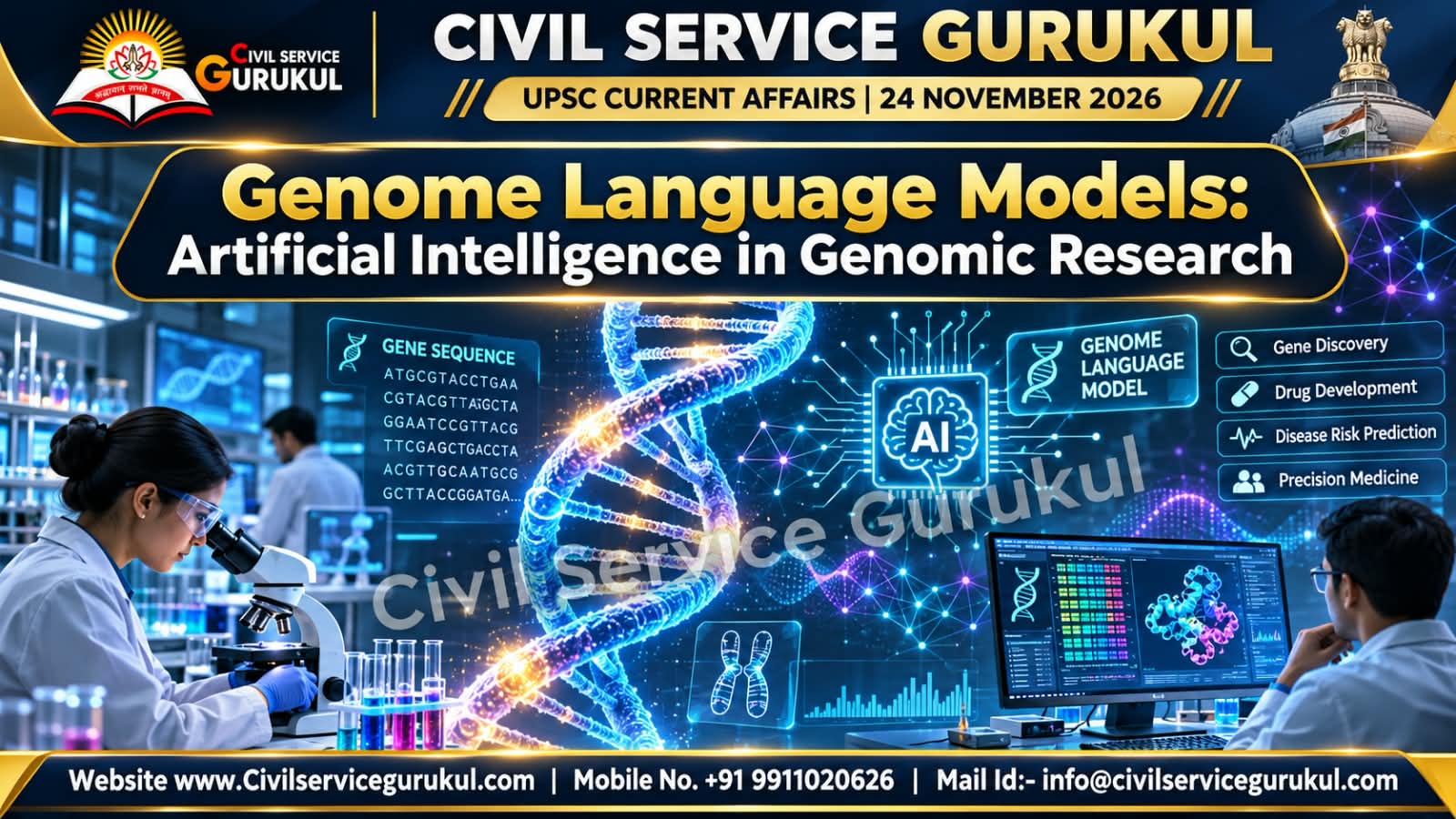
Genome Language Models: How Artificial Intelligence Is Decoding the Language of Life and Transforming Genomic Research
Artificial intelligence is moving beyond human language to explore the molecular information underlying living organisms. Genome Language Models are opening new avenues for understanding genetic variation, biological functions, disease mechanisms and the future of precision medicine.
Why in the News?
Artificial intelligence-based Genome Language Models have emerged as an important research frontier at the intersection of biotechnology, computational biology and machine learning.
Research published in Nature in 2026 described Evo 2, a biological foundation model trained on approximately nine trillion DNA base pairs collected from diverse organisms.
Other developments, including GPN-Star and the Nucleotide Transformer family, demonstrate how artificial intelligence can help researchers investigate genetic variation, regulatory sequences and genome-wide biological functions.
These developments are significant because conventional genome sequencing produces enormous amounts of biological information, but interpreting the functional significance of that information remains a major scientific challenge.
For India, initiatives such as the GenomeIndia Project provide opportunities to combine genomic databases, artificial intelligence and biotechnology research for population-specific healthcare and scientific innovation.
UPSC CSE Syllabus Relevance
| UPSC Paper | Relevant Syllabus Topics |
|---|---|
| Prelims GS Paper I | General Science, biotechnology, genetics and current affairs |
| Mains GS Paper II | Health services, government policies, public health and equitable access to technology |
| Mains GS Paper III | Artificial intelligence, biotechnology, scientific developments, intellectual property and technological applications |
| Mains GS Paper IV | Bioethics, privacy, informed consent, accountability and responsible innovation |
| Essay Paper | Science and society, technological progress, human dignity and ethical governance |
Understanding DNA, Genes and Genomes
What Is DNA?
Deoxyribonucleic Acid, commonly known as DNA, is the principal hereditary material in cellular organisms. It stores biological information required for development, functioning and reproduction.
DNA consists of nucleotide units containing a sugar, a phosphate group and a nitrogenous base.
| DNA Base | Full Name | Complementary Base |
|---|---|---|
| A | Adenine | Thymine |
| T | Thymine | Adenine |
| G | Guanine | Cytosine |
| C | Cytosine | Guanine |
What Is a Gene?
A gene is a functional unit of hereditary information. Genes contain information used to produce functional RNA molecules or, in the case of protein-coding genes, proteins through RNA intermediates.
Genes influence various biological characteristics, although many human traits result from interactions involving multiple genes, regulatory mechanisms and environmental factors.
What Is a Genome?
A genome refers to the complete genetic material of an organism. It includes genes, regulatory sequences and other genetic regions.
A haploid human nuclear genome contains approximately three billion DNA base pairs. Humans also possess mitochondrial DNA.
What Is Genomics?
Genomics is the scientific study of genomes, including their structure, function, variation, regulation and evolution.
Genetics generally focuses on heredity and individual genes, whereas genomics examines genetic material at a broader genome-wide level.
Central Dogma of Molecular Biology
The central dogma explains important pathways through which genetic information is transferred and expressed within biological systems.
DNA → RNA → Protein
Transcription converts genetic information in DNA into RNA. Translation uses messenger RNA information to produce proteins.
Reverse transcription, in which RNA serves as a template for DNA synthesis, is also an established biological process. Not all RNA molecules are translated into proteins.
Understanding these biological processes is essential for examining the role of artificial intelligence in genomics.
What Are Genome Language Models?
Genome Language Models, commonly abbreviated as gLMs or GLMs, are artificial intelligence models that learn patterns from genetic sequences.
They apply computational techniques inspired by natural language processing to biological information encoded in DNA and RNA.
Just as a conventional language model learns statistical relationships between words, a genomic language model learns relationships among nucleotides, sequence patterns and their surrounding genetic context.
The analogy between biological sequences and human language is useful for understanding the technology. However, DNA does not possess grammar or meaning in exactly the same sense as human language.
Genomic functions also depend on cellular environments, evolutionary history, molecular interactions and regulatory processes that may not be fully captured by DNA sequence alone.
A Genome Language Model is an AI-based computational system trained to recognize patterns in genetic sequences and support predictions about biological functions, genetic variations and regulatory mechanisms.
How Do Genome Language Models Work?
Researchers assemble genetic sequence datasets from suitable genomic databases and scientific studies.
The quality, diversity and accuracy of training datasets influence the reliability of the resulting model.
Genetic sequences are converted into computational units called tokens. Depending on the model, a token may represent an individual nucleotide or a short group of nucleotides.
The artificial intelligence model learns recurring statistical relationships from extensive genomic datasets, often using self-supervised learning.
Certain models learn by predicting missing sequence information, while others learn by predicting subsequent tokens.
The model develops internal representations of sequence relationships and may recognize patterns associated with genes, regulatory regions and evolutionary conservation.
The pretrained model may be adapted to tasks such as genetic variant assessment, genome annotation and prediction of regulatory properties.
Researchers evaluate model predictions against independent datasets, established biological evidence and appropriate experimental observations.
AI predictions must not be treated as automatically established biological or clinical facts.
Important Artificial Intelligence Concepts Used in Genomics
| AI Concept | Meaning in Genomic Research |
|---|---|
| Machine Learning | Learning statistical relationships from biological datasets |
| Deep Learning | Using multilayer neural networks to model complex sequence patterns |
| Transformer Architecture | Using attention mechanisms to represent relationships between sequence elements |
| Self-Supervised Learning | Learning from training data without requiring manually assigned labels for every example |
| Foundation Model | A broadly pretrained model that can be adapted to multiple research tasks |
| Tokenization | Representing genetic sequences as computational units |
| Fine-Tuning | Adapting a pretrained model to a more specific research task |
| Context Window | The amount of sequence information a model can consider within a given input context |
| Bioinformatics | The application of computational methods to biological information |
Genome Language Models vs Large Language Models
| Particulars | Genome Language Models | Text-Based Large Language Models |
|---|---|---|
| Primary Data | Genetic sequences | Human language and text |
| Basic Units | Nucleotides or nucleotide groups | Text tokens, words or subwords |
| Primary Objective | Learn biological sequence patterns | Learn linguistic and textual patterns |
| Typical Applications | Genome annotation and genetic variant research | Writing, translation, coding and question answering |
| Scientific Validation | Biological experiments, independent genomic data and clinical validation where relevant | Task-specific evaluation and factual verification |
| Major Ethical Concerns | Genetic privacy, discrimination and biological dual-use risks | Misinformation, privacy, bias and harmful misuse |
Major Genome Language Models
1. Evo 2
Evo 2 is a biological foundation model described in peer-reviewed research published in Nature in 2026.
Its training dataset comprises approximately nine trillion DNA base pairs spanning diverse forms of life. The model supports a context window of up to one million tokens at single-nucleotide resolution.
The research demonstrates advances in genomic pattern recognition, functional prediction and biological sequence modelling.
Evo 2 is a research technology. Its predictions do not independently establish clinical validity, biological safety or the feasibility of every predicted function.
2. Nucleotide Transformer
Nucleotide Transformer is a family of DNA foundation models developed to learn genomic sequence representations.
Research has examined models trained using diverse human and multispecies genome datasets for tasks associated with functional genomics and regulatory sequence analysis.
3. DNABERT
DNABERT applies language-model architecture to DNA sequence analysis.
It demonstrates how methods inspired by natural language processing can be adapted to identify biological patterns and support genome annotation tasks.
4. GPN and GPN-Star
These genomic modelling approaches incorporate evolutionary information to assess functional constraints and investigate the potential effects of genetic variations.
GPN-Star research published in 2026 highlights the importance of incorporating evolutionary relationships when evaluating genomic variation.
5. AlphaFold
AlphaFold is an important artificial intelligence system in structural biology. Its best-known application is predicting protein structures from sequence information.
Although closely related to AI-driven biological research, AlphaFold should not be classified simply as a DNA language model.
| AI Model | Primary Research Focus |
|---|---|
| Evo 2 | Large-scale genomic sequence modelling |
| DNABERT | DNA sequence representation and annotation |
| Nucleotide Transformer | Genomic foundation modelling and functional prediction |
| GPN-Star | Evolutionary constraints and genetic variant effects |
| AlphaFold | Protein structure prediction and related molecular modelling |
Genome sequencing, genome language modelling, protein structure prediction and genome editing are related but distinct scientific technologies.
Major Applications of Artificial Intelligence in Genomic Research
1. Genetic Disease Research
Genomic AI may help researchers assess whether particular genetic variations are likely to influence biological functions.
This could support research into inherited disorders, rare diseases and complex genetic conditions.
A computational prediction alone is not sufficient to establish a medical diagnosis.
2. Precision Medicine
Precision medicine seeks to account for differences in genetics, environment and lifestyle when developing disease prevention and treatment strategies.
AI-assisted genomic analysis may contribute to more individualized medical research and treatment selection after appropriate clinical validation.
3. Cancer Genomics
Cancer may involve genetic and regulatory alterations affecting normal cellular functions.
AI-based analysis can help researchers prioritize genetic changes for investigation and improve understanding of tumour biology.
4. Drug Discovery
Genomic information can help researchers identify biological pathways and investigate potential therapeutic targets.
Artificial intelligence may improve the efficiency of early-stage research, although laboratory studies, clinical trials and regulatory approvals remain essential.
5. Rare Disease Diagnosis Research
Genome sequencing can reveal numerous genetic variants whose clinical significance is uncertain.
AI models may help prioritize variants for further investigation by qualified genetics specialists.
6. Agricultural Biotechnology
AI-assisted genomic research may support crop breeding studies, agricultural biodiversity assessment and research into characteristics such as drought tolerance, nutritional quality and environmental resilience.
7. Biodiversity Conservation
Genomic analysis can help researchers understand evolutionary relationships, genetic diversity and population-level conservation priorities.
AI tools may assist in processing extensive biological datasets relevant to conservation research.
8. Pharmacogenomics
Pharmacogenomics examines how genetic variation influences responses to medicines.
AI-assisted research may improve understanding of variation in drug response and support future treatment personalization where sufficient medical evidence exists.
9. Functional Genomics
Functional genomics investigates how genetic sequences contribute to biological functions and gene regulation.
Genome Language Models may support the identification of genomic regions requiring additional experimental investigation.
10. Evolutionary Biology
AI-assisted comparison of genetic information across organisms can support research into evolutionary conservation, biological diversity and the development of different characteristics over time.
Difference Between Genome Sequencing, Genome Editing and Genomic AI
| Technology | Primary Function |
|---|---|
| Genome Sequencing | Determines the order of genetic sequence components |
| Genome Language Models | Computationally analyse and predict patterns in genetic information |
| Genome Editing | Introduces targeted changes to genetic material |
| CRISPR-Cas Technology | A family of technologies used for targeted genetic modification and other molecular applications |
| Gene Therapy | Uses genetic approaches to treat or prevent certain diseases |
| Protein Structure Prediction | Computationally estimates the three-dimensional structure of proteins |
A genome language model does not physically edit an organism's genetic material merely by analysing its sequence. Computational predictions and biological interventions are separate stages requiring different technologies and safeguards.
India and the Future of Artificial Intelligence in Genomics
India possesses substantial opportunities for genomic research because of its population diversity, expanding biotechnology ecosystem, scientific institutions and growing digital infrastructure.
1. GenomeIndia Project
The GenomeIndia Project is a national genomic research initiative funded by the Department of Biotechnology under the Ministry of Science and Technology.
Launched in January 2020, the project aims to establish a comprehensive understanding of genetic variations across diverse Indian population groups.
The project achieved a major milestone through whole-genome sequencing of more than 10,000 individuals. Genomic data was dedicated to the research community in January 2025, with access governed through appropriate research arrangements.
| Particular | GenomeIndia Project |
|---|---|
| Launch | January 2020 |
| Funding Department | Department of Biotechnology |
| Ministry | Ministry of Science and Technology |
| Initial Sequencing Milestone | Over 10,000 individuals |
| Major Objective | Understanding genetic variation across Indian populations |
| Research Significance | Population genetics, disease research and precision medicine |
2. Indian Biological Data Centre
The Indian Biological Data Centre, or IBDC, provides national infrastructure for the management and sharing of biological research data.
Such infrastructure can support genomic research, computational biology and responsible development of artificial intelligence-based research applications.
3. IndiGen Programme
The IndiGen initiative associated with the Council of Scientific and Industrial Research has contributed to understanding genetic variation among Indian individuals.
Population-specific genomic information can help address the limitations of research datasets that underrepresent Indian communities.
4. IndiaAI Mission
The IndiaAI Mission seeks to strengthen India's artificial intelligence ecosystem through computing infrastructure, research, innovation, datasets and skill development.
Its broader capabilities may support future AI applications in healthcare, biotechnology and scientific research.
5. BioE3 Policy
India's BioE3 Policy emphasizes Biotechnology for Economy, Environment and Employment.
It supports the development of high-performance biomanufacturing and biotechnology innovation.
AI-driven biological research may complement the wider objectives of this policy.
| Indian Initiative | Major Relevance |
|---|---|
| GenomeIndia | Indian population genomic diversity |
| Indian Biological Data Centre | Biological data infrastructure |
| IndiGen | Population-level genome research |
| IndiaAI Mission | Artificial intelligence ecosystem and computing capacity |
| BioE3 Policy | Biotechnology innovation and biomanufacturing |
| Biotechnology Industry Research Assistance Council | Support for biotechnology research and entrepreneurship |
These initiatives represent complementary areas of national scientific capacity. Their inclusion does not imply that all programmes are currently integrated into a single Genome Language Model project.
Why India Needs Population-Specific Genomic Research
Genetic variation differs across populations and individuals. Artificial intelligence models trained predominantly on datasets from other regions may not perform equally well for every Indian population.
Population-representative research can contribute to reducing this gap while recognizing that ancestry is only one factor affecting health outcomes.
- Better understanding of Indian genetic diversity.
- Research into inherited and rare diseases.
- Improved representation in international genomic studies.
- Population-specific evaluation of medical AI models.
- Development of domestic biotechnology research capabilities.
- Potential improvements in precision healthcare.
- Strengthening scientific data infrastructure.
- Promotion of interdisciplinary biotechnology education.
Ethical Concerns Associated with Genome Language Models
1. Genetic Data Privacy
Genomic information may reveal sensitive details concerning individuals, their biological relatives and inherited characteristics.
Removing names and conventional identifiers may not eliminate every possibility of re-identification.
2. Informed Consent
Individuals participating in genomic studies should receive understandable information about data collection, research purposes, storage, sharing and potential secondary uses.
3. Genetic Discrimination
Inappropriate use of genetic information may create risks of discrimination in employment, insurance, healthcare or other social contexts.
4. Algorithmic Bias
Underrepresentation of particular population groups may reduce the accuracy and fairness of AI-assisted genomic analysis.
5. Data Ownership and Benefit Sharing
Genomic research raises questions concerning control over biological information, commercial use, intellectual property and equitable sharing of scientific benefits.
6. Commercialization of Genetic Information
Commercial research involving genomic datasets should operate within appropriate consent, privacy and governance frameworks.
7. Biosecurity and Dual-Use Concerns
Advanced biological AI can support beneficial scientific research, but certain capabilities may also create risks of harmful misuse.
Responsible governance requires proportionate access controls, expert oversight, safety evaluation and appropriate safeguards against misuse.
8. Clinical Accountability
Medical decisions should not rely solely on unvalidated AI predictions. Healthcare professionals, research institutions and technology developers must establish appropriate accountability and review mechanisms.
Genomic AI involves a balance between scientific freedom, individual privacy, public health, equitable access, human dignity and collective safety. Technological capability alone cannot determine whether a particular application is ethically justified.
Legal and Regulatory Dimensions in India
Digital Personal Data Protection Act, 2023
The Digital Personal Data Protection Act establishes a framework for processing digital personal data in India.
Identifiable genomic information may fall within the scope of personal data, depending on the circumstances and applicable legal provisions.
Research institutions should examine applicable commencement provisions, rules, exemptions and data protection obligations before processing such information.
Right to Privacy
In Justice K.S. Puttaswamy v. Union of India, the Supreme Court recognized privacy as a fundamental right protected under the Constitution.
This constitutional principle is particularly relevant to the responsible management of sensitive biological and personal information.
ICMR Ethical Guidelines
The Indian Council of Medical Research provides ethical guidance for biomedical and health research involving human participants.
Genomic studies should consider applicable requirements concerning informed consent, ethics committee oversight, confidentiality and participant protection.
Intellectual Property Rights
AI-driven biotechnology raises questions concerning patentability, ownership of inventions, access to research datasets and the commercial exploitation of scientific discoveries.
These matters must be assessed under applicable intellectual property laws rather than assuming that naturally occurring genetic information can automatically be patented.
Scientific and Technological Challenges
| Challenge | Explanation |
|---|---|
| Complex Genome Regulation | Biological functions depend on interactions extending beyond individual genetic sequences |
| Data Quality | Errors or incomplete datasets can reduce prediction accuracy |
| Population Bias | Unrepresentative datasets may limit performance across different populations |
| High Computational Requirements | Large AI models may require extensive computing and energy resources |
| Model Interpretability | Understanding why an AI model makes a prediction can be difficult |
| Long-Range Interactions | Relationships between distant genomic regions remain challenging to predict reliably |
| Clinical Validation | Research predictions must be independently evaluated before medical application |
| Environmental Effects | DNA sequences alone cannot explain all influences on health and biological characteristics |
| Epigenetic Factors | Gene regulation may depend on molecular changes and cellular conditions not captured by sequence alone |
| Biosecurity | Advanced biological modelling requires responsible safeguards |
Can Artificial Intelligence Completely Decode the Human Genome?
Genome Language Models represent significant advances in computational biology, but they do not provide a complete understanding of all biological functions.
The relationship between genetic sequence and biological outcome is influenced by gene regulation, protein interactions, epigenetic mechanisms, environmental conditions and developmental processes.
A large context window or extensive training dataset does not necessarily guarantee accurate predictions across every scientific task.
Traditional statistical methods, evolutionary models and specialized biological tools may outperform genomic foundation models for particular applications.
Artificial intelligence identifies statistical relationships and generates predictions. Experimental research remains necessary to establish biological mechanisms, causation, clinical effectiveness and safety.
Genome Language Models and Sustainable Development Goals
| Sustainable Development Goal | Potential Contribution |
|---|---|
| SDG 2 – Zero Hunger | Research supporting resilient crops and sustainable agriculture |
| SDG 3 – Good Health and Well-Being | Precision medicine, disease research and healthcare innovation |
| SDG 4 – Quality Education | Interdisciplinary training in biotechnology and artificial intelligence |
| SDG 9 – Industry, Innovation and Infrastructure | Scientific infrastructure and biotechnology innovation |
| SDG 10 – Reduced Inequalities | Improving representation and equitable access to genomic research |
| SDG 15 – Life on Land | Genetic diversity research and biodiversity conservation |
Way Forward for India
1. Strengthen Representative Genomic Databases
India should expand ethically governed genomic research covering diverse population groups and address gaps in scientific representation.
2. Develop Indigenous AI Capabilities
Investment in domestic computing infrastructure, biotechnology research and artificial intelligence can strengthen national scientific capacity.
3. Promote Interdisciplinary Education
Universities and research institutions should encourage collaboration among geneticists, doctors, computer scientists, statisticians, ethicists and public policy experts.
4. Establish Responsible Data Governance
Genomic datasets should be managed using appropriate consent arrangements, privacy protections, cybersecurity measures and access controls.
5. Ensure Independent Scientific Validation
AI-based biological predictions should be evaluated using independent datasets and appropriate scientific or clinical research methods.
6. Strengthen Biosecurity Governance
Research institutions should incorporate safety assessments, responsible access policies and expert oversight into genomic AI development.
7. Promote Public-Private Research Partnerships
Collaboration between government institutions, universities, biotechnology companies and startups can support responsible scientific innovation.
8. Ensure Equitable Access
The benefits of precision medicine and genomic research should not remain restricted to economically privileged groups or major urban centres.
9. Encourage International Cooperation
International scientific collaboration can support research reproducibility, responsible data sharing and common approaches to biological AI safety.
10. Strengthen Public Awareness
Citizens should receive accurate information about genomic research, its benefits, limitations and potential implications for privacy and healthcare.
UPSC Prelims 2027: Important Facts for Revision
- DNA stands for Deoxyribonucleic Acid.
- RNA stands for Ribonucleic Acid.
- The four principal DNA bases are Adenine, Thymine, Guanine and Cytosine.
- RNA typically contains Uracil instead of Thymine.
- A haploid human nuclear genome contains approximately three billion base pairs.
- A gene may encode a protein or a functional RNA molecule.
- Genomics studies genetic information at a genome-wide level.
- Genome Language Models learn statistical patterns from genetic sequences.
- Self-supervised learning is commonly used in genomic foundation models.
- Evo 2 was described in Nature in 2026.
- Evo 2 was trained on approximately nine trillion DNA base pairs.
- Evo 2 supports a context window of up to one million tokens.
- DNABERT applies language modelling techniques to DNA sequences.
- AlphaFold is primarily associated with protein structure prediction.
- CRISPR-Cas technologies can be used for targeted genetic modification.
- The GenomeIndia Project was launched in January 2020.
- GenomeIndia is funded by the Department of Biotechnology.
- GenomeIndia achieved whole-genome sequencing of more than 10,000 individuals.
- The Indian Biological Data Centre supports biological data infrastructure.
- BioE3 stands for Biotechnology for Economy, Environment and Employment.
- Pharmacogenomics studies how genetic variations influence drug responses.
- Genomic AI predictions require independent scientific validation.
UPSC Prelims Practice Questions
Question 1
With reference to Genome Language Models, consider the following statements:
1. They can learn statistical patterns from DNA sequences.
2. They may support genetic variant effect prediction.
3. They directly modify the genetic material of living organisms during computational analysis.
Which of the statements given above are correct?
(a) 1 only
(b) 1 and 2 only
(c) 2 and 3 only
(d) 1, 2 and 3
View Answer and Explanation
Correct Answer: (b) 1 and 2 only
Statements 1 and 2 are correct because genomic AI models learn sequence relationships and may support functional predictions. Statement 3 is incorrect because computational modelling does not itself physically modify DNA.
Question 2
With reference to the artificial intelligence model Evo 2, consider the following statements:
1. It is a biological foundation model.
2. It was trained on approximately nine trillion DNA base pairs.
3. It was trained exclusively on the human genome.
Which of the statements given above are correct?
(a) 1 and 2 only
(b) 2 and 3 only
(c) 1 and 3 only
(d) 1, 2 and 3
View Answer and Explanation
Correct Answer: (a) 1 and 2 only
Evo 2 is a biological foundation model trained using approximately nine trillion DNA base pairs. Its dataset spans diverse organisms rather than being restricted to humans.
Question 3
The GenomeIndia Project is funded by which of the following departments?
(a) Department of Atomic Energy
(b) Department of Telecommunications
(c) Department of Biotechnology
(d) Department of Space
View Answer and Explanation
Correct Answer: (c) Department of Biotechnology
GenomeIndia is funded by the Department of Biotechnology under the Ministry of Science and Technology.
Question 4
Consider the following pairs:
| Technology | Primary Application |
|---|---|
| 1. AlphaFold | Protein structure prediction |
| 2. DNABERT | DNA sequence modelling |
| 3. CRISPR-Cas9 | Targeted genome editing |
How many of the above pairs are correctly matched?
(a) Only one
(b) Only two
(c) All three
(d) None
View Answer and Explanation
Correct Answer: (c) All three
AlphaFold is associated with protein structure prediction, DNABERT applies language modelling to DNA, and CRISPR-Cas9 can be used for targeted genome editing.
Question 5
Which one of the following nitrogenous bases is typically found in RNA instead of Thymine?
(a) Adenine
(b) Guanine
(c) Cytosine
(d) Uracil
View Answer and Explanation
Correct Answer: (d) Uracil
RNA typically contains Adenine, Uracil, Guanine and Cytosine, whereas DNA contains Thymine instead of Uracil.
Question 6
Consider the following statements regarding precision medicine:
1. It may consider genetic variation among individuals.
2. It may incorporate environmental and lifestyle information.
3. It eliminates the need for clinical validation of treatment approaches.
Which of the statements given above are correct?
(a) 1 and 2 only
(b) 2 and 3 only
(c) 1 and 3 only
(d) 1, 2 and 3
View Answer and Explanation
Correct Answer: (a) 1 and 2 only
Precision medicine considers individual variation, including genetic, environmental and lifestyle factors. It does not eliminate clinical evidence or validation requirements.
Question 7
The term pharmacogenomics refers to the study of:
(a) The geographical distribution of medicinal plants
(b) The influence of genetic variation on drug responses
(c) The industrial manufacture of pharmaceutical packaging
(d) The physical structure of chromosomes alone
View Answer and Explanation
Correct Answer: (b)
Pharmacogenomics examines how genetic differences influence an individual's response to medicines.
Question 8
Which of the following are ethical concerns associated with artificial intelligence in genomic research?
1. Genetic discrimination.
2. Unauthorized use of genetic information.
3. Population representation bias.
4. Biological dual-use risks.
Select the correct answer using the code given below:
(a) 1 and 2 only
(b) 2 and 3 only
(c) 1, 3 and 4 only
(d) 1, 2, 3 and 4
View Answer and Explanation
Correct Answer: (d) 1, 2, 3 and 4
All four represent important ethical or governance concerns in genomic AI research.
Question 9
The BioE3 Policy of the Government of India primarily refers to biotechnology for:
(a) Education, Engineering and Energy
(b) Economy, Environment and Employment
(c) Ecology, Electronics and Exports
(d) Evolution, Entrepreneurship and Equity
View Answer and Explanation
Correct Answer: (b) Economy, Environment and Employment
The BioE3 Policy focuses on biotechnology for economic development, environmental sustainability and employment generation.
Question 10
With reference to genomic artificial intelligence, consider the following statements:
1. DNA sequence information alone may not explain every biological characteristic.
2. Epigenetic and environmental factors can influence biological outcomes.
3. Increasing model size guarantees accurate predictions for all genomic research tasks.
Which of the statements given above are correct?
(a) 1 only
(b) 1 and 2 only
(c) 2 and 3 only
(d) 1, 2 and 3
View Answer and Explanation
Correct Answer: (b) 1 and 2 only
Biological outcomes are influenced by several interacting genetic and non-genetic factors. Larger AI models do not guarantee superior accuracy across every research task.
UPSC Mains Practice Questions
Question 1 – GS Paper III
Genome Language Models represent a convergence of artificial intelligence and biotechnology. Discuss their applications, scientific limitations and potential significance for India.
Marks: 15 | Word Limit: 250 words
Question 2 – GS Paper III
Examine the role of the GenomeIndia Project in advancing population-specific genomic research and precision medicine.
Marks: 10 | Word Limit: 150 words
Question 3 – GS Paper IV
Discuss the ethical concerns associated with artificial intelligence-based genomic research. How can scientific innovation be balanced with genetic privacy and human dignity?
Marks: 15 | Word Limit: 250 words
Question 4 – GS Paper II
Evaluate the opportunities and challenges associated with integrating precision medicine and genomic artificial intelligence into India's public healthcare system.
Marks: 15 | Word Limit: 250 words
Question 5 – GS Paper III
Distinguish between genome sequencing, Genome Language Models and genome editing. Examine their complementary roles in modern biotechnology.
Marks: 10 | Word Limit: 150 words
UPSC Mains Model Answer
Question
Genome Language Models represent a convergence of artificial intelligence and biotechnology. Discuss their applications, scientific limitations and potential significance for India.
GS Paper III | 15 Marks | 250 Words
Introduction
Genome Language Models are artificial intelligence systems trained to recognize patterns in genetic sequences. Recent developments such as Evo 2 demonstrate their potential to advance computational biology and improve understanding of complex genomic information.
Major Applications
- Healthcare: Supporting research into inherited disorders, cancer and rare diseases.
- Precision medicine: Investigating genetic variation relevant to individualized treatment.
- Drug discovery: Assisting identification and prioritization of potential therapeutic targets.
- Agriculture: Supporting genomic research relevant to resilient and nutritious crops.
- Conservation: Improving understanding of genetic diversity and evolutionary relationships.
Significance for India
The GenomeIndia Project, Indian Biological Data Centre, IndiaAI Mission and BioE3 Policy provide complementary foundations for strengthening domestic genomic research, biotechnology innovation and computational capabilities.
Challenges
- Genetic privacy and informed consent.
- Population representation and algorithmic bias.
- High computational requirements.
- Limited model interpretability.
- Biological dual-use and biosecurity concerns.
- Need for independent experimental and clinical validation.
Way Forward
India should promote representative genomic databases, interdisciplinary education, indigenous AI development and responsible data governance. Independent scientific evaluation, ethical oversight and international cooperation are necessary to ensure safe and equitable innovation.
Conclusion
Genome Language Models offer significant scientific opportunities but cannot substitute for established biological and clinical evidence. A balanced governance framework integrating technological innovation, scientific accountability and human dignity can help India realize the benefits of genomic AI responsibly.
Important Keywords for UPSC Mains Answer Writing
Genomic Artificial Intelligence | Computational Biology | Precision Medicine | Population Genomics | Self-Supervised Learning | Biological Foundation Models | Genetic Diversity | Functional Genomics | Pharmacogenomics | Responsible Innovation | Genetic Data Sovereignty | Informed Consent | Algorithmic Fairness | Biosecurity | Dual-Use Technology | Scientific Validation | Digital Health | Inclusive Biotechnology | Data Governance | Ethical Artificial Intelligence
Frequently Asked Questions
1. What are Genome Language Models?
Genome Language Models are AI systems that learn patterns from DNA or RNA sequences to support biological research and functional predictions.
2. How are Genome Language Models different from ChatGPT?
Text-based language models primarily learn from human language, whereas Genome Language Models primarily learn relationships within biological sequences.
3. What is Evo 2?
Evo 2 is a biological foundation model described in scientific research published in 2026. It was trained on approximately nine trillion DNA base pairs.
4. What is the context window of Evo 2?
Evo 2 supports a context window of up to one million tokens at single-nucleotide resolution.
5. What is the GenomeIndia Project?
GenomeIndia is a national initiative funded by the Department of Biotechnology to study genetic diversity across Indian population groups.
6. When was the GenomeIndia Project launched?
The project was formally launched in January 2020.
7. How many individuals were included in the initial GenomeIndia sequencing milestone?
The project achieved whole-genome sequencing of more than 10,000 individuals.
8. Can Genome Language Models diagnose diseases independently?
No. They may support research and clinical interpretation, but medical diagnoses require appropriate evidence and qualified professional assessment.
9. Are genome sequencing and genome editing the same?
No. Genome sequencing reads genetic information, whereas genome editing introduces changes to genetic material.
10. What is pharmacogenomics?
Pharmacogenomics studies the relationship between genetic variation and individual responses to medicines.
11. Is AlphaFold a DNA language model?
AlphaFold is primarily associated with protein structure prediction and related molecular modelling rather than being a DNA language model.
12. What are the major ethical concerns associated with genomic AI?
Major concerns include genetic privacy, informed consent, discrimination, population bias, data ownership and biological misuse risks.
13. Can AI replace conventional biological research?
No. AI can complement scientific research, but independent experiments and appropriate validation remain necessary.
14. How can Genome Language Models benefit agriculture?
They may support research into crop genetics, biodiversity, environmental resilience and other agriculturally relevant characteristics.
15. Why are Genome Language Models important for UPSC 2027?
The topic connects biotechnology, artificial intelligence, healthcare, scientific innovation, data privacy, bioethics and responsible technology governance.
Conclusion
Genome Language Models represent an emerging frontier in the convergence of artificial intelligence and biological sciences.
By analysing patterns within extensive genetic datasets, these technologies may support advances in disease research, precision medicine, agricultural biotechnology, biodiversity conservation and scientific innovation.
India's growing genomic databases and biotechnology ecosystem create important opportunities for responsible participation in this scientific transformation.
However, the development of genomic artificial intelligence must be accompanied by strong data protection, equitable representation, scientific validation, ethical oversight and biosecurity governance.
The future of genomic research should be guided not merely by computational capabilities, but also by scientific integrity, public welfare and respect for human dignity.
Prepare for UPSC CSE 2027 with Civil Service Gurukul
Strengthen your UPSC preparation through syllabus-oriented current affairs, conceptual clarity, comprehensive revision, Prelims MCQs and analytical Mains answer writing.
Our Academic Focus:
UPSC Prelims | UPSC Mains | Current Affairs | Science and Technology | Indian Economy | Indian Polity | Geography | Environment and Ecology | International Relations | Internal Security | Ethics | Essay Writing | Test Series | Mains Answer Writing | Mentorship
Explore Our Courses Contact Our Academic Team WhatsApp for Guidance Email UsThis article has been prepared for educational purposes and UPSC Civil Services Examination preparation. It reflects scientific and policy information reviewed as of 24 November 2026.
Potential applications of Genome Language Models should not be interpreted as established clinical treatments or guaranteed scientific outcomes. Independent validation and appropriate regulatory and ethical approvals remain necessary.
The practice questions and model answers are independently prepared educational material and are not represented as official UPSC previous-year questions.
Prepare with Mentors Who Cleared the Exam
Get personalized study plans, evaluated answer models, and test series access.