
Daily News Analysis
Our daily news analysis consists of two integral parts — Daily News Analysis and Important Editorials curated rigorously from The Hindu, The Indian Express, LiveMint, PIB, and Sansad TV debates. Content is mapped directly to UPSC CSE and State PCS syllabi.
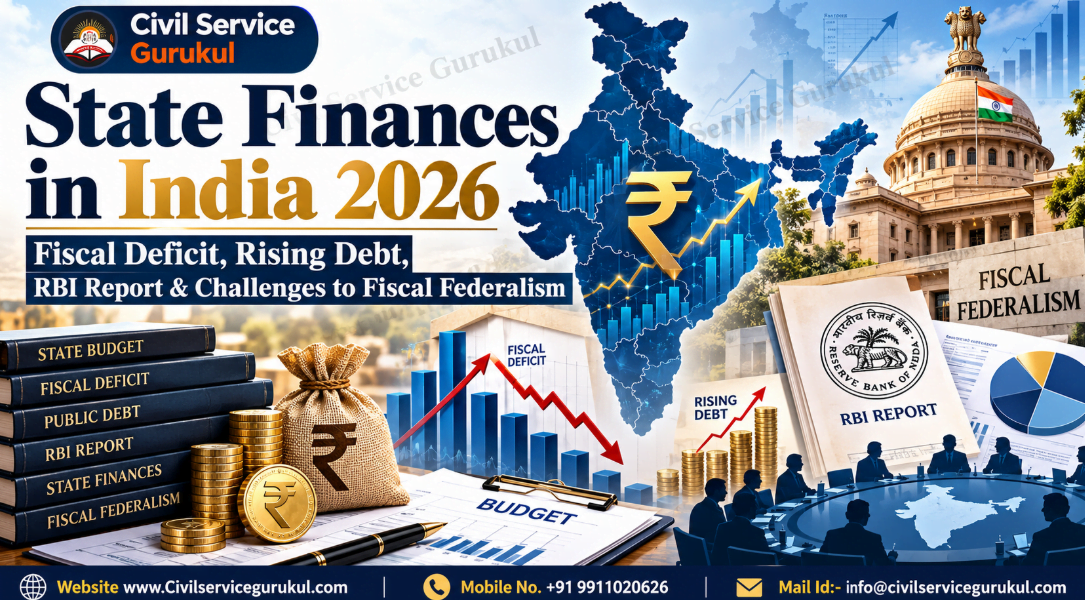
State Finances in India 2026: RBI Report & UPSC Notes
India's state finances face growing pressure from public debt, salaries, pensions, subsidies, and infrastructure requirements. Explore RBI's State Finances: A Study of Budgets of 2025–26, the Sixteenth Finance Commission, GST revenue, fiscal deficit, capital expenditure, and key reforms for UPSC Prelims and Mains

India’s 103 Ramsar Sites: Sukhna Wetland and Sauj Jheel — UPSC Environment Guide
India’s Ramsar wetlands play a vital role in biodiversity conservation, water management and ecological resilience. This article explores Sukhna Wetland in Chandigarh and Sauj Jheel in Uttar Pradesh, explaining their geographical locations, ecological significance, wildlife habitats, conservation challenges and relevance for the UPSC Civil Services Examination. It also includes quick revision facts and a practice question for aspirants.
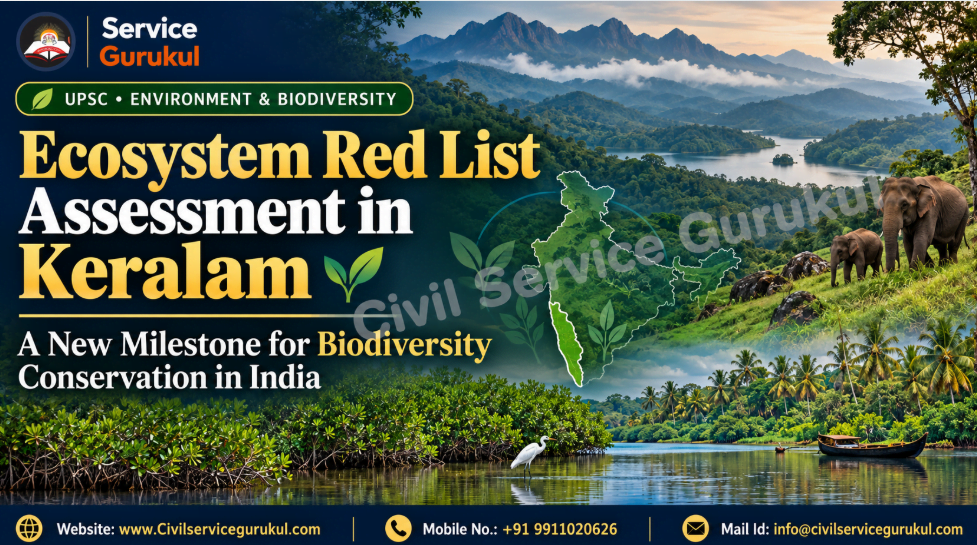
Keralam Ecosystem Red List Assessment: UPSC Biodiversity Notes
Keralam has launched India’s first State-level Red List Assessment of Ecosystems to identify habitats at risk of degradation and ecological collapse. Using the IUCN Red List of Ecosystems framework, the initiative aims to assess forests, wetlands, river systems, grasslands and coastal ecosystems across the state. Explore its objectives, conservation significance, decentralised planning benefits and importance for UPSC Civil Services preparation.
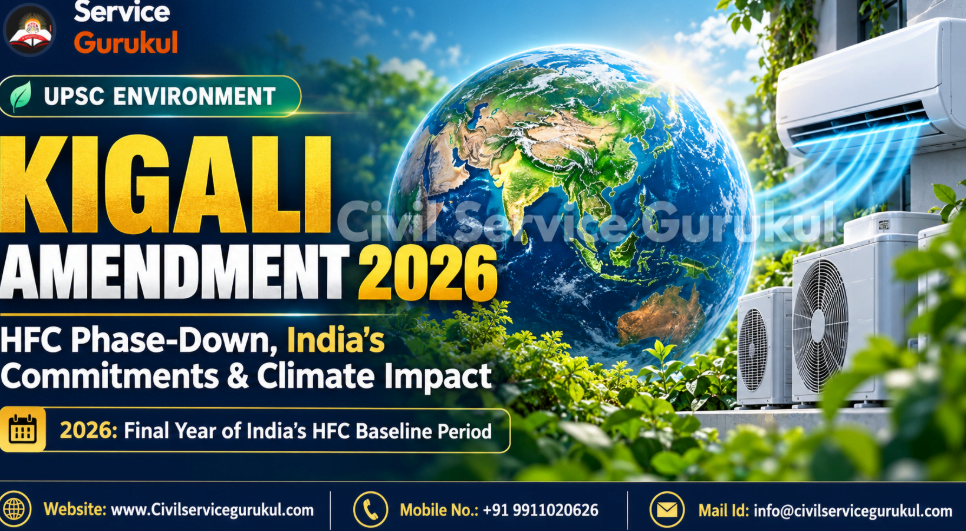
Kigali Amendment 2026: India’s HFC Phase-Down | UPSC
Understand the Kigali Amendment, India’s HFC phase-down schedule and the significance of 2026. Explore climate benefits and essential UPSC notes. The Kigali Amendment provides for a phased reduction in HFC production and consumption under the Montreal Protocol. For India, 2026 is the final year of the 2024–2026 HFC baseline period, followed by a freeze in 2028 and scheduled reductions beginning in 2032. The transition connects climate mitigation with affordable, energy-efficient cooling
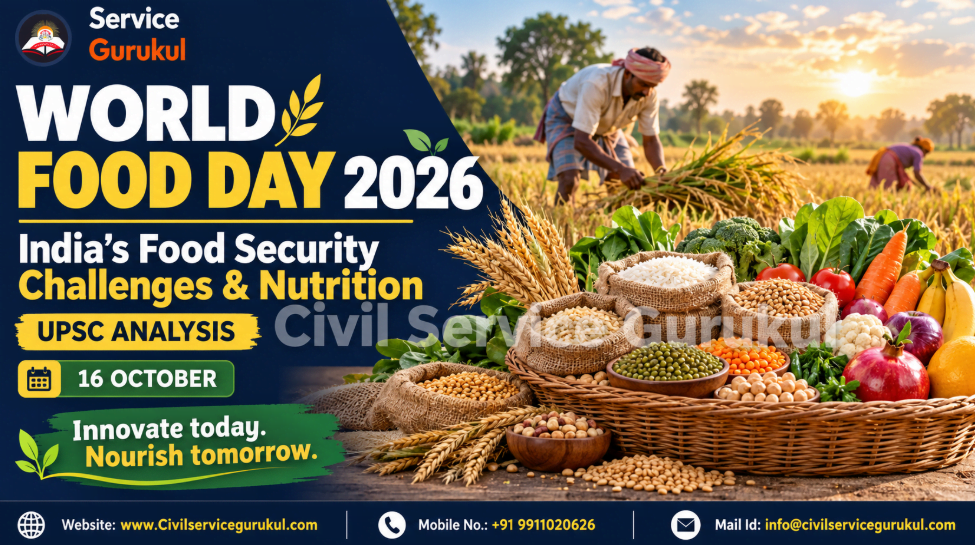
World Food Day 2026: India’s Food Security | UPSC Guide
Explore World Food Day 2026, its theme and India’s food security challenges. Understand nutrition, NFSA, and key policy priorities for UPSC. World Food Day 2026, observed on 16 October, carries the theme “Innovate today. Nourish tomorrow.” This article examines India’s food-security challenges through food availability, affordability, nutrition, and resilience, with focused explanations of public programs and UPSC concepts.
CCRAS SPARK 5.0 & Ayurshodh 2026: UPSC Research Guide
Explore CCRAS SPARK 5.0 and Ayurshodh 2026, their objectives, and their significance. Understand Ayurveda research, innovation, and key UPSC concepts. : CCRAS SPARK 5.0 supports research exposure among undergraduate Ayurveda students, while Ayurshodh 2026 recognises research communication, original publications, and innovation. Together, they highlight the importance of research capacity, scientific evaluation, and responsible communication in India’s traditional-medicine ecosystem.
Conversion and Reservation: Supreme Court Ruling | UPSC
India’s campaign for a non-permanent seat on the United Nations Security Council for 2028–29 highlights the importance of multilateral diplomacy, regional partnerships and global governance reform. This article explains the UNSC election process, India’s strategic interests, the challenges of securing international support and the issue’s significance for UPSC Civil Services Prelims and Mains.
UPSC Current Affairs 16 October 2026: Food Security, India’s UNSC Bid & Prelims Notes
Explore UPSC Current Affairs for 16 October 2026 with concise, exam-oriented notes on India’s food and nutrition security, the 2028–29 UN Security Council bid, Ayurveda research, Ramsar sites, the Kigali Amendment, OCI and Panama mapping. Includes GS paper connections, Prelims revision points and a Mains practice question.

PFAS in India: Why Water Treatment Plants Fail | UPSC 2026
Research from IIT Madras has raised concerns about the ability of conventional Indian water treatment systems to remove persistent PFAS, commonly known as forever chemicals. Discover why these pollutants survive treatment, the findings from Chennai and Visakhapatnam, potential health risks, gaps in India's drinking-water standards, and advanced technologies for safer water.

UPI Transaction Fee Rollout Postponed Beyond Deepavali: Why Traders Opposed the 0.4% Merchant Charge
The National Payments Corporation of India (NPCI) has postponed the proposed 0.4% Merchant Discount Rate (MDR) on eligible UPI merchant transactions exceeding ₹2,000 until after Deepavali 2026. Explore the reasons behind the postponement, the role of traders' associations, proposed exemptions, implications for India's digital payment ecosystem and UPSC examination relevance.

Weimar Triangle 2026: France, Germany & Poland, European Security and UPSC Analysis
Established in 1991, the Weimar Triangle connects France, Germany and Poland through an informal diplomatic framework that promotes reconciliation and European integration. Its 35th anniversary in 2026 highlighted renewed cooperation on Ukraine, defence preparedness, economic resilience and European strategic autonomy.

Diego Garcia 2026: Chagos Islands Dispute, UK–Mauritius Treaty & UPSC Analysis
The UK and Mauritius signed their Chagos Archipelago treaty on 22 May 2025. However, as of 16 October 2026, the treaty has not entered into force. The UK Parliament's House of Commons Library reported on 8 October 2026 that UK ratification had been paused pending discussions with the United States over the future of the military base. Mauritius reiterated its sovereignty claim on 14 October 2026.
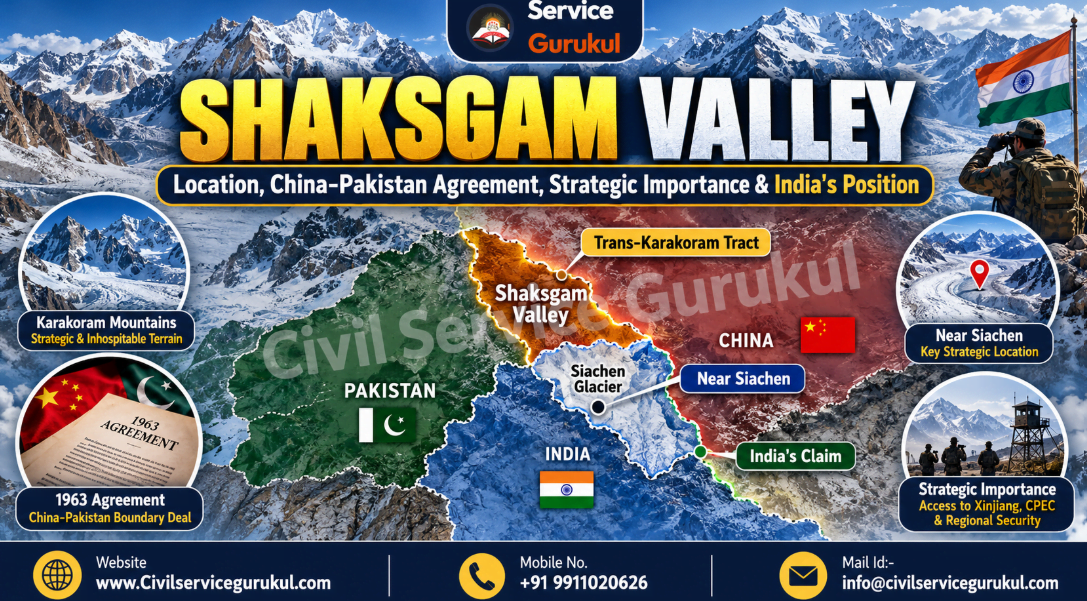
Shaksgam Valley Dispute 2026: Location, China–Pakistan Agreement & UPSC Analysis
Shaksgam Valley, also known as the Trans-Karakoram Tract, is a strategically important region of approximately 5,180 sq. km under Chinese administration but claimed by India. Explore its geography, the disputed 1963 China–Pakistan Boundary Agreement, its proximity to Siachen Glacier, infrastructure concerns and the implications for India's territorial sovereignty.

India–Germany Agreements 2026: 19 Major MoUs, Strategic Partnership and UPSC Analysis
India and Germany strengthened their strategic partnership during German Chancellor Friedrich Merz's official visit to India on 12–13 January 2026. The two countries concluded 19 agreements and MoUs and announced eight additional initiatives covering defence cooperation, critical minerals, semiconductors, green hydrogen, education, skilled migration, and Indo-Pacific security. This UPSC-focused analysis explains the agreements, their strategic significance, implementation challenges, and relevance for India's foreign policy.
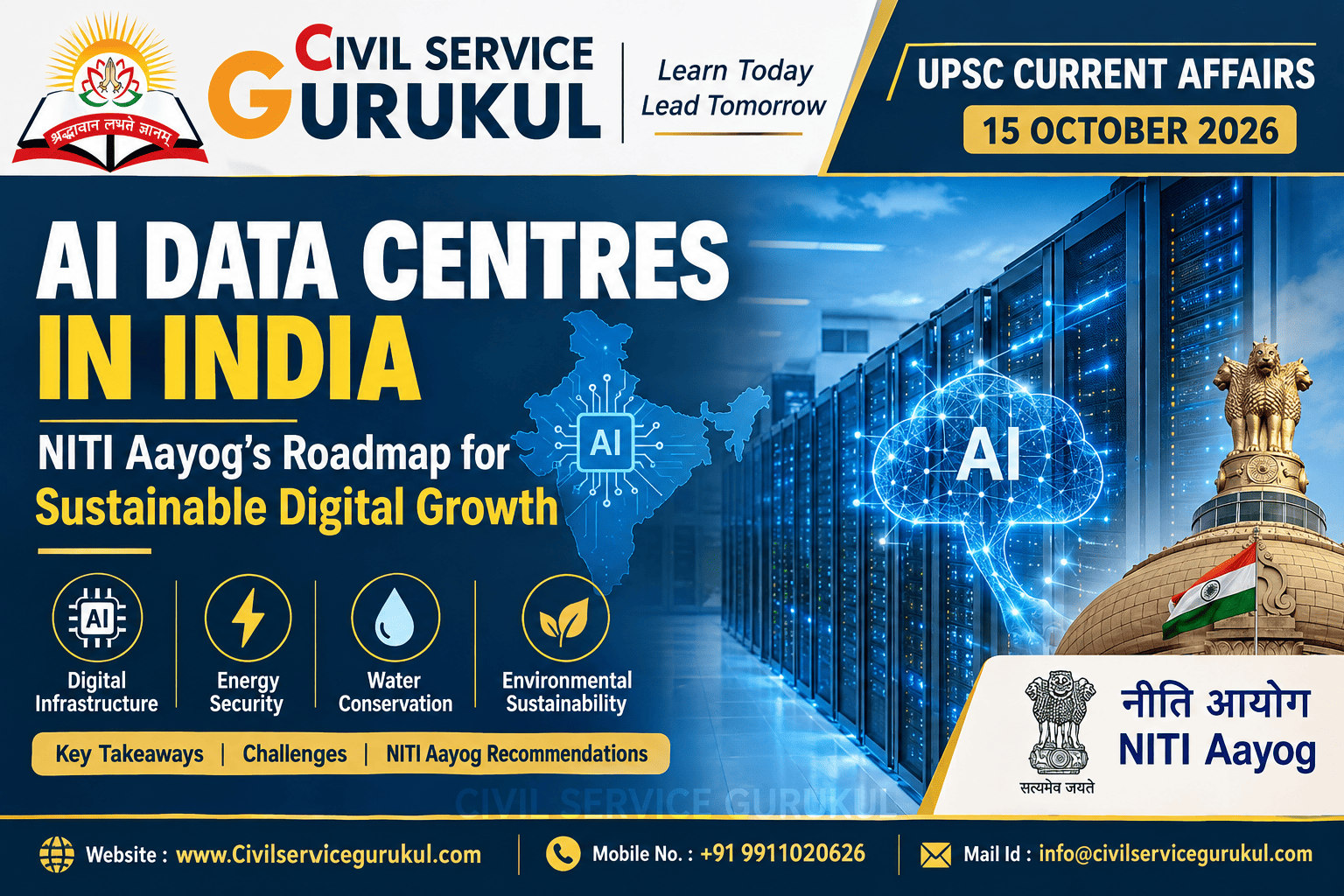
AI Data Centres in India: NITI Aayog’s Roadmap for Sustainable Digital Growth | UPSC GS 3
India’s growing AI data centre industry can strengthen digital infrastructure, innovation and technological self-reliance. However, rising electricity demand, water consumption, emissions and limited direct employment create significant policy challenges. Understand NITI Aayog’s proposed recommendations, sustainable data centre strategies and the relevance of this issue for UPSC GS Paper III.