
Daily News Analysis
Our daily news analysis consists of two integral parts — Daily News Analysis and Important Editorials curated rigorously from The Hindu, The Indian Express, LiveMint, PIB, and Sansad TV debates. Content is mapped directly to UPSC CSE and State PCS syllabi.
India Tops Global Business Climate Survey 2026: UPSC Key Facts & Analysis
India ranked first among 41 global markets in the Global Business Climate Survey 2026, with 73% of surveyed Swedish companies rating the country’s business environment as good or very good. The survey highlights strong investor confidence, revenue-growth expectations and India’s growing appeal as a destination for foreign investment, manufacturing and global value-chain integration.
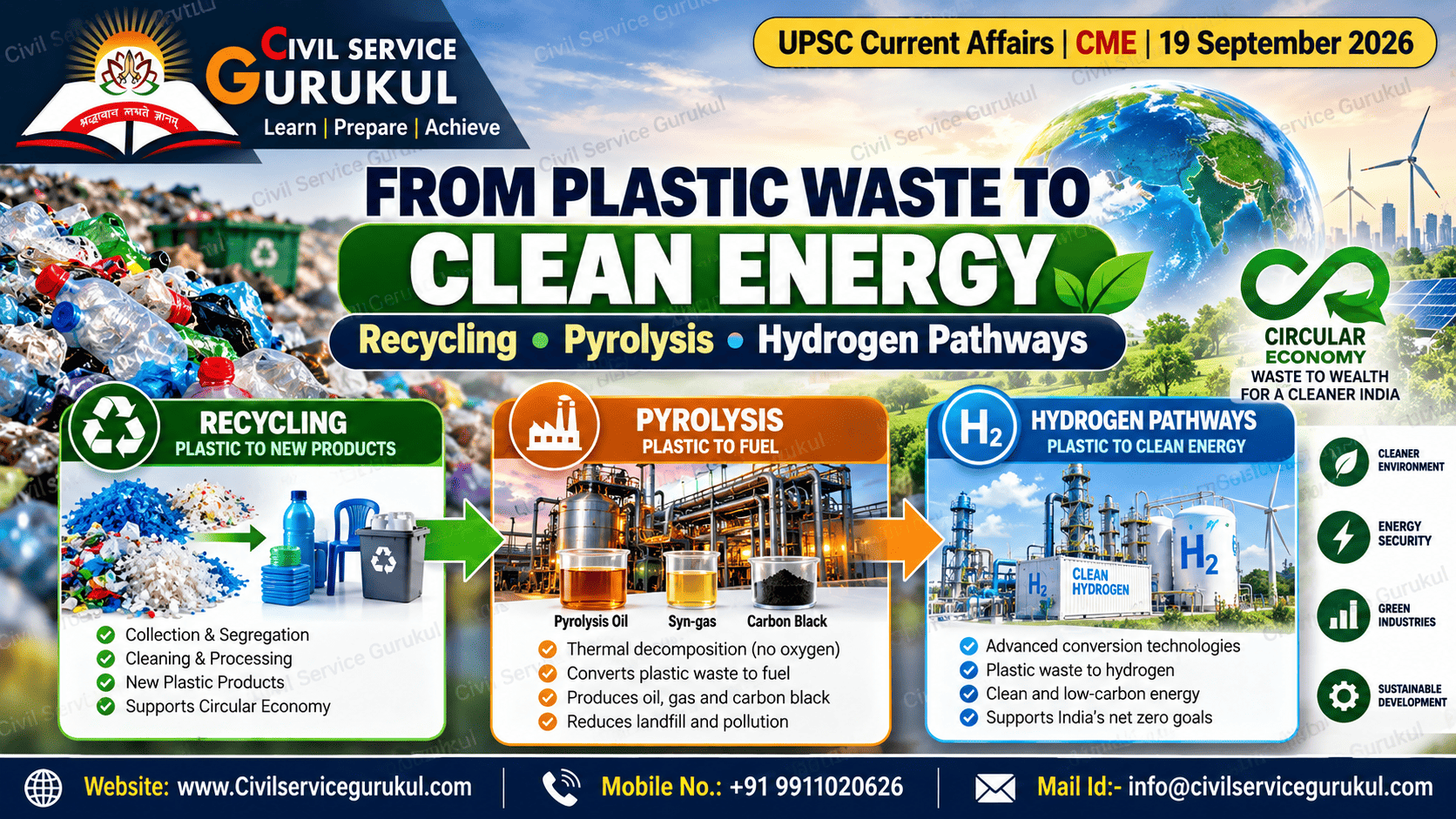
Plastic Waste to Clean Energy: Recycling, Pyrolysis & Hydrogen for UPSC
Plastic waste can be transformed into useful materials, fuels and potentially hydrogen through technologies such as mechanical recycling, pyrolysis and advanced thermochemical processing. For India, these pathways can support waste-to-wealth, circular economy and clean-energy goals, but they must complement—not replace—plastic reduction, reuse and high-quality recycling. For UPSC, the topic links plastic pollution, waste management, hydrogen, EPR, sustainable development and environmental governance.
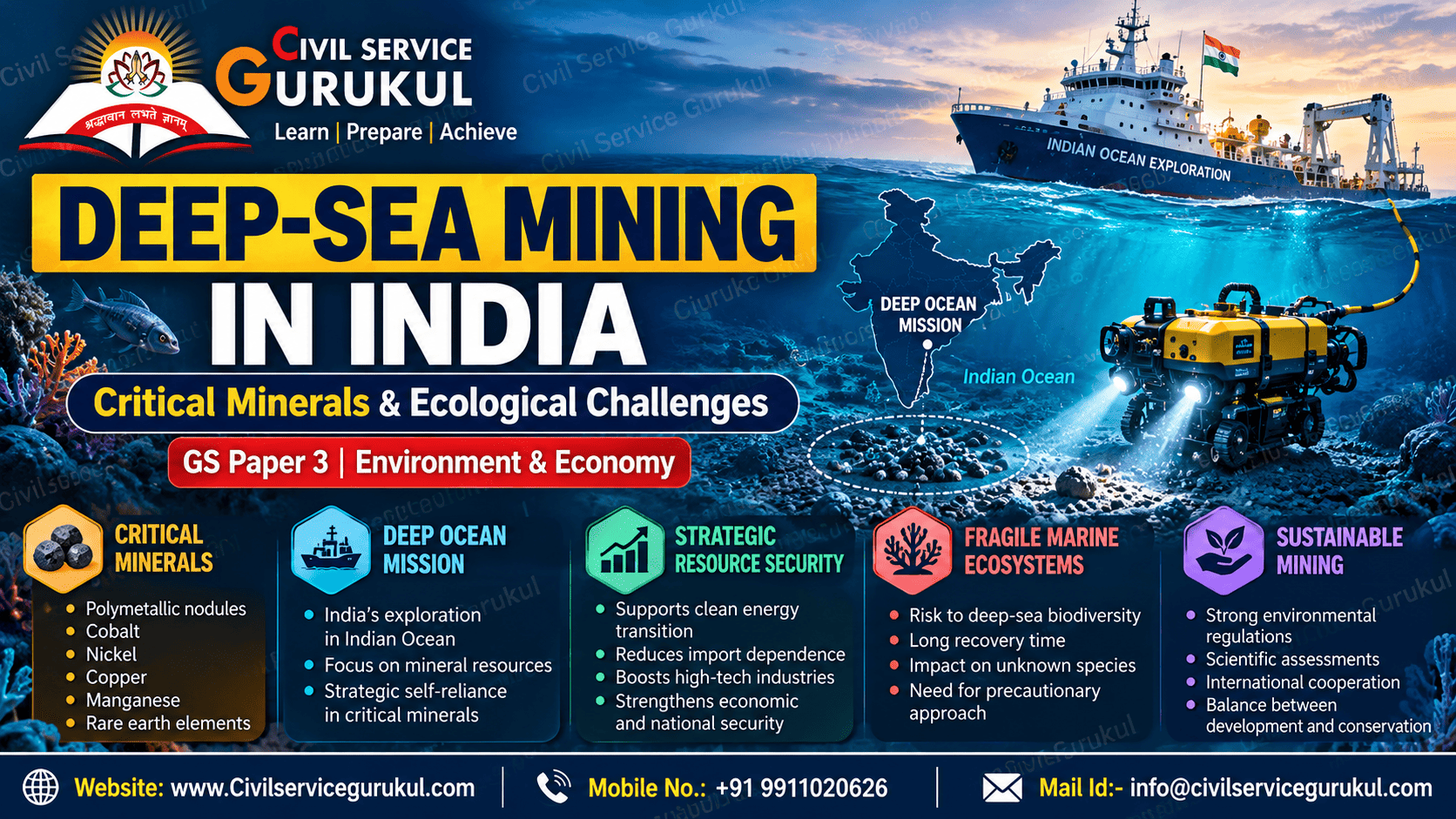
Deep-Sea Mining in India: Critical Minerals, Deep Ocean Mission & UPSC Analysis
Deep Sea Mining India, Deep Ocean Mission, MATSYA 6000, Samudrayaan, Polymetallic Nodules, Critical Minerals India, International Seabed Authority, UNCLOS, Central Indian Ocean Basin, Blue Economy, Marine Biodiversity, Deep Sea Ecology, NIOT, Critical Minerals UPSC, UPSC Environment, GS Paper 3, Precautionary Principle, Ocean Governance, UPSC Current Affairs 2026, Civil Service Gurukul.
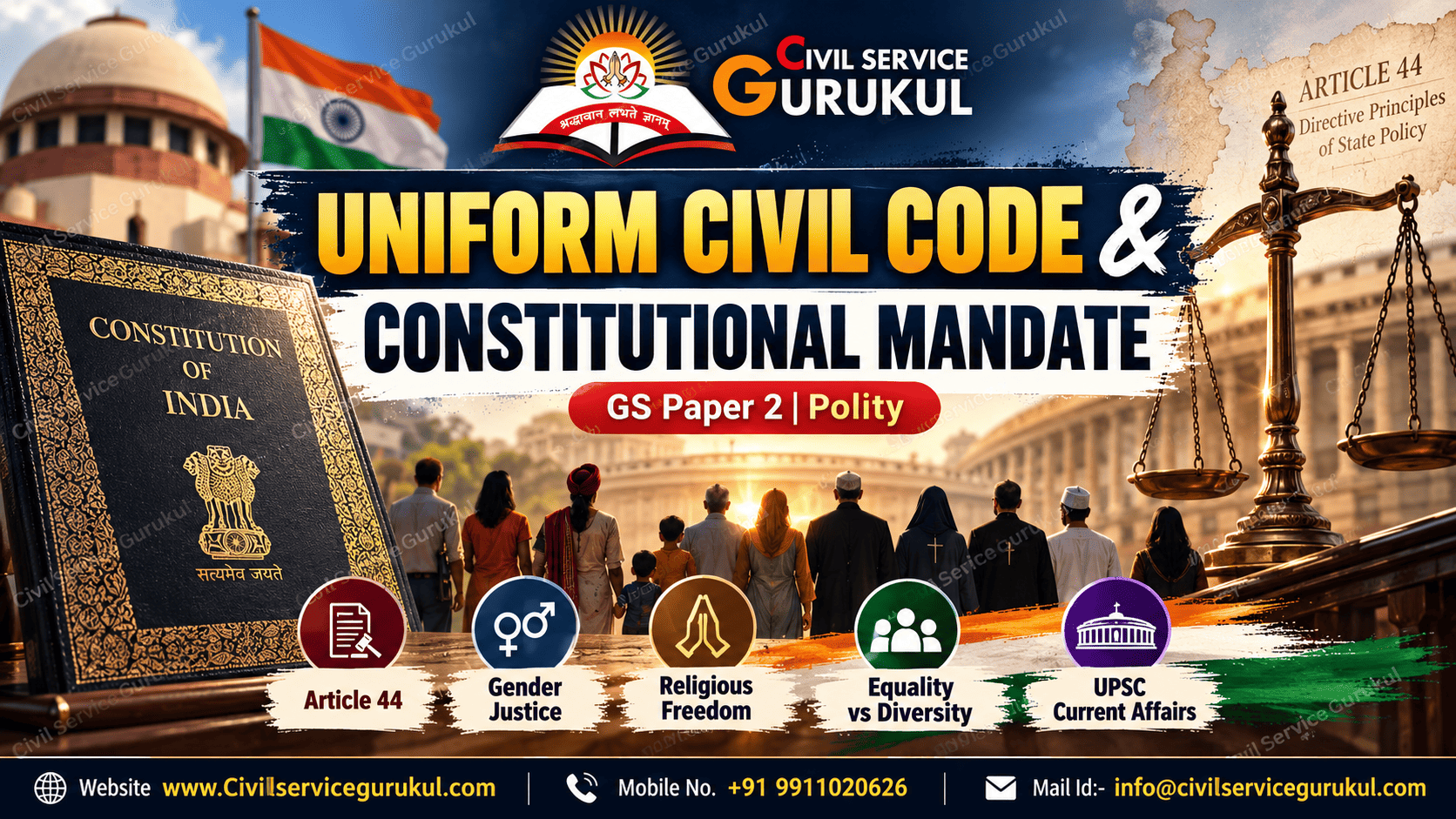
Uniform Civil Code in India: Article 44, Gender Justice & UPSC Analysis
The Uniform Civil Code seeks to create a common framework for personal laws relating to marriage, divorce, inheritance, adoption and maintenance. For UPSC GS Paper 2, the issue is important because Article 44’s constitutional mandate must be balanced with equality, gender justice, religious freedom and India’s cultural diversity. The debate ultimately centres on whether legal uniformity or rights-based reform within personal laws can better achieve constitutional justice.

Black Sea: Geography, Strategic Chokepoints and Global Importance for UPSC
The Black Sea is a strategically vital inland sea connecting Eastern Europe, Western Asia and the Mediterranean maritime system. This UPSC-focused guide explains its bordering countries, Bosporus and Dardanelles, anoxic waters, major rivers, Montreux Convention, trade routes and geopolitical importance.
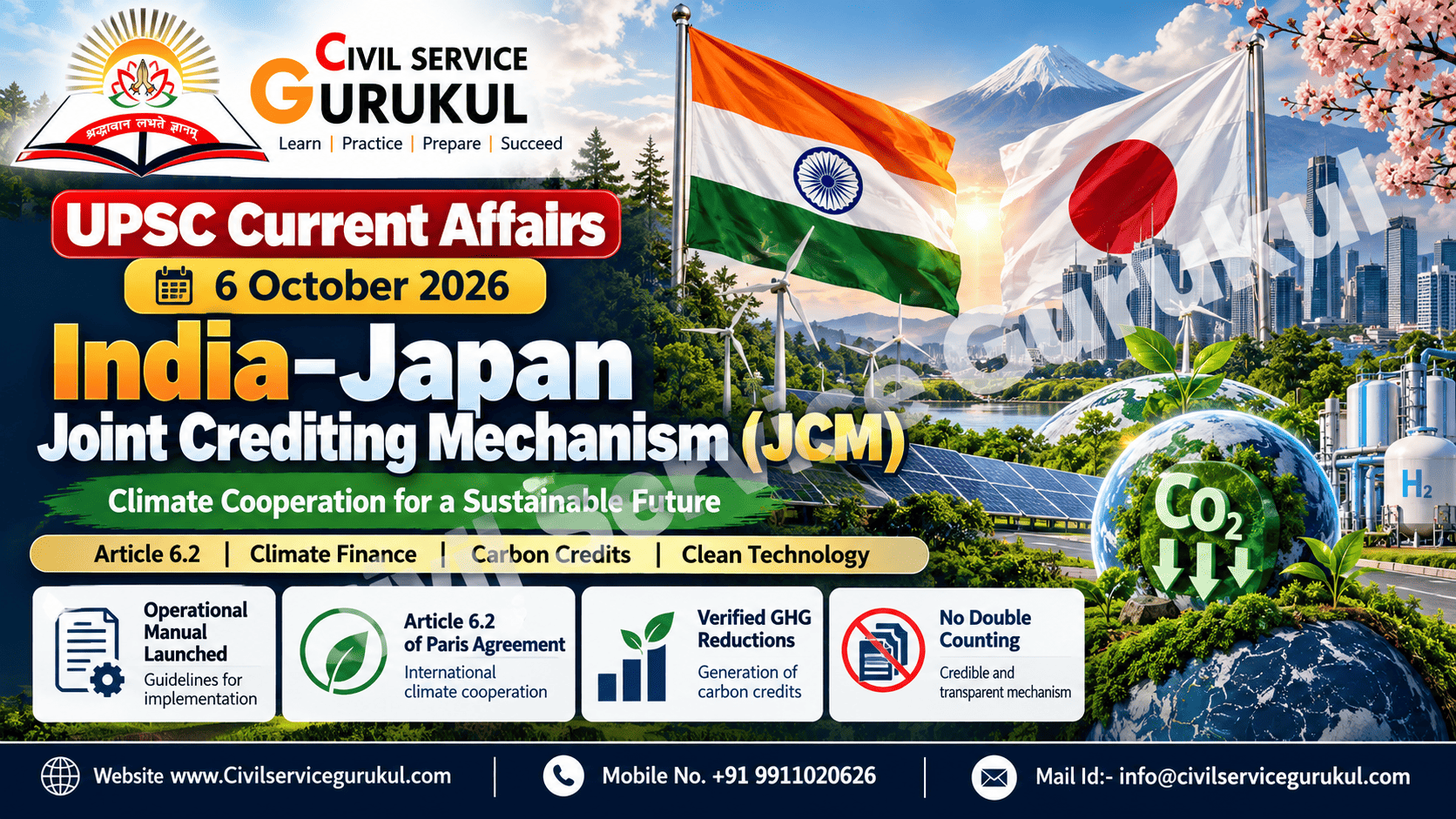
India–Japan Joint Crediting Mechanism: Carbon Markets, Climate Finance and Article 6.2 Explained
India and Japan have operationalised the Joint Crediting Mechanism to promote low-carbon technologies, climate finance and verified greenhouse-gas reductions. Linked with Article 6.2 of the Paris Agreement, the framework enables internationally transferred mitigation outcomes while requiring robust accounting to prevent double counting.
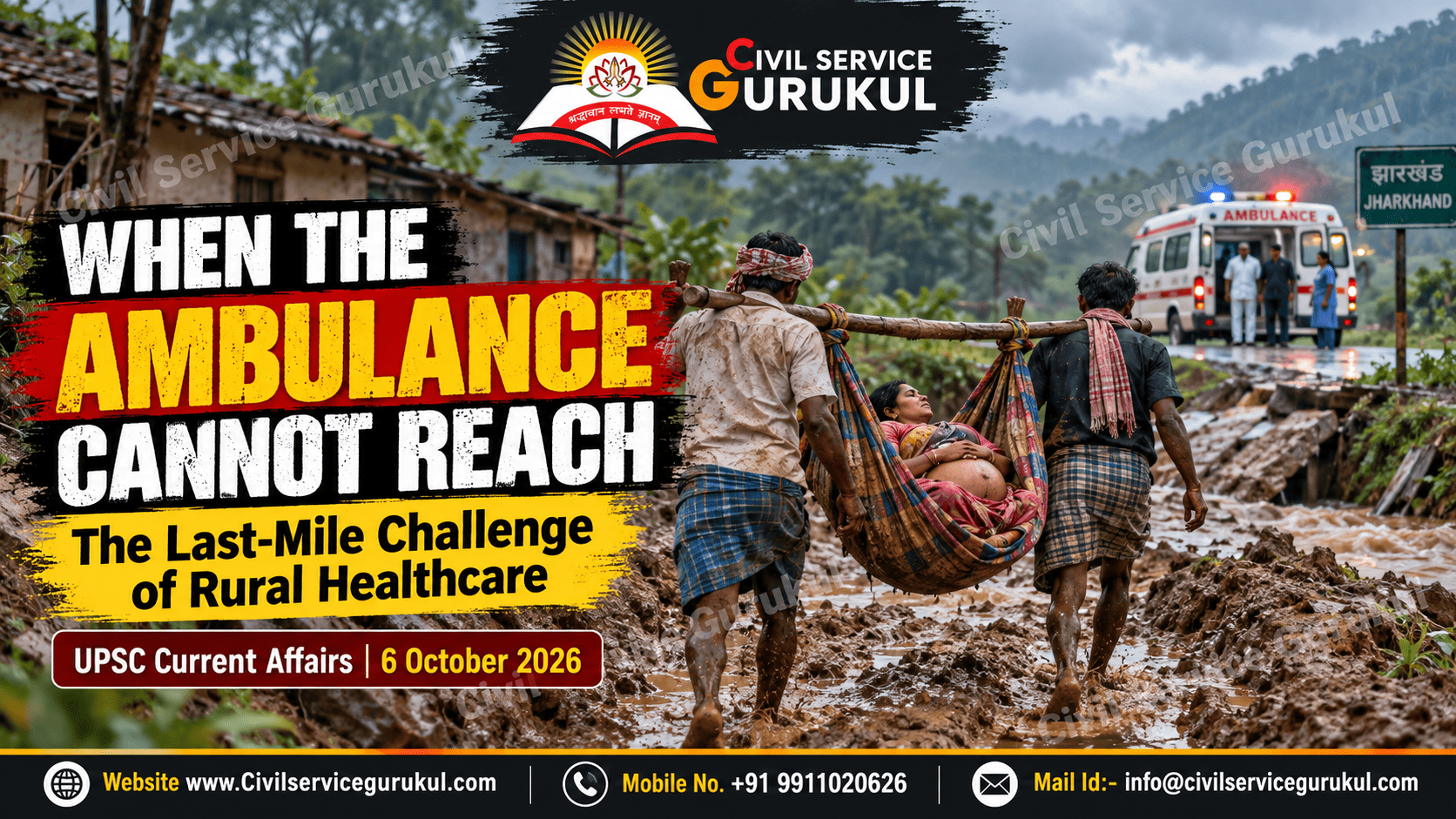
When Healthcare Stops at the Road: India’s Last-Mile Rural Healthcare Challenge
A real-life rural healthcare challenge shows how poor road connectivity can make ambulances and medical facilities inaccessible when they are needed most. This UPSC-focused analysis examines last-mile healthcare delivery, rural infrastructure, accountability, dignity, and citizen-centric governance in India.
India–Switzerland Relations 2026: From Traditional Trade Ties to a Strategic Technology Partnership
India–Switzerland relations entered a new phase in 2026 with deeper cooperation in defence production, civil nuclear energy, mobility, clean technology, research and innovation. Supported by the India–EFTA TEPA, the partnership is evolving into a broader strategic and technology-driven relationship.
August 2026 UPSC Current Affairs: GS-Wise Monthly Revision of the Most Important Issues
Revise the most important August 2026 UPSC current affairs through a GS-wise framework covering the 16th Finance Commission, fiscal federalism, delimitation, critical minerals, UPI, Himalayan cloudbursts, carbon-border measures, wetlands, labour standards and India’s cultural heritage.
UPSC Current Affairs Quiz – 6 October 2026: Test Today’s High-Yield Prelims Topics
Practice original UPSC Prelims current affairs MCQs on the Inter-Parliamentary Union, Classical Languages, Quantum Key Distribution, Ramappa Temple and Desert National Park, with detailed explanations and quick revision points.
UPSC CSAT Daily Aptitude & Reasoning Test – 6 October 2026: Build Speed, Accuracy & Confidence
Practice five original UPSC CSAT questions covering percentages, ratio, logical reasoning, time and work, and data interpretation, with detailed solutions designed to improve speed, accuracy and confidence for General Studies Paper II.
UPSC Static Geography Quiz – 6 October 2026: Test Your Indian & World Geography Concepts
Practice five original UPSC Prelims-style Geography MCQs covering the Indian monsoon, Himalayan rivers, black soil, plate tectonics and ocean currents, with answers and detailed explanations for quick revision.
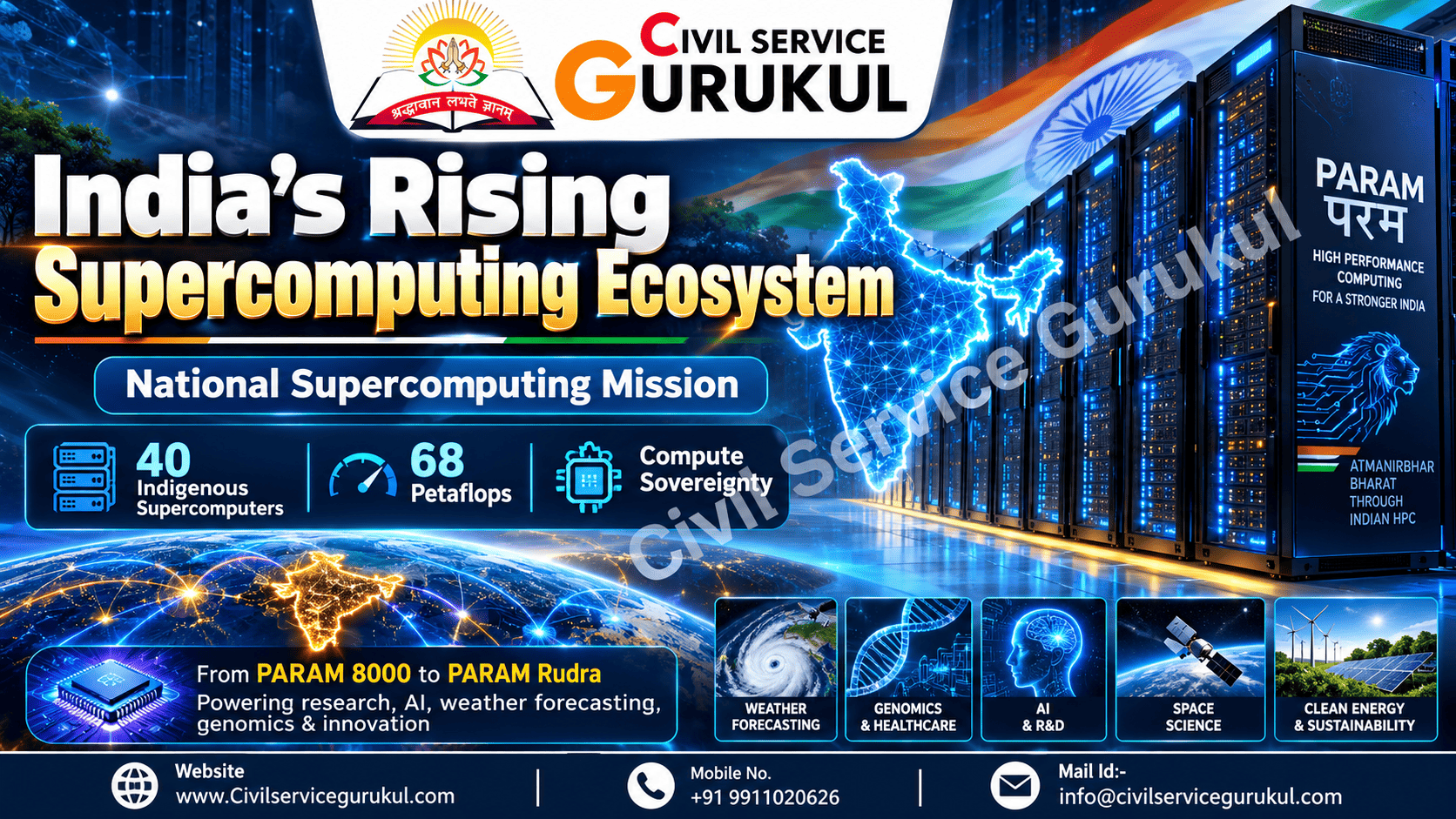
India’s Supercomputing Rise: From PARAM 8000 to the Quest for Compute Sovereignty
India’s National Supercomputing Mission has created a growing indigenous high-performance computing ecosystem with 40 systems and 68 Petaflops of capacity. For UPSC aspirants, the topic connects science and technology, AI, disaster management, strategic autonomy, semiconductor self-reliance and Viksit Bharat 2047.
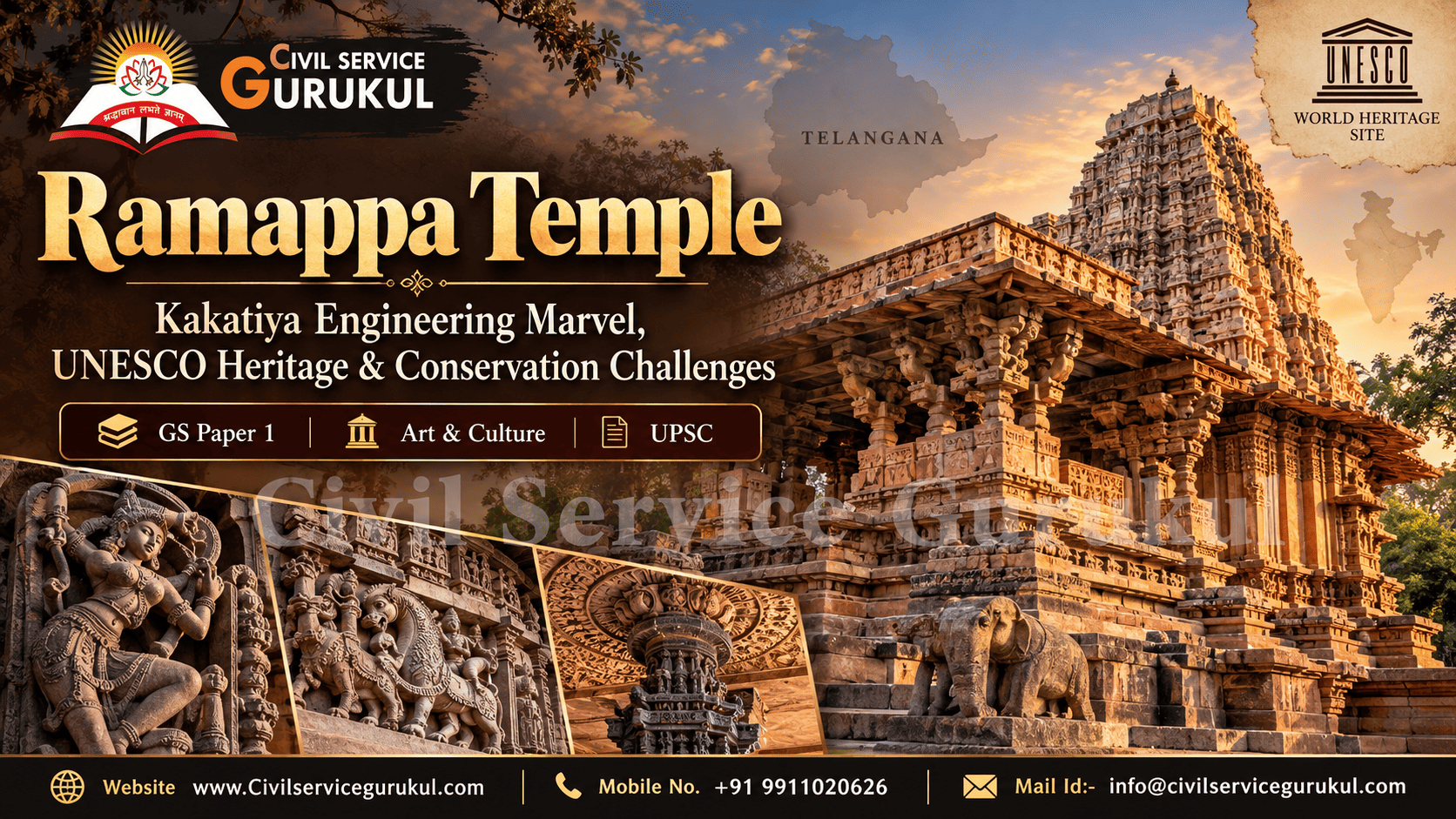
Ramappa Temple: Kakatiya Engineering Marvel, UNESCO Heritage & Conservation Challenges
Ramappa Temple, officially known as the Kakatiya Rudreshwara Temple, is a 13th-century Shiva temple in Telangana and a UNESCO World Heritage Site. Famous for its sandbox foundation, lightweight floating bricks, intricate Kakatiya sculptures and association with Ramappa Lake, it is highly relevant for UPSC GS Paper 1, Prelims and Art & Culture preparation.
Next-Gen GST and India’s Growth Story: Reform, Formalisation & the Road Ahead
Next-Gen GST marks a new phase in India’s indirect tax reform, focused on rate rationalisation, easier compliance, faster refunds, correction of inverted duty structures and deeper economic formalisation. This Civil Service Gurukul analysis explains its impact on growth, MSMEs, GST collections, Input Tax Credit, GSTAT and its relevance for UPSC GS Paper 3.
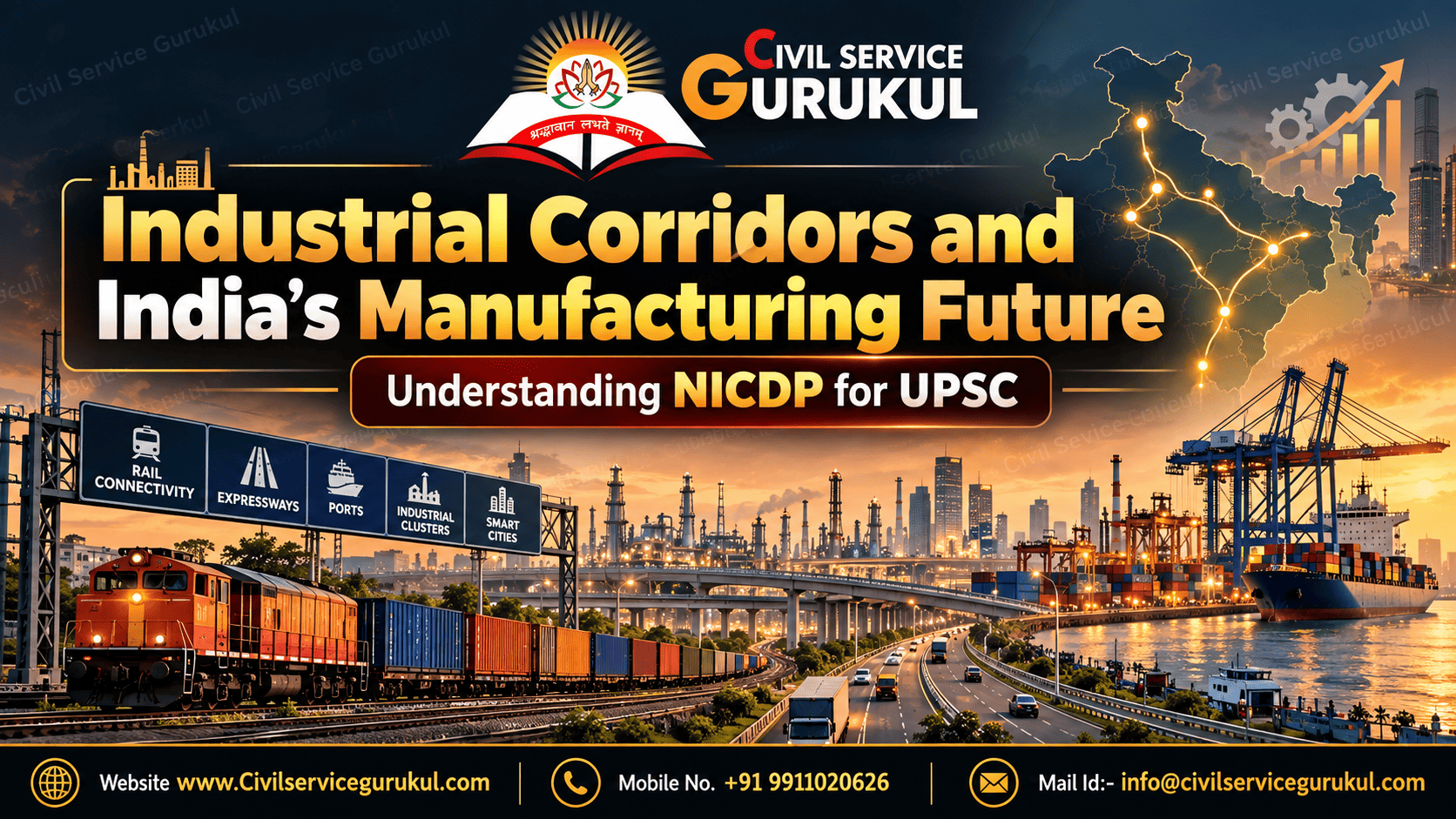
Industrial Corridors and India’s Manufacturing Future: Understanding NICDP for UPSC
The National Industrial Corridor Development Programme is reshaping India’s manufacturing geography by integrating industrial nodes with freight corridors, expressways, ports, logistics networks and planned smart cities. This Civil Service Gurukul guide explains NICDP from a UPSC perspective with Prelims facts, GS Paper 1 and GS Paper 3 relevance, challenges and Mains-ready analysis.
UPSC Current Affairs 5 October 2026: From Industrial Corridors to Quantum Security
UPSC Current Affairs for 5 October 2026 covers major developments in industrial infrastructure, GST reforms, diplomacy, quantum communication, heritage conservation, rural housing and biodiversity. This Civil Service Gurukul guide presents each topic with Prelims facts, GS paper relevance and Mains-ready analysis.
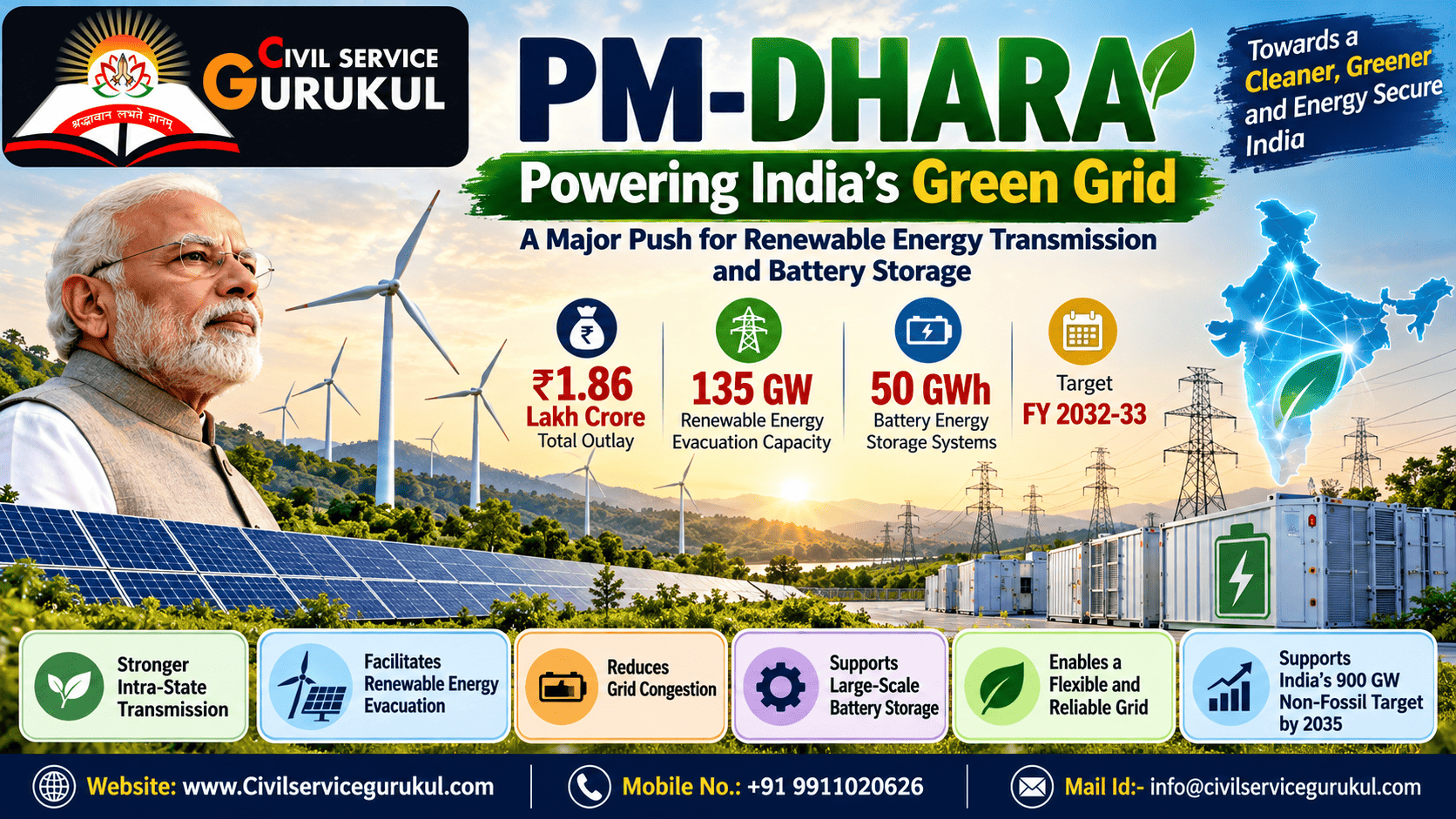
Powering India’s Green Grid: PM-DHARA Scheme and the Next Leap in Renewable Energy Transmission
PM-DHARA is a major green-energy transmission and storage programme aimed at strengthening electricity networks within States and Union Territories. Its principal objectives are to: - develop stronger intra-state transmission systems, - facilitate evacuation of renewable electricity, - reduce grid congestion, - support large-scale battery storage, - improve grid flexibility, - and enable greater integration of solar and wind power. The scheme is expected to facilitate the evacuation of up to 135 GW of renewable energy capacity across States and Union Territories.
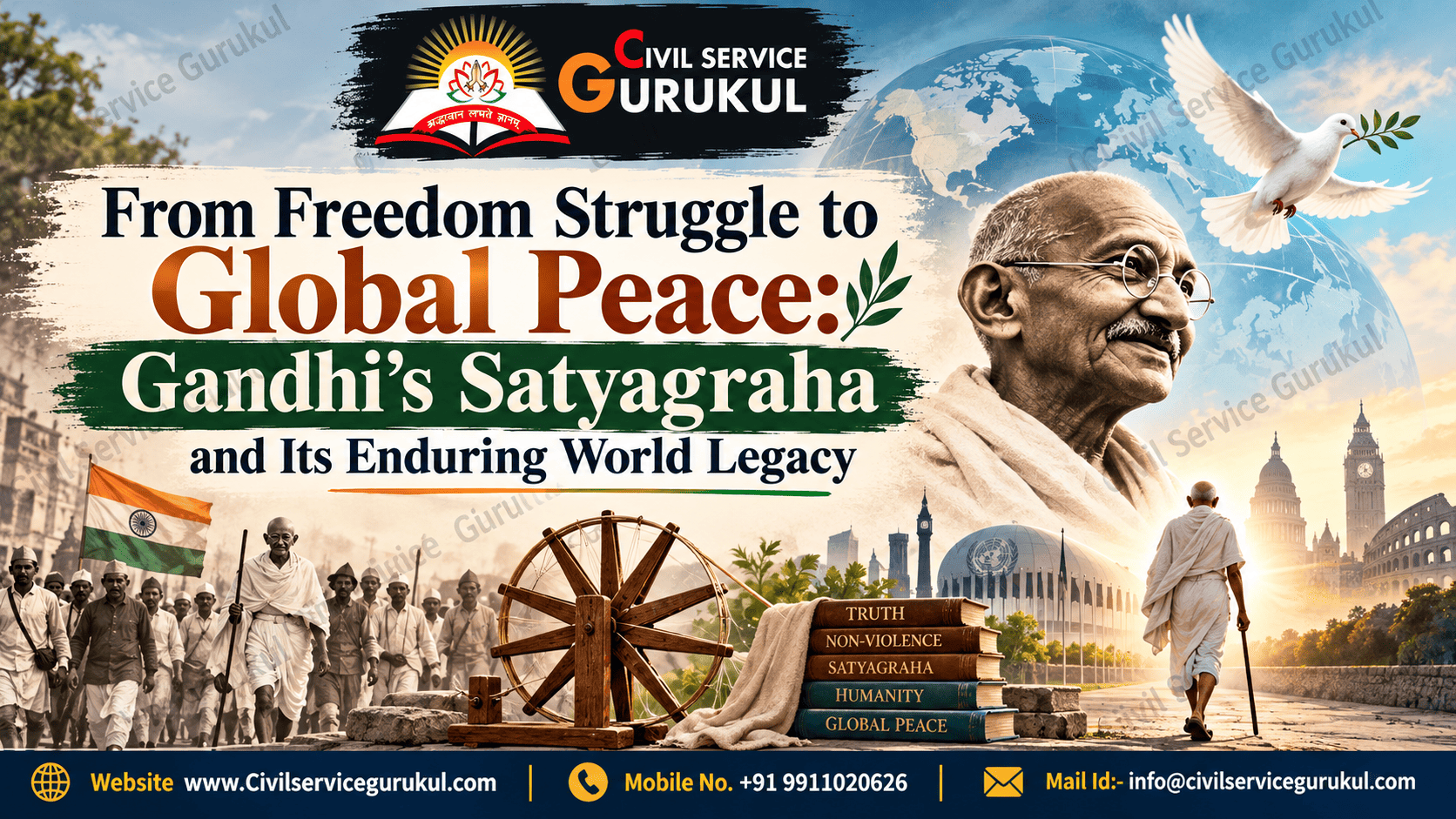
Gandhi Beyond 1947: The Unfinished Global Journey of Satyagraha
Mahatma Gandhi is usually studied in the context of India’s freedom struggle, but his larger vision extended beyond Indian independence. In the years immediately before his assassination, Gandhi was actively thinking about how Satyagraha and non-violent mass action could become a global force for peace, justice and conflict resolution. The idea was not simply moral preaching; it was about institutionalising non-violent resistance as a practical strategy against injustice.
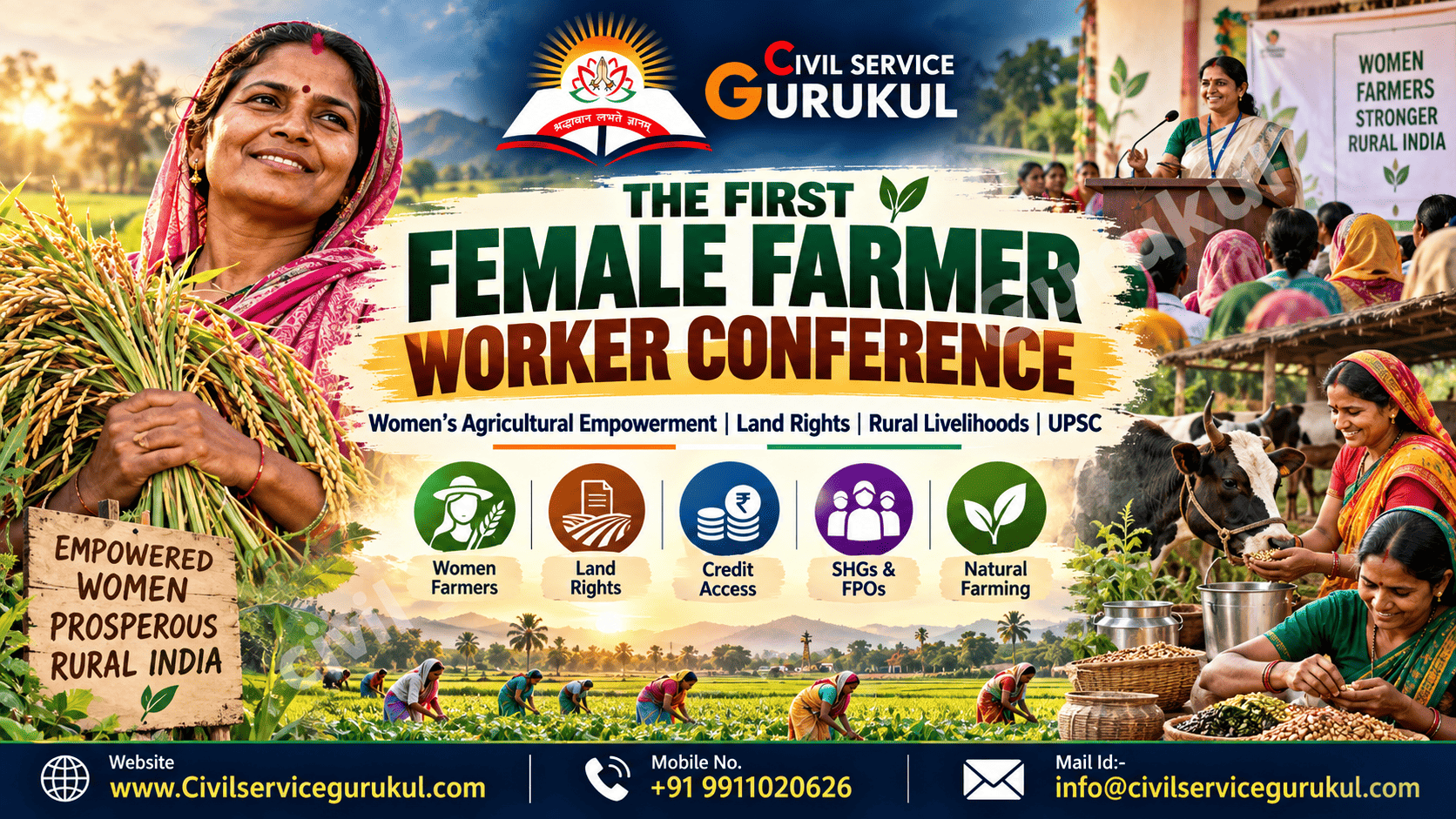
First Female Farmer Worker Conference: Women Farmers, Land Rights, Credit & Rural Empowerment
India’s First Female Farmer Worker Conference highlighted women’s vital role in agriculture and the need for stronger recognition, land rights, institutional credit, SHGs, FPOs and sustainable farming. The topic is highly relevant for UPSC GS II, GS III, Essay and women-led development.