
Daily News Analysis
Our daily news analysis consists of two integral parts — Daily News Analysis and Important Editorials curated rigorously from The Hindu, The Indian Express, LiveMint, PIB, and Sansad TV debates. Content is mapped directly to UPSC CSE and State PCS syllabi.

Exercise IBSAMAR IX 2026: INS Tarkash, India–Brazil–South Africa Naval Cooperation & UPSC Prelims–Mains Analysis
Exercise IBSAMAR IX 2026 is the ninth edition of the trilateral naval exercise involving India, Brazil and South Africa under the IBSA cooperation framework. Hosted by South Africa, the exercise features India's guided-missile stealth frigate INS Tarkash, supported by an onboard Chetak helicopter. Naval activities include anti-submarine warfare, surface warfare, maritime interdiction, anti-piracy operations, search and rescue, and damage-control training. Civil Service Gurukul explains the exercise's objectives, participating warships, IBSA Dialogue Forum, India's maritime security interests and strategic significance for the Global South, along with original UPSC Prelims MCQs, Mains practice questions and quick revision notes.
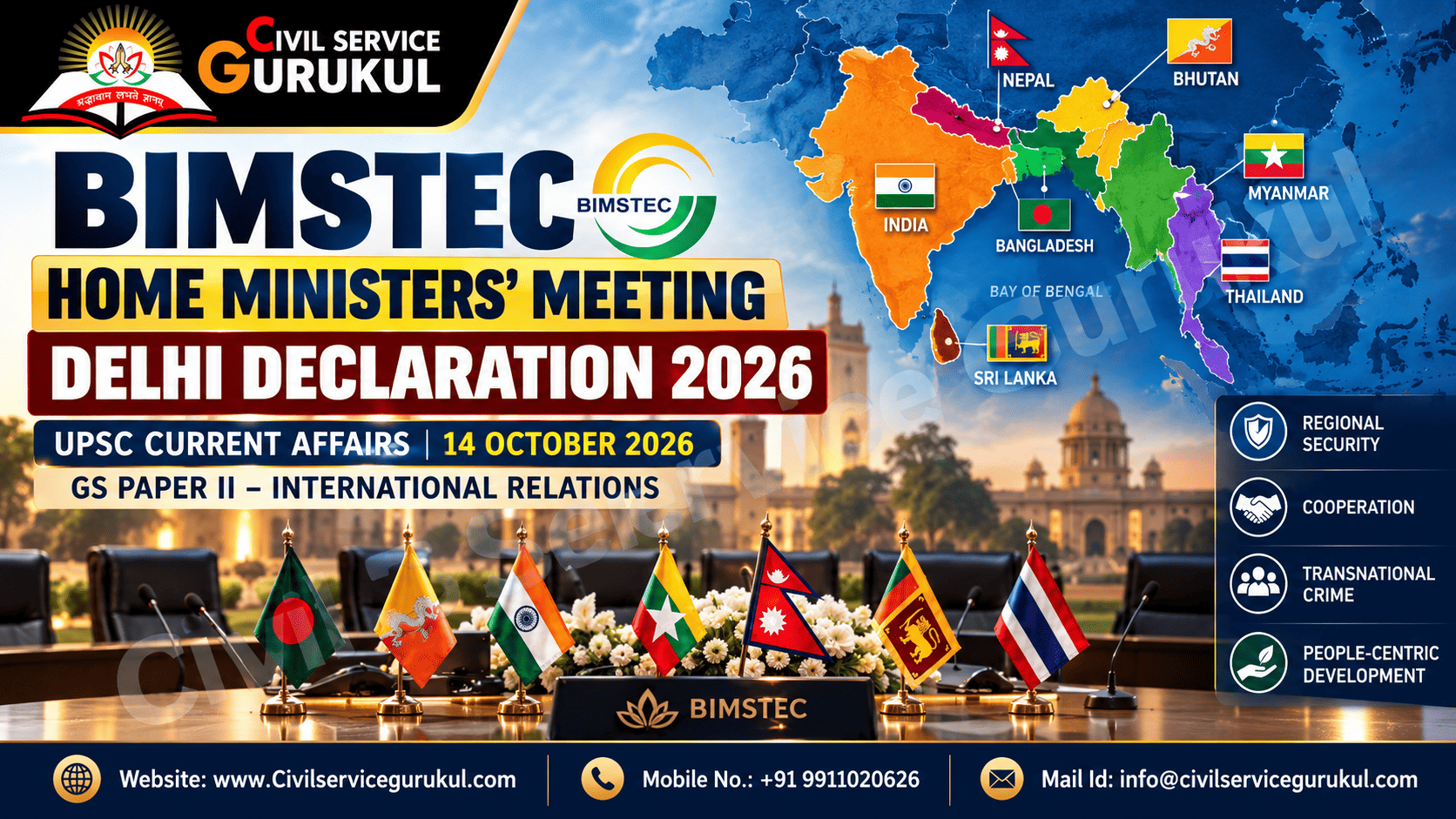
BIMSTEC Delhi Declaration 2026: First Home Ministers' Meeting, India's Security Diplomacy & UPSC Prelims–Mains Analysis
The first BIMSTEC Home Ministers' Meeting, held in New Delhi on 13 October 2026, adopted the landmark Delhi Declaration to strengthen regional security cooperation among seven Bay of Bengal countries. The declaration focuses on counterterrorism, terror financing, cybercrime, transnational organised crime, human trafficking, drug trafficking and intelligence-sharing mechanisms. For India, the initiative strengthens its Neighbourhood First and Act East policies while reinforcing security cooperation between South Asia and Southeast Asia. Civil Service Gurukul explains the declaration, BIMSTEC's institutional framework, India's strategic interests, UPSC Prelims facts, original practice MCQs and GS Paper II Mains answer-writing points.
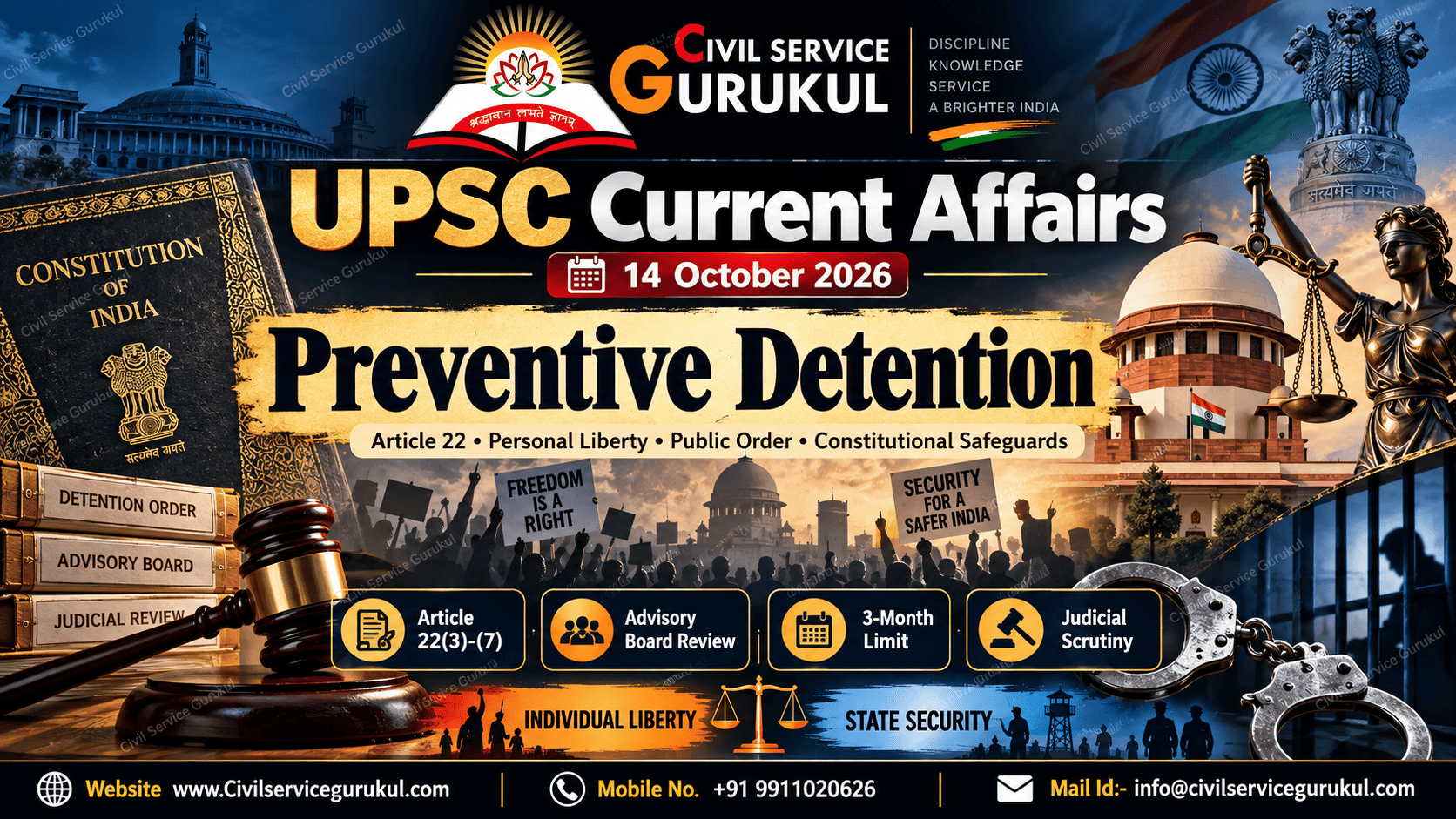
Preventive Detention in India: Article 22, Supreme Court Safeguards and the Right to Personal Liberty | UPSC 2026
Preventive detention in India allows authorities to detain individuals without a criminal trial to prevent certain anticipated threats to national security, public order or essential supplies. Recent judicial scrutiny has brought renewed attention to Article 22, procedural safeguards, the distinction between public order and ordinary law-and-order issues, and the constitutional protection of personal liberty. This Civil Service Gurukul article examines the legal framework, relevant Supreme Court judgments, limitations on detention powers and important UPSC Prelims and Mains concepts.
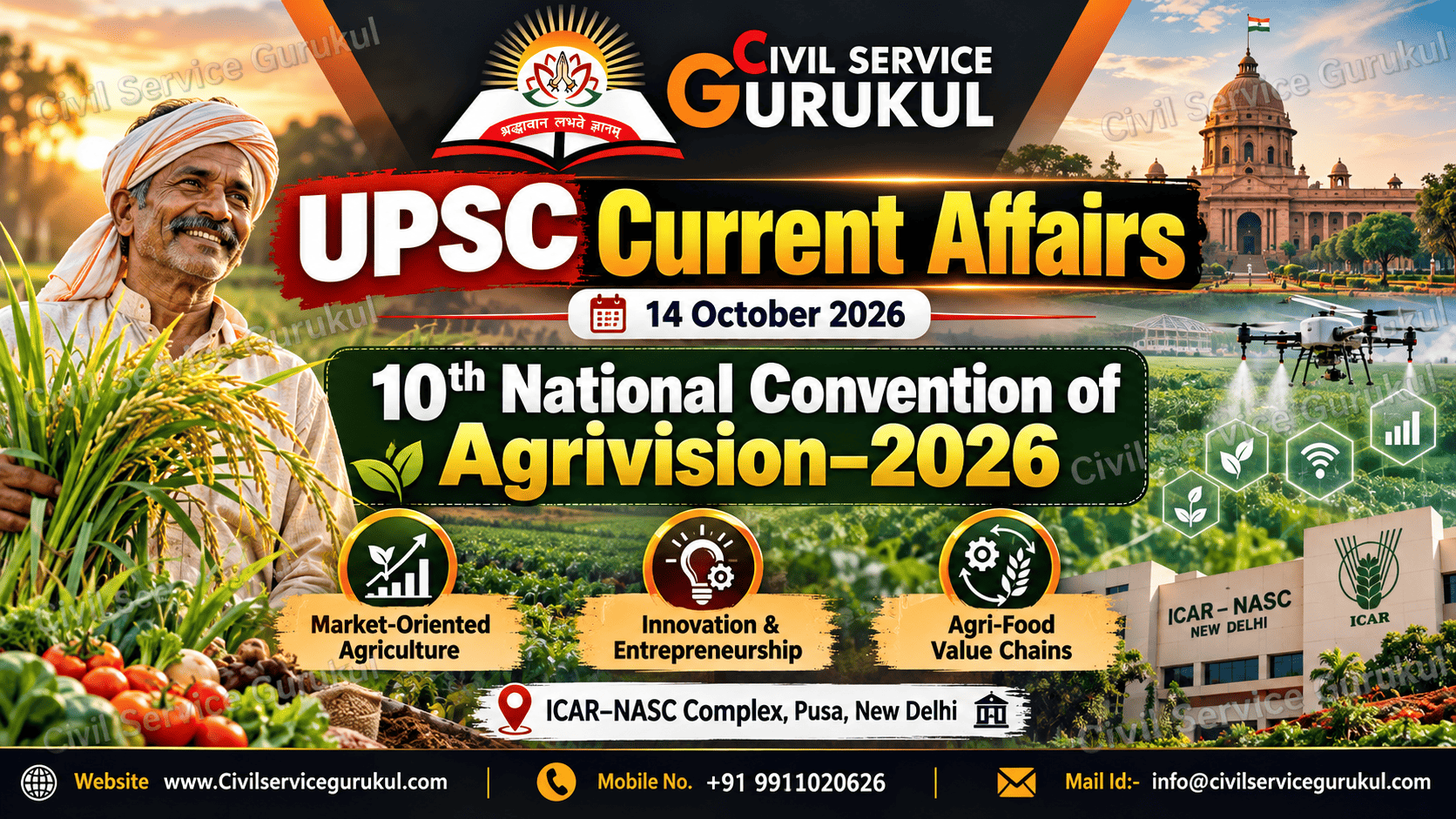
Agrivision 2026: Transforming Indian Agriculture Through Innovation, Market-Driven Farming and Agri-Food Value Chains | UPSC Current Affairs
Bengaluru-based recommerce startup Circle has raised ₹25 crore in seed funding led by Nexus Venture Partners, with participation from Titan Capital, Raveen Sastry and Ajith Pai. Founded in 2025, Circle uses AI-powered pricing, product verification and managed logistics to simplify buying and selling pre-owned goods. DhanCapital Ventures explores the startup's business model, expansion strategy, early traction and the growing investment potential of India's circular commerce ecosystem.
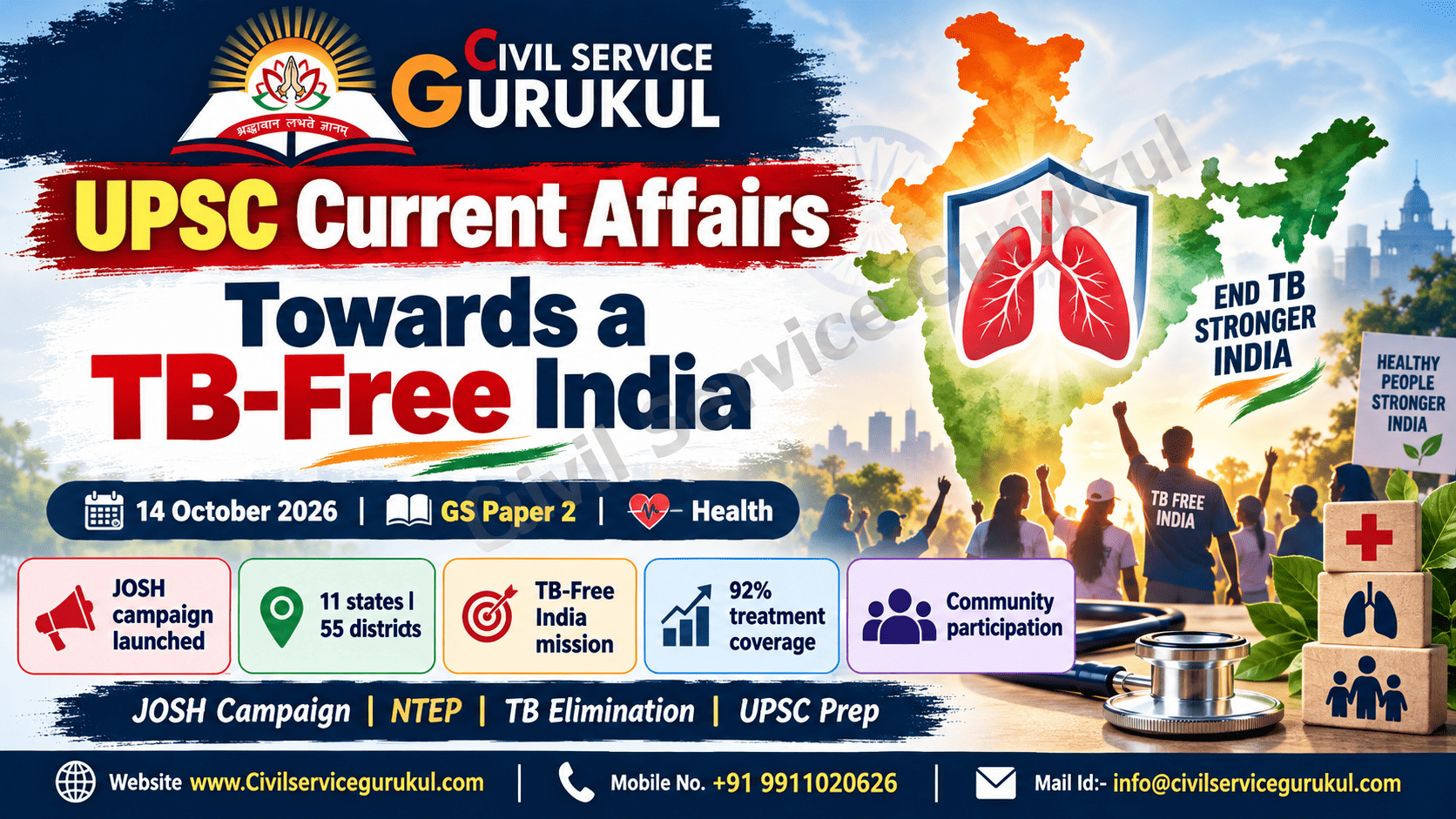
UPSC Current Affairs 14 October 2026: Top 9 Important Topics for Prelims & Mains 2027 | BIMSTEC, Article 22, TB-Free India, ULLAS Scheme & Practice MCQs
Prepare for UPSC Prelims and Mains with Civil Service Gurukul's current affairs analysis for 14 October 2026. Today's nine important topics include India's TB elimination efforts and JOSH campaign, Agrivision 2026, NRC 268 and NRC 270 soybean varieties, Khajuraho's Javari Temple, Lakshadweep's literacy achievement under ULLAS, the BIMSTEC Delhi Declaration, constitutional safeguards against preventive detention, naval exercise IBSAMAR IX and Costa Rica's geography. This exam-focused guide connects each development with the UPSC syllabus and includes concise revision notes, practice MCQs with explanations, Mains questions and priority areas for revision.

Board of Peace for Gaza 2026: UN Resolution 2803, India & UPSC
The Board of Peace (BoP), chaired by US President Donald Trump, is a new international peace and transitional governance mechanism associated with the 2025 Gaza ceasefire agreement. Welcomed under United Nations Security Council Resolution 2803 (2025), it seeks to coordinate Gaza's reconstruction, temporary governance arrangements and international security assistance. However, by October 2026, implementation remains constrained by disagreements over disarmament, Israeli troop withdrawal, Palestinian governance and humanitarian access. The initiative raises important questions concerning international law, Palestinian self-determination, the two-state solution, the United Nations and India's strategic interests in West Asia.
US Withdrawal from 66 International Organisations 2026 | UPSC
On 7 January 2026, US President Donald Trump signed a presidential memorandum directing American agencies to end participation in and funding for 66 international bodies, comprising 35 non-UN organisations and 31 UN entities. This decision reflects the administration's America First approach and raises important questions about sovereignty, multilateralism, climate diplomacy, international development and global governance. For India, the decision has particular significance because the International Solar Alliance, a flagship India–France initiative, is among the affected organisations. This UPSC-focused analysis covers the policy's causes, global consequences, India's interests, verified previous-year questions, and high-priority revision topics.

Greenland Dispute 2026: US, NATO & Arctic Geopolitics | UPSC
Greenland has emerged as a focal point of global geopolitics due to its strategic Arctic location, critical mineral potential, military significance and rapidly changing climate. The United States' efforts to strengthen its presence have raised important questions about Danish sovereignty, Greenlandic self-determination and NATO unity. A September 2026 security agreement has added a new dimension to this debate. This UPSC-focused analysis examines the background, major stakeholders, environmental implications, India's Arctic interests and relevant examination questions.
US Strikes on Venezuela 2026: UPSC Notes & Analysis
The reported US military operation in Venezuela, codenamed Operation Absolute Resolve, has intensified debates over national sovereignty, the prohibition on the use of force, interventionism and the future of the rules-based international order. This UPSC-focused analysis examines the international response, the Monroe and Donroe doctrines, geopolitical competition over Venezuelan oil, India's diplomatic position, UN Security Council reform, and the prospects for a multipolar world order. Includes prelims revision facts, mains answer-writing guidance, and examination practice questions.
UPSC Mains Micro-Notes: 30-Day Revision Strategy
The final 30 days before UPSC Mains should focus on smart revision, active recall, and answer-writing practice rather than collecting new study material. Micro-notes help aspirants compress bulky notes into concise, exam-ready revision sheets containing key concepts, facts, examples, diagrams, and conclusions. This Civil Service Gurukul guide explains how to create effective micro-notes for GS Papers I–IV, Essay and Ethics, along with a realistic 30-day revision plan, before-and-after note-making examples, and practical methods for converting revision into better Mains answers.

India–EU FTA 2026: Benefits, Challenges & UPSC Notes
The India–EU Free Trade Agreement, described as the “Mother of All Deals,” marks a major milestone in India's economic diplomacy. Announced at the 16th India–EU Summit, the conclusion of negotiations promises wider European market access for Indian exports, stronger services cooperation, and opportunities for labour-intensive industries. This UPSC-focused article explains the agreement's tariff provisions, strategic importance, EU institutions, Carbon Border Adjustment Mechanism (CBAM), implementation challenges, and relevant examination questions with answers and explanations.

India Free Trade Agreements 2026: RCEP & UPSC Notes
India's Free Trade Agreement strategy is reshaping its economic relations with major global partners. From the UAE CEPA and Australia ECTA to negotiations with New Zealand and trade arrangements involving the UK, EU, EFTA and Oman, India is pursuing greater market access, stronger supply chains, and export competitiveness. This UPSC-focused guide explains FTAs, RCEP, levels of economic integration, India's major trade partnerships, opportunities for labour-intensive sectors, challenges for domestic industries, and important trade-related examination questions with answers and explanations.
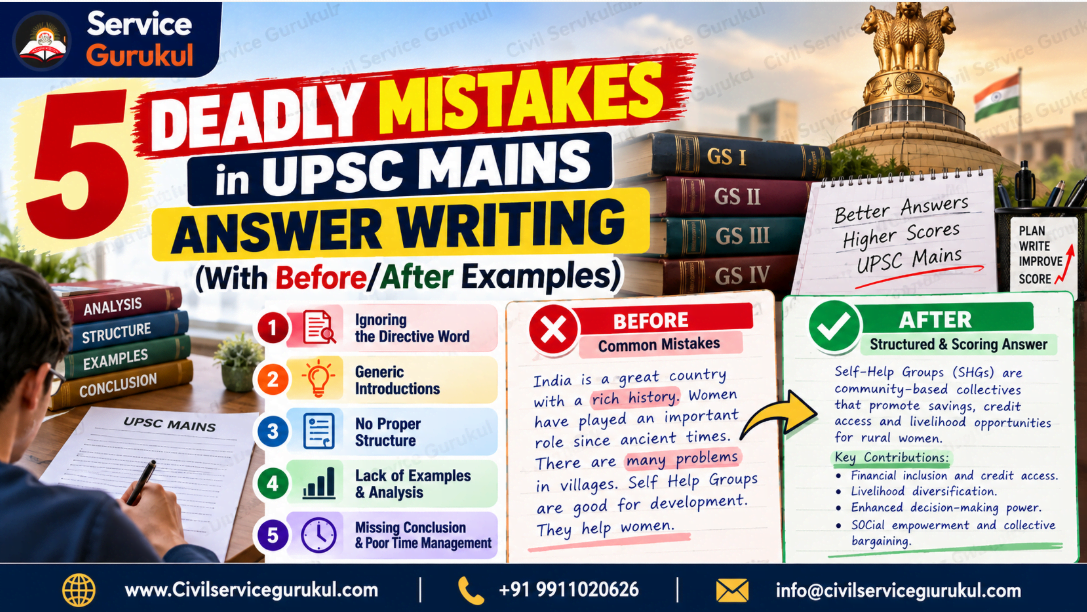
5 Deadly UPSC Mains Answer Writing Mistakes That Cost You Marks — With Before & After Examples
Why do well-prepared UPSC aspirants struggle to convert knowledge into Mains marks? Often, the problem is not a lack of information but poor answer presentation, misunderstanding the question, generic introductions, weak structure, and missing conclusions. In this practical Civil Service Gurukul guide, discover five costly UPSC Mains answer-writing mistakes through clearly marked BEFORE and AFTER examples, examiner-oriented explanations, model answer frameworks, and a self-evaluation checklist to improve relevance, clarity, analytical depth, and time management.
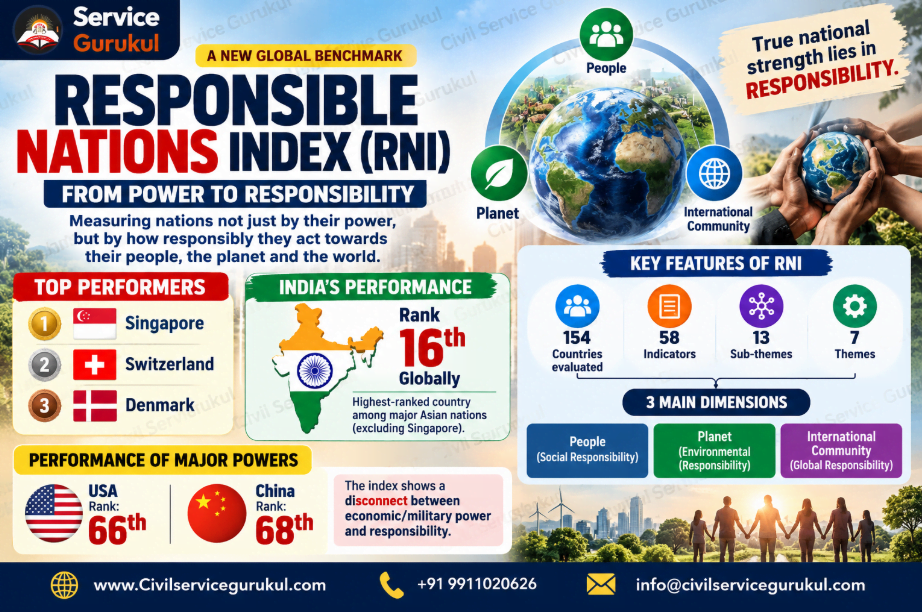
Responsible Nations Index 2026: India Ranks 16th — From Global Power to Global Responsibility
The Responsible Nations Index (RNI), launched in New Delhi by the World Intellectual Foundation, introduces a new approach to measuring national progress by shifting attention from economic and military power to responsibility towards people, the planet, and the international community. Developed with JNU and IIM Mumbai, the index evaluates 154 countries using 58 indicators. India ranks 16th, while Singapore tops the index. This UPSC article explores its methodology, global rankings, ethical governance, sustainable development, India's civilizational values, and relevant previous-year examination themes.
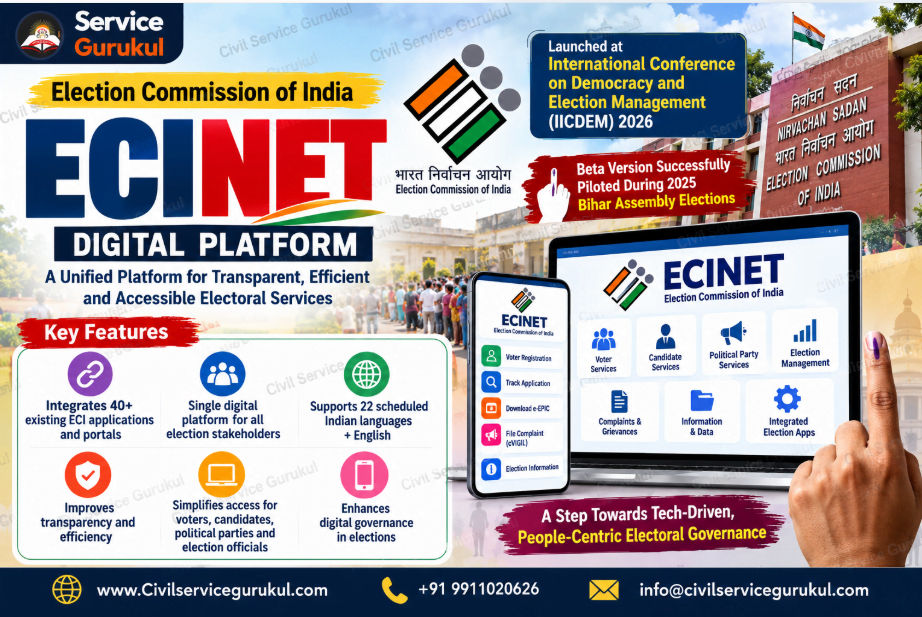
ECINET 2026: India's Unified Digital Election Platform and the Future of Electoral Governance
The Election Commission of India launched ECINET at IICDEM 2026 after piloting its beta version during the 2025 Bihar Assembly Elections. Designed as a unified digital platform for election-related services and information, ECINET aims to simplify access for voters, candidates, political parties, and election officials. This UPSC-focused article examines its features, constitutional relevance, potential benefits, challenges, electoral reforms, and previous-year questions with explanations.
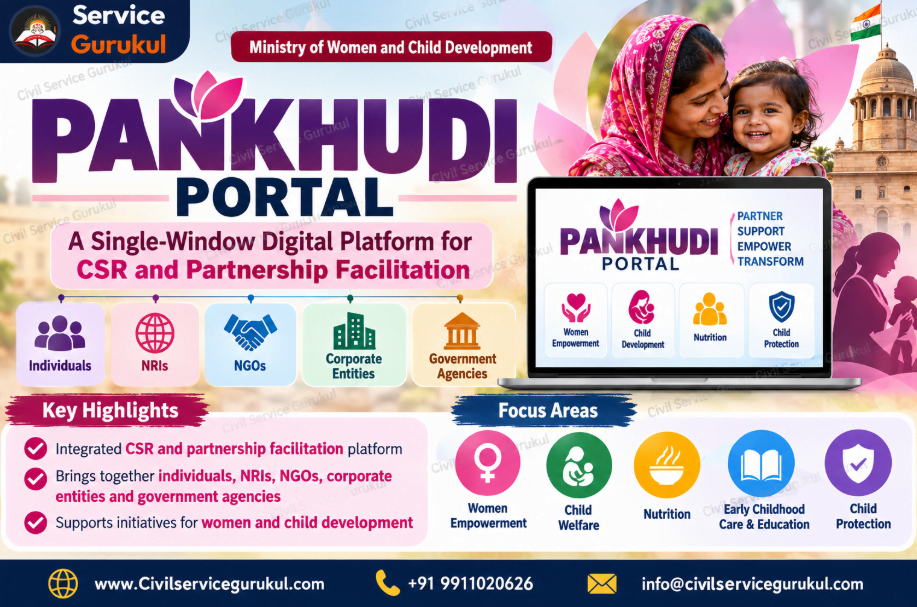
PANKHUDI Portal 2026: Transforming CSR Partnerships for Women and Child Development in India
The Ministry of Women and Child Development launched the PANKHUDI Portal on 8 January 2026 as a single-window digital platform to facilitate transparent CSR and voluntary partnerships. It connects individuals, NRIs, NGOs, corporate entities, and government agencies to support nutrition, early childhood education, child protection, and women's empowerment. This UPSC-focused article examines its objectives, features, links with Mission Shakti, Mission Vatsalya, and Poshan 2.0, constitutional relevance, governance challenges, and previous-year questions.

Land Stack & Glossary of Revenue Terms: India's Next Step in Digital Land Governance
Land Stack is an integrated GIS-based digital platform for land and property records, introduced alongside the Glossary of Revenue Terms under India's Digital India Land Records Modernization Programme (DILRMP). Drawing inspiration from international land administration practices, the initiative aims to support better integration, accessibility, and management of land information. This UPSC-focused article explains its objectives, potential benefits, implementation challenges, constitutional significance, and connections with governance, land reforms, and economic development.
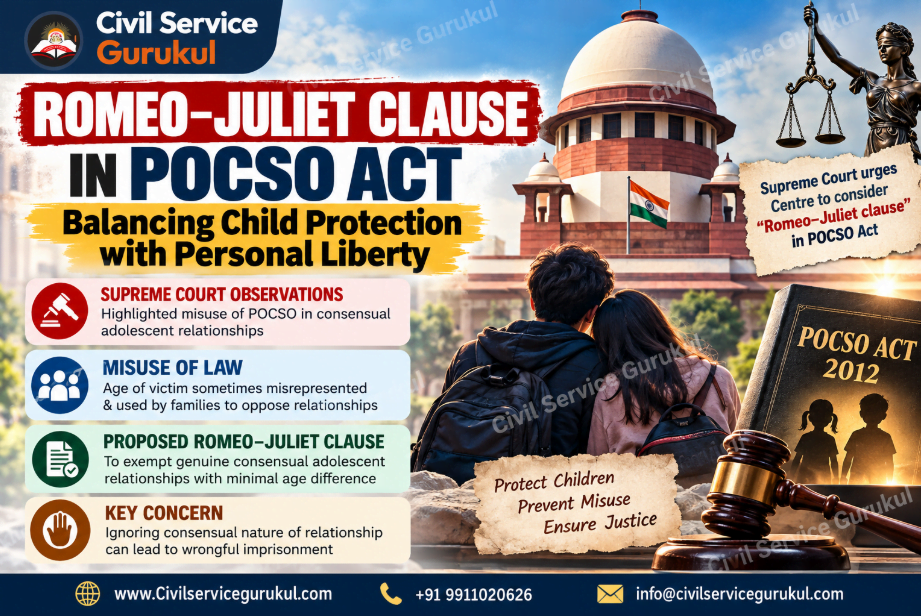
Romeo–Juliet Clause in POCSO Act: Supreme Court's Observations, Child Protection and Adolescent Rights
The Supreme Court has highlighted concerns about the application of the POCSO Act to consensual adolescent relationships and suggested consideration of a narrowly framed Romeo–Juliet clause. Such an exception could address cases involving adolescents close in age while maintaining strong safeguards against sexual exploitation, coercion, and abuse. This UPSC-focused article explains the POCSO Act, the proposed legal reform, constitutional dimensions, judicial concerns, implementation challenges, and its relevance to GS Paper II, social justice and child rights.
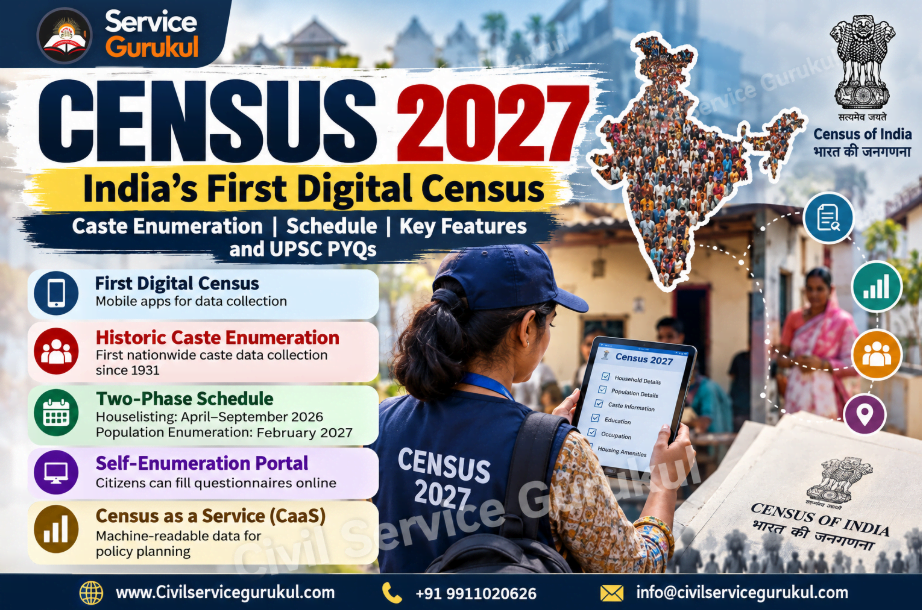
Census 2027: India's First Digital Census, Caste Enumeration & UPSC PYQs
Census 2027 marks a major transformation in India's population data collection system, introducing mobile-based enumeration, a self-enumeration portal, digital mapping and nationwide caste enumeration. The 16th Census will be conducted in two phases, with houselisting during 2026 and population enumeration in 2027, subject to special arrangements for snow-bound regions. This UPSC-focused guide explains its schedule, digital tools, constitutional and socio-economic significance, challenges, evidence-based policymaking and relevant previous year questions with answers and explanations.
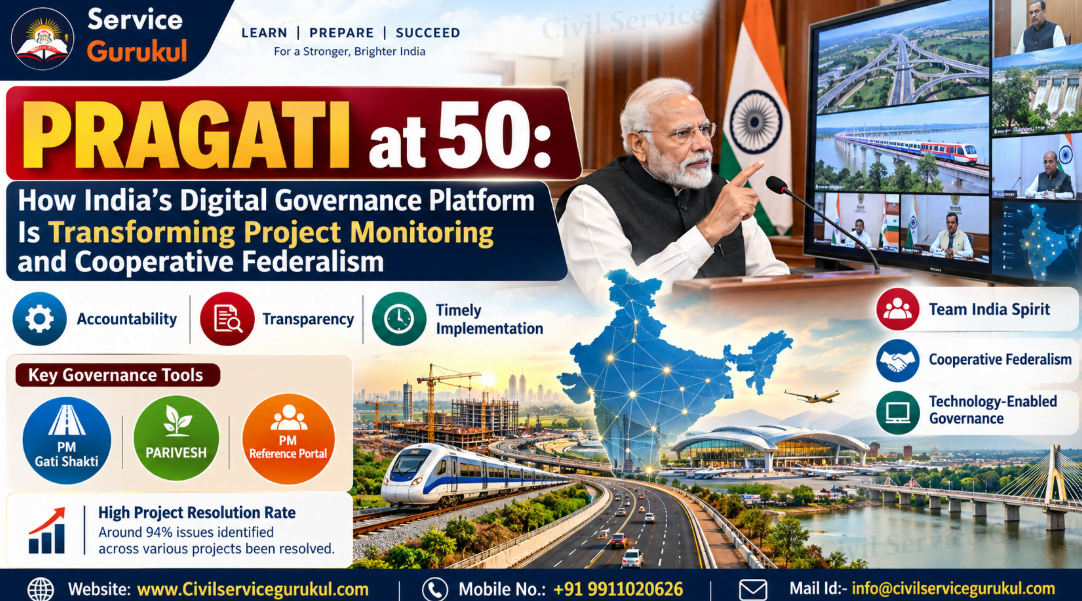
50th PRAGATI Meeting: Digital Governance & Federalism for UPSC
The 50th PRAGATI Meeting marks a significant milestone in India's technology-enabled governance and infrastructure monitoring. Launched in 2015, PRAGATI (Pro-Active Governance and Timely Implementation) promotes administrative accountability, transparency, cooperative federalism and timely project implementation. This comprehensive UPSC-focused article examines its key features, reported achievements, major infrastructure projects, constitutional significance, governance challenges and previous year questions from UPSC Prelims and Mains. Essential reading for GS Paper II, governance and current affairs preparation.