
Daily News Analysis
Our daily news analysis consists of two integral parts — Daily News Analysis and Important Editorials curated rigorously from The Hindu, The Indian Express, LiveMint, PIB, and Sansad TV debates. Content is mapped directly to UPSC CSE and State PCS syllabi.
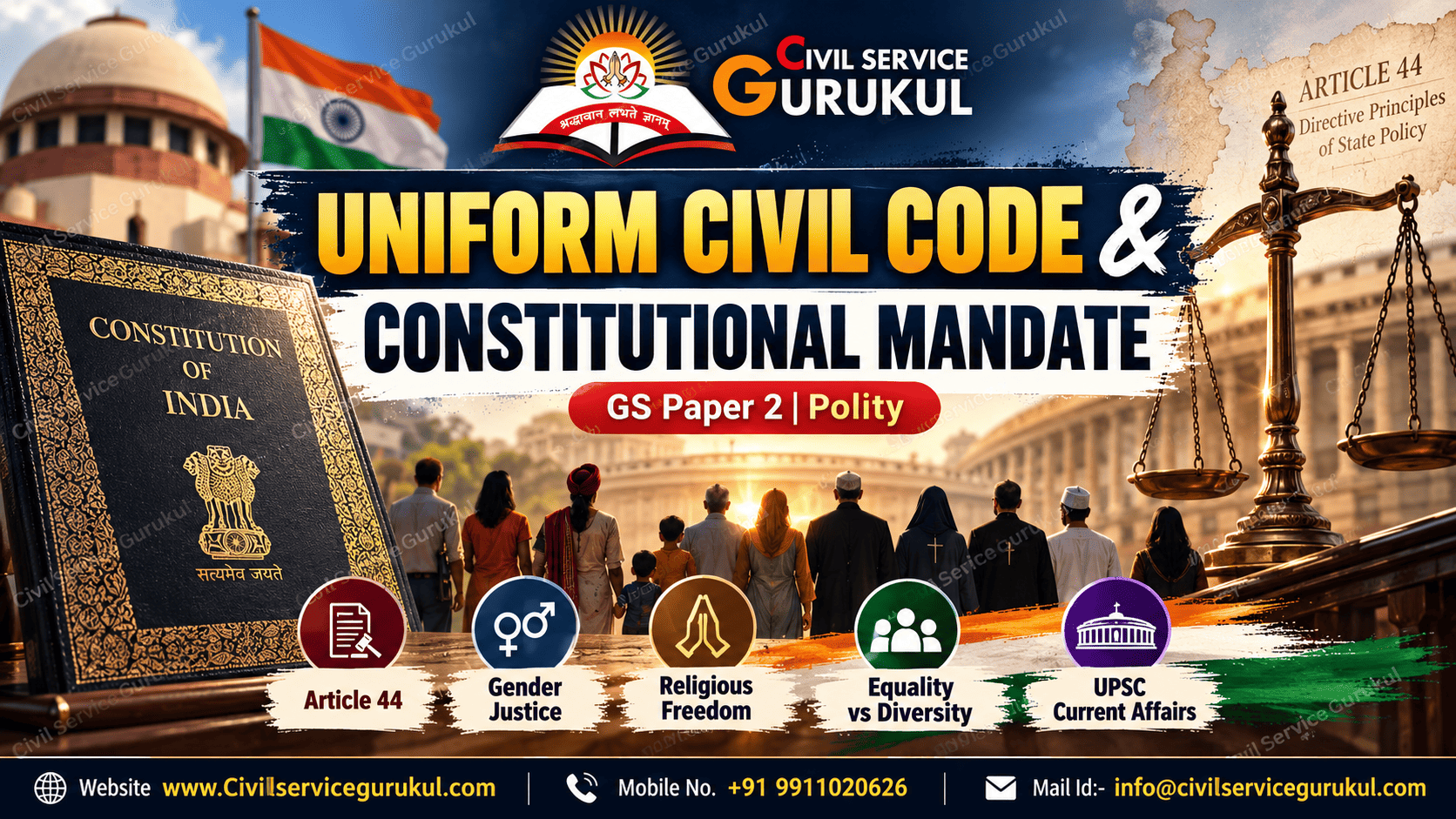
Uniform Civil Code in India: Article 44, Gender Justice & UPSC Analysis
The Uniform Civil Code seeks to create a common framework for personal laws relating to marriage, divorce, inheritance, adoption and maintenance. For UPSC GS Paper 2, the issue is important because Article 44’s constitutional mandate must be balanced with equality, gender justice, religious freedom and India’s cultural diversity. The debate ultimately centres on whether legal uniformity or rights-based reform within personal laws can better achieve constitutional justice.
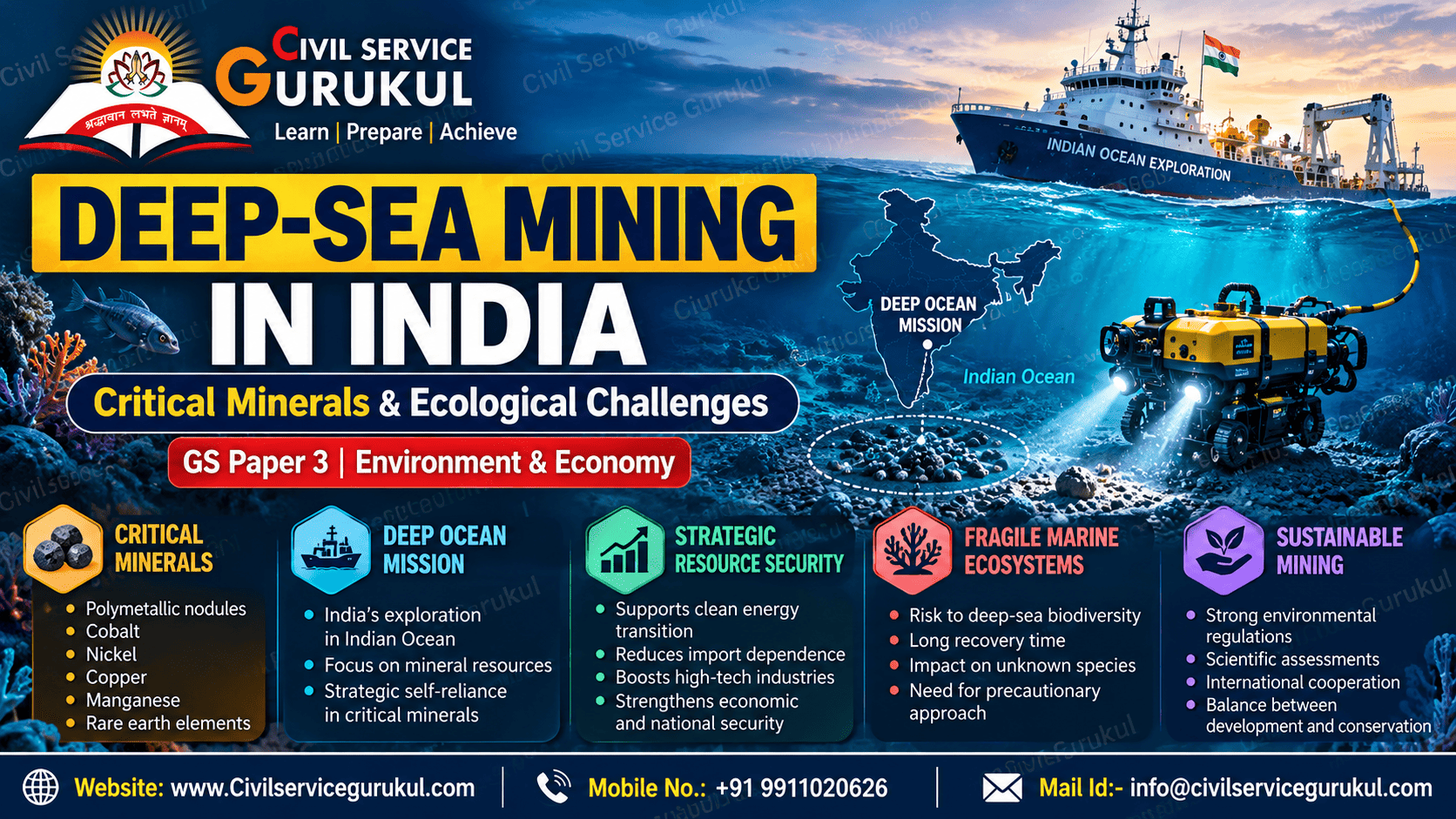
Deep-Sea Mining in India: Critical Minerals, Deep Ocean Mission & UPSC Analysis
Deep Sea Mining India, Deep Ocean Mission, MATSYA 6000, Samudrayaan, Polymetallic Nodules, Critical Minerals India, International Seabed Authority, UNCLOS, Central Indian Ocean Basin, Blue Economy, Marine Biodiversity, Deep Sea Ecology, NIOT, Critical Minerals UPSC, UPSC Environment, GS Paper 3, Precautionary Principle, Ocean Governance, UPSC Current Affairs 2026, Civil Service Gurukul.
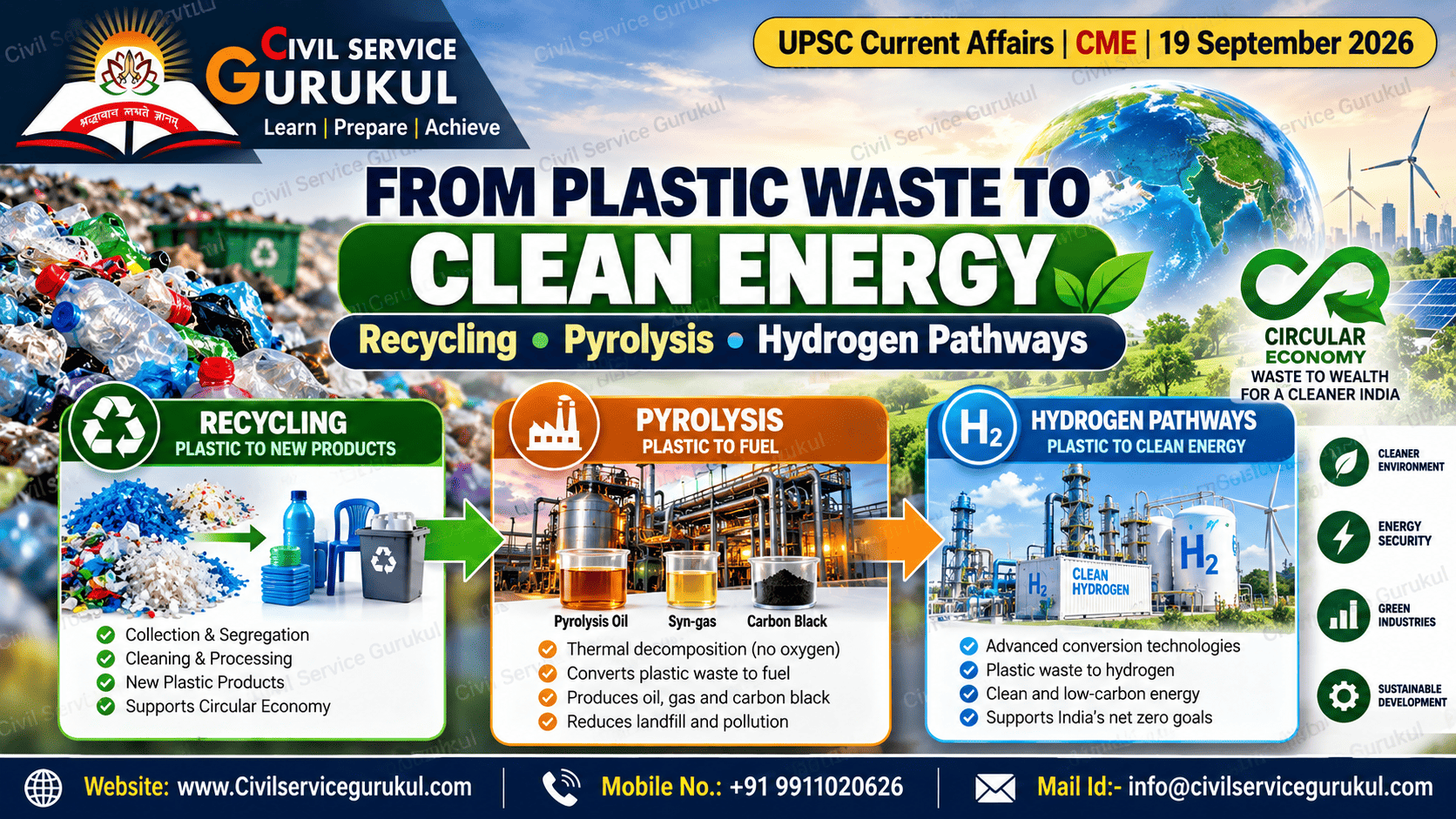
Plastic Waste to Clean Energy: Recycling, Pyrolysis & Hydrogen for UPSC
Plastic waste can be transformed into useful materials, fuels and potentially hydrogen through technologies such as mechanical recycling, pyrolysis and advanced thermochemical processing. For India, these pathways can support waste-to-wealth, circular economy and clean-energy goals, but they must complement—not replace—plastic reduction, reuse and high-quality recycling. For UPSC, the topic links plastic pollution, waste management, hydrogen, EPR, sustainable development and environmental governance.
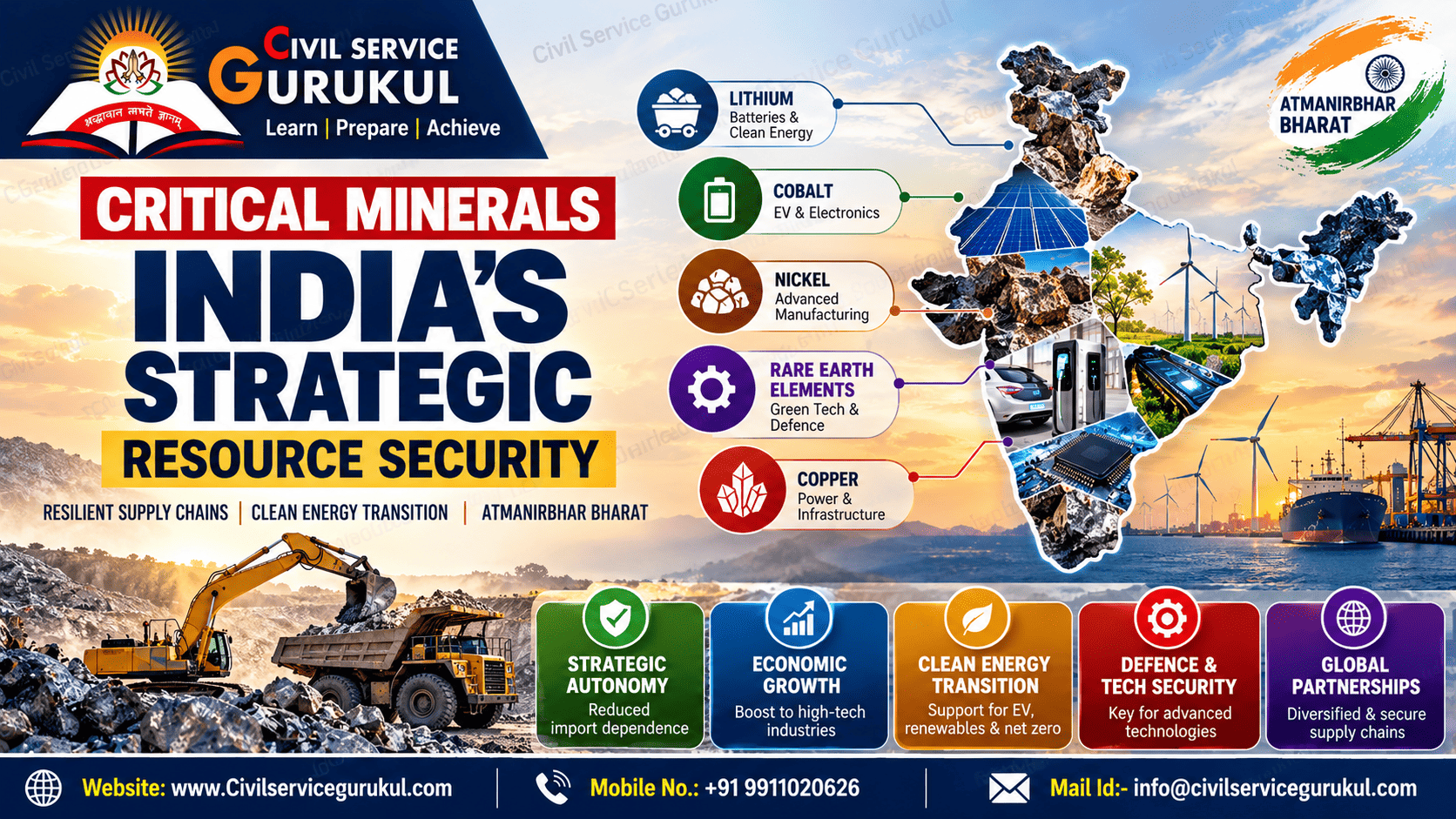
India Tops Global Business Climate Survey 2026: UPSC Key Facts & Analysis
India ranked first among 41 global markets in the Global Business Climate Survey 2026, with 73% of surveyed Swedish companies rating the country’s business environment as good or very good. The survey highlights strong investor confidence, revenue-growth expectations and India’s growing appeal as a destination for foreign investment, manufacturing and global value-chain integration.
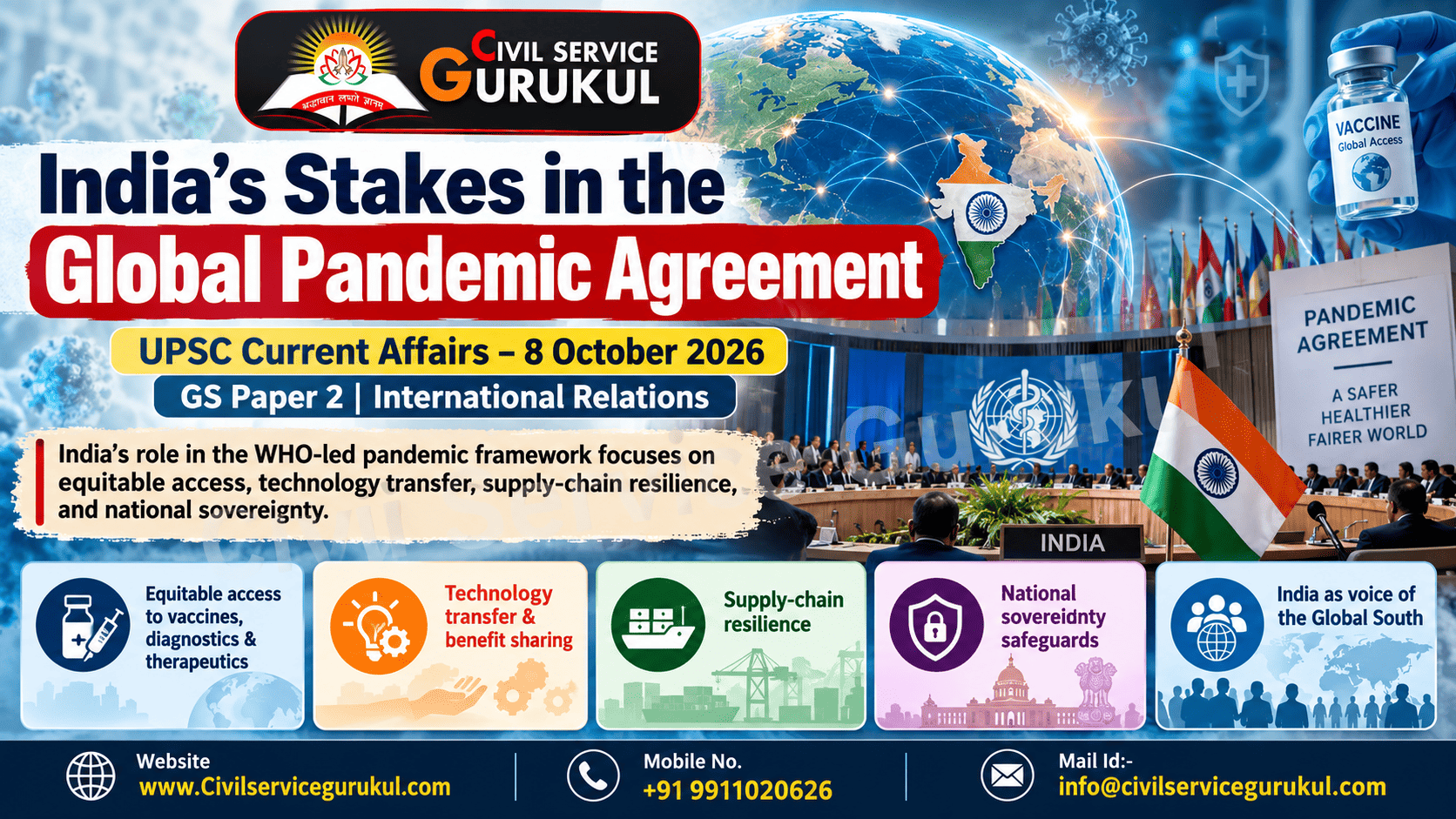
India and the WHO Pandemic Agreement: Equity, Sovereignty and Global Health Diplomacy
The WHO Pandemic Agreement seeks to strengthen global pandemic prevention, preparedness and response while ensuring fair access to vaccines, diagnostics and therapeutics. For India, the key stakes include equitable pathogen benefit-sharing, technology transfer, resilient pharmaceutical supply chains, protection of national sovereignty and leadership of the Global South in shaping a fairer global health architecture.
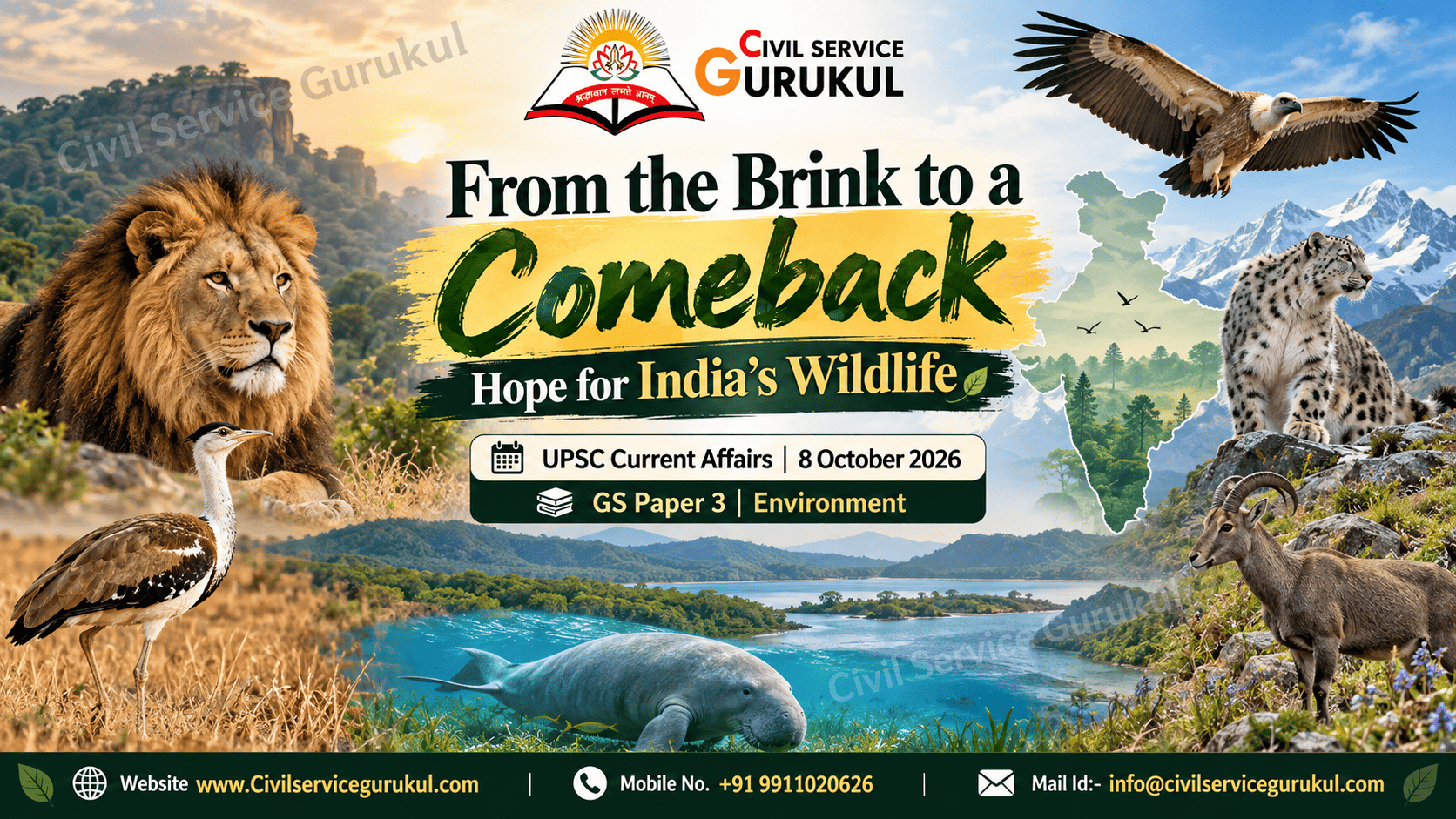
India's Wildlife Conservation Success Story 2026: Endangered Species Recovery, Biodiversity Challenges & UPSC GS-3 Analysis
Explore India's wildlife conservation success story in 2026, highlighting the recovery of endangered species such as Asiatic lions, vultures, Nilgiri tahrs, dugongs and the Great Indian Bustard. Understand biodiversity protection, habitat fragmentation, conservation challenges, government initiatives and sustainable wildlife management. A comprehensive, exam-focused analysis for UPSC Prelims and Mains GS Paper III (Environment & Ecology), presented by Civil Service Gurukul.
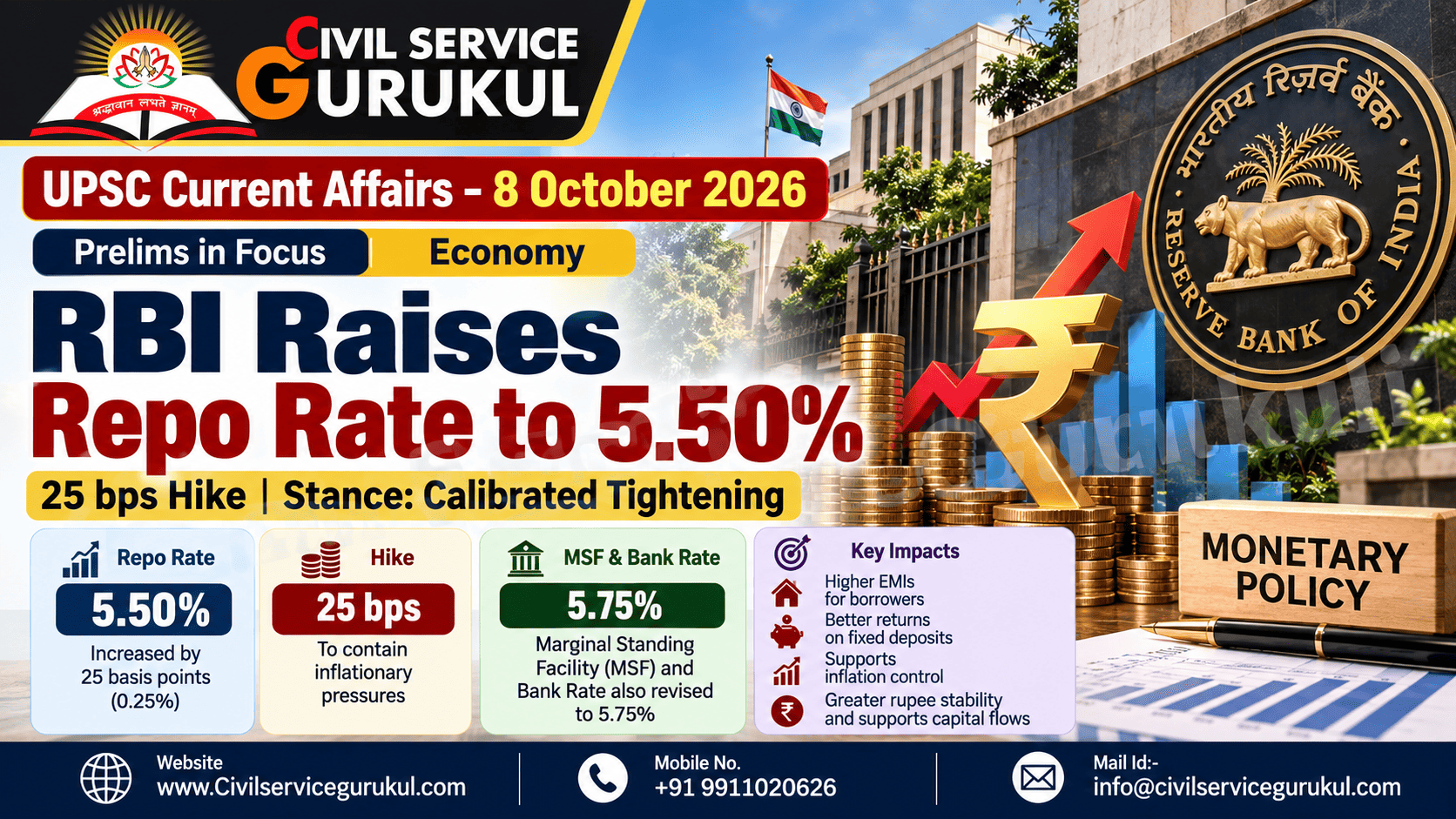
RBI Raises Repo Rate to 5.50%: What It Means for Inflation, Loans and India’s Economy
The RBI has raised the repo rate by 25 basis points to 5.50% and shifted its policy stance from neutral to calibrated tightening amid rising inflation risks. The decision can increase borrowing costs, influence EMIs and investment, moderate aggregate demand and support price and currency stability, making it an important topic for UPSC Indian Economy preparation. The Economic Times

Ghana's BRICS Membership Bid 2026: Strategic Importance, India–Africa Relations & World Geography for UPSC
India's wildlife conservation efforts are showing encouraging signs of recovery, with notable developments involving Asiatic lions, vultures, Nilgiri tahrs and dugongs. A rare natural hatching of a Great Indian Bustard chick in Gujarat has renewed attention to endangered species protection. Explore India's conservation achievements, ecological challenges, legal frameworks, community participation and sustainable solutions through a comprehensive UPSC Prelims and Mains GS Paper III analysis.
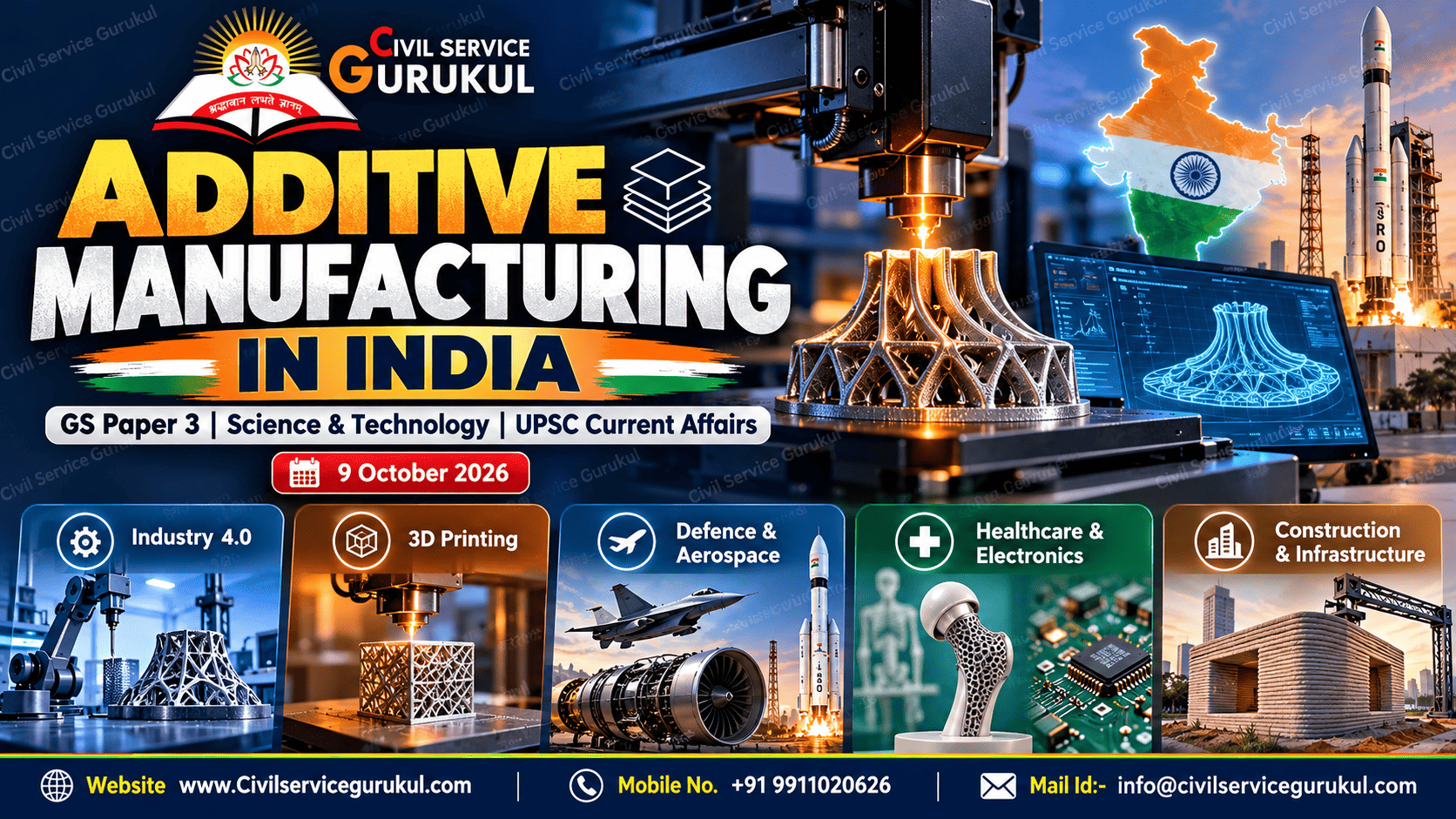
Additive Manufacturing in India: NSAM 2.0, 3D Printing and the Future of Advanced Manufacturing
India is scaling up its additive manufacturing ecosystem through NSAM 2.0, with a focus on indigenous technologies, domestic intellectual property, shared facilities for MSMEs and strategic applications in aerospace, defence, healthcare and electronics. The next challenge is to reduce dependence on imported materials, high-cost machines and foreign software while building globally competitive standards and commercial manufacturing capacity.
Beyond Stubble Burning: Why North India's Farm Fire Crisis Persists and How India Can Solve It
Stubble burning remains a major environmental and agricultural challenge in Punjab, Haryana and North India. Despite government regulations, machinery subsidies and satellite monitoring, seasonal farm fires continue due to compressed harvesting windows, high crop-residue management costs, groundwater conservation policies and paddy procurement incentives. This UPSC GS Paper 3 analysis explores the root causes, environmental and health impacts, government initiatives and sustainable solutions involving crop diversification, bioenergy, technology and farmer-centred reforms.
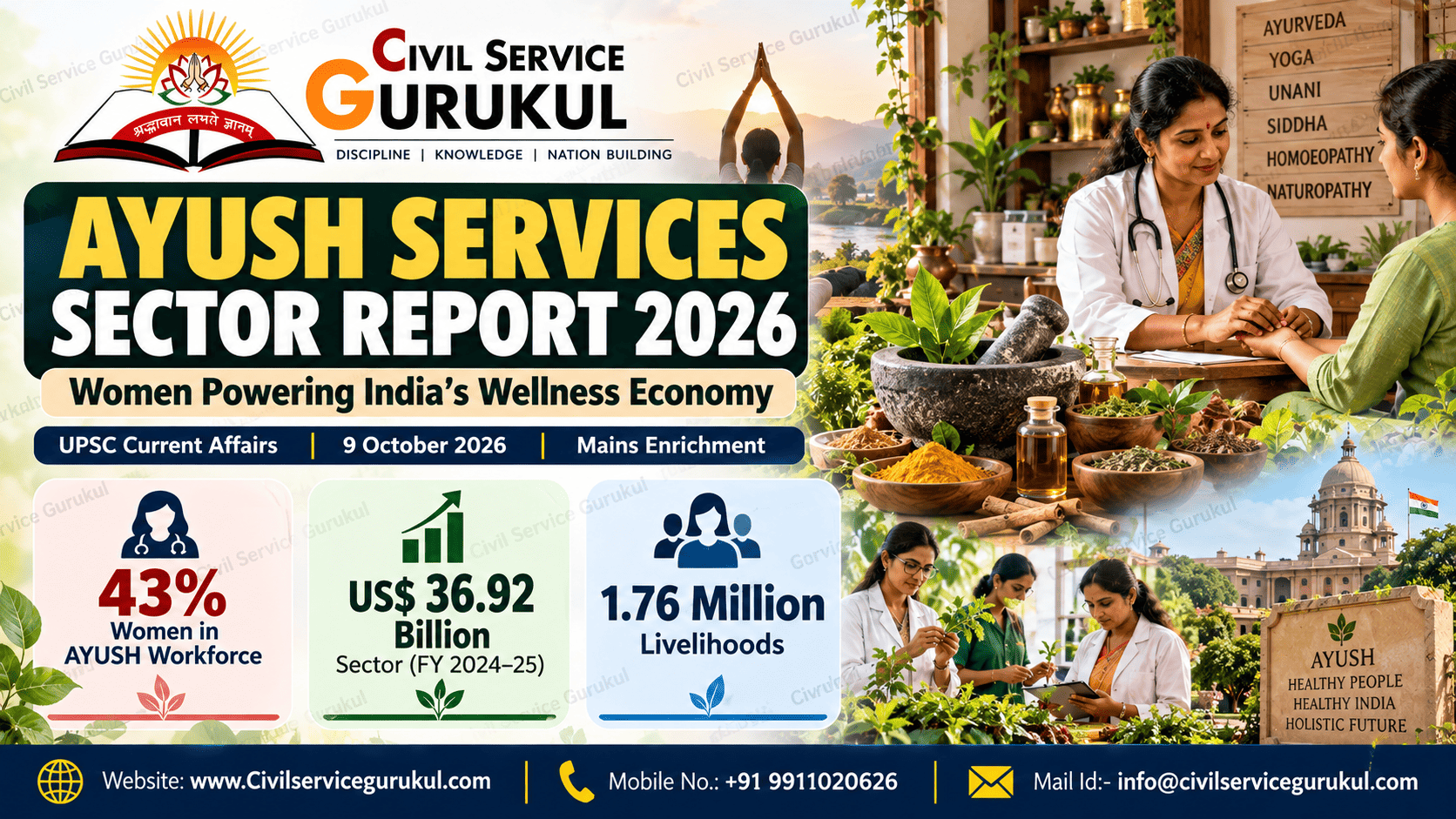
Ayush Services Sector Report 2026: Women, Wellness and India’s Traditional Healthcare Economy
The Ayush Services Sector Report 2026 highlights the growing economic and social importance of India’s traditional healthcare ecosystem. Women account for 43% of the overall workforce, the sector supports around 1.76 million livelihoods, and its economic size reached about US$36.92 billion in FY2024-25. Strong growth in Ayurveda, wellness and medical tourism makes the sector important for women’s empowerment, employment, entrepreneurship and India’s healthcare economy.
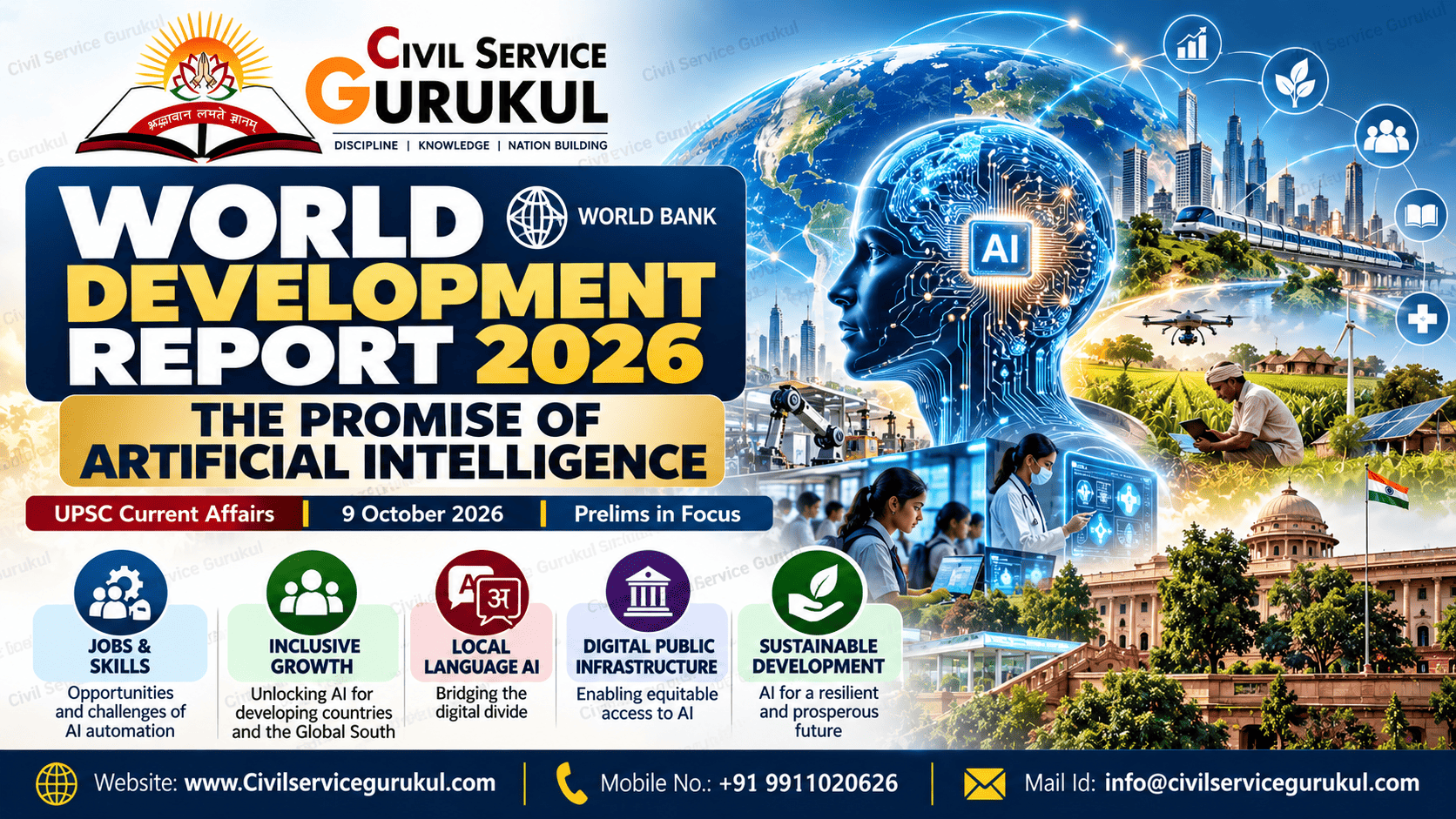
World Development Report 2026: Can Artificial Intelligence Bridge the Global Development Divide?
The World Bank's World Development Report 2026, titled "The Promise of Artificial Intelligence," examines how AI can transform economic growth, employment, education, healthcare and public service delivery in developing economies. The report highlights opportunities for India through affordable AI adoption, multilingual innovation and Digital Public Infrastructure, while warning about job displacement, AI talent migration, infrastructure dependence and widening digital inequality. This Civil Service Gurukul analysis covers the report's major findings, India's AI strategy, challenges, policy recommendations and important facts for UPSC Prelims and GS Mains.
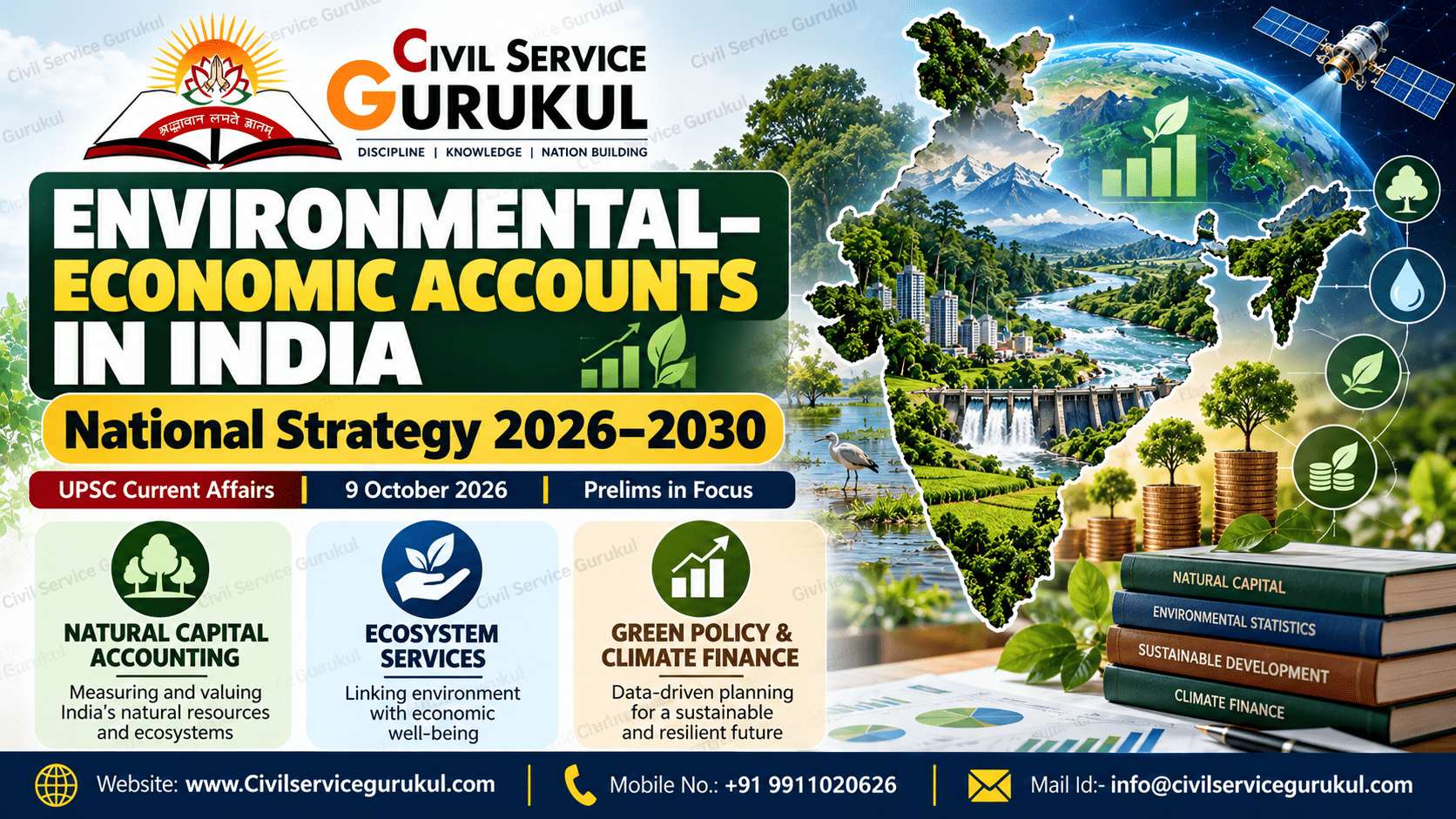
Environmental-Economic Accounting in India: Why the 2026–2030 Strategy Matters for Green Growth
India’s Strategy for Environmental-Economic Accounts 2026–2030 seeks to integrate natural capital, ecosystem services and environmental degradation into national economic statistics. The roadmap expands accounting for water, land, minerals, soil, carbon stocks, pollination, forests and biodiversity, helping policymakers assess whether economic growth is environmentally sustainable and strengthening evidence-based green policymaking and climate finance.

How to Decode UPSC Mains Trends Using PYQs (2015-2025): A Strategic Guide for 2026 Aspirants
Master the UPSC Mains 2026 exam by decoding a decade of PYQs. Learn our step-by-step strategy for GS 1 to GS 4, identify repeating themes, and boost your score.
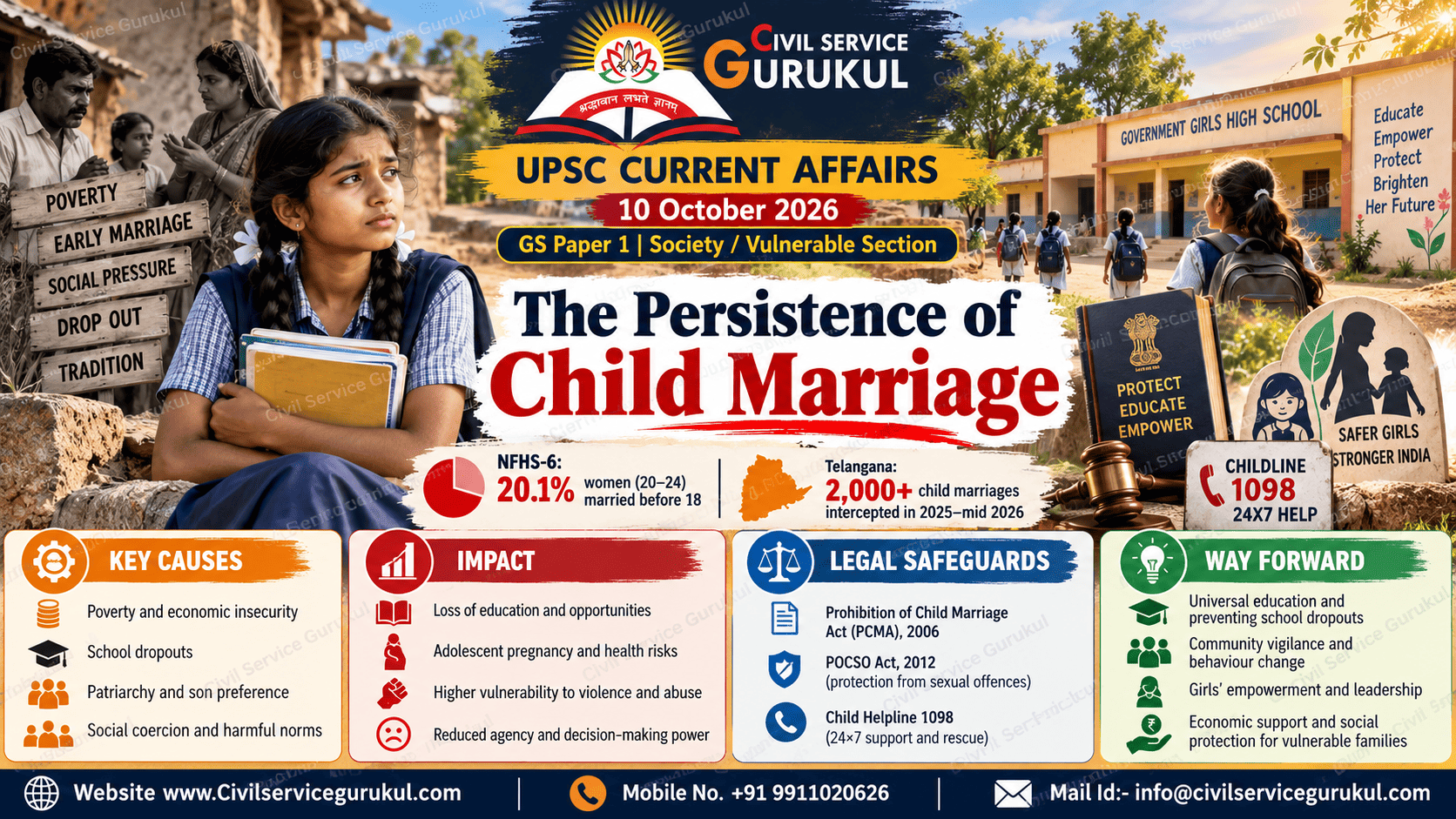
Why Child Marriage Persists in India: Poverty, Patriarchy and the Missing Social Protection
Child marriage has declined in India but continues because of poverty, school dropout, parental distress, patriarchy, family honour and social coercion. Recent interventions show that stopping a wedding alone is not enough; sustainable prevention requires girls’ education, stronger social protection, community-level behaviour change and effective legal enforcement.
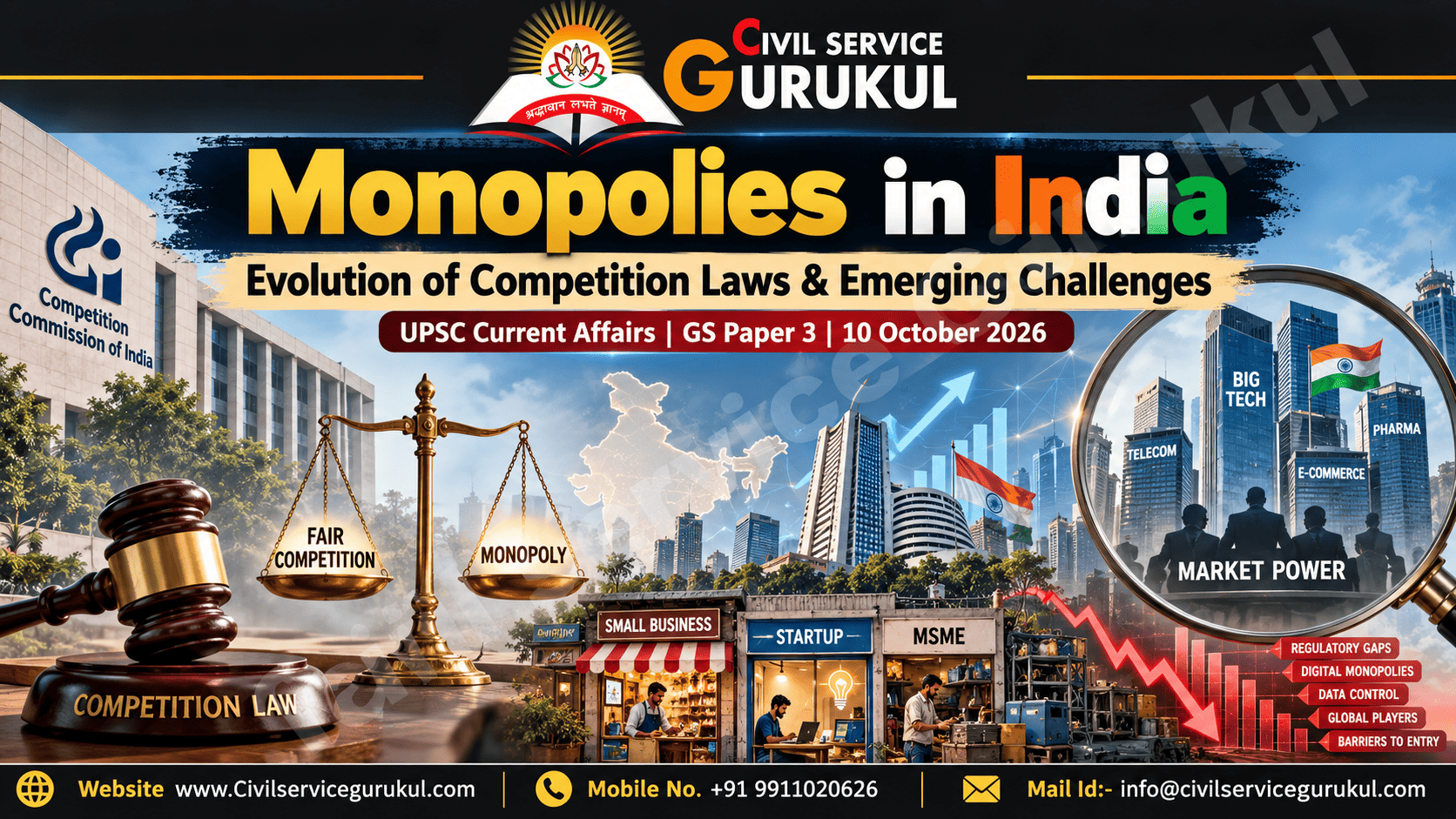
Monopoly vs Competition in India: From Licence Raj to Big Tech Regulation | UPSC GS Paper III Analysis
Explore the evolution of monopolies and competition laws in India, from the Licence Raj and MRTP Act, 1969 to the Competition Act, 2002 and Big Tech regulation. This UPSC GS Paper III analysis examines the role of the Competition Commission of India (CCI), digital market dominance, satellite communication, constitutional provisions, economic reforms and challenges to fair competition. Includes exam-ready notes, key facts, Prelims MCQs and Mains answer-writing practice for UPSC Civil Services Examination 2027.
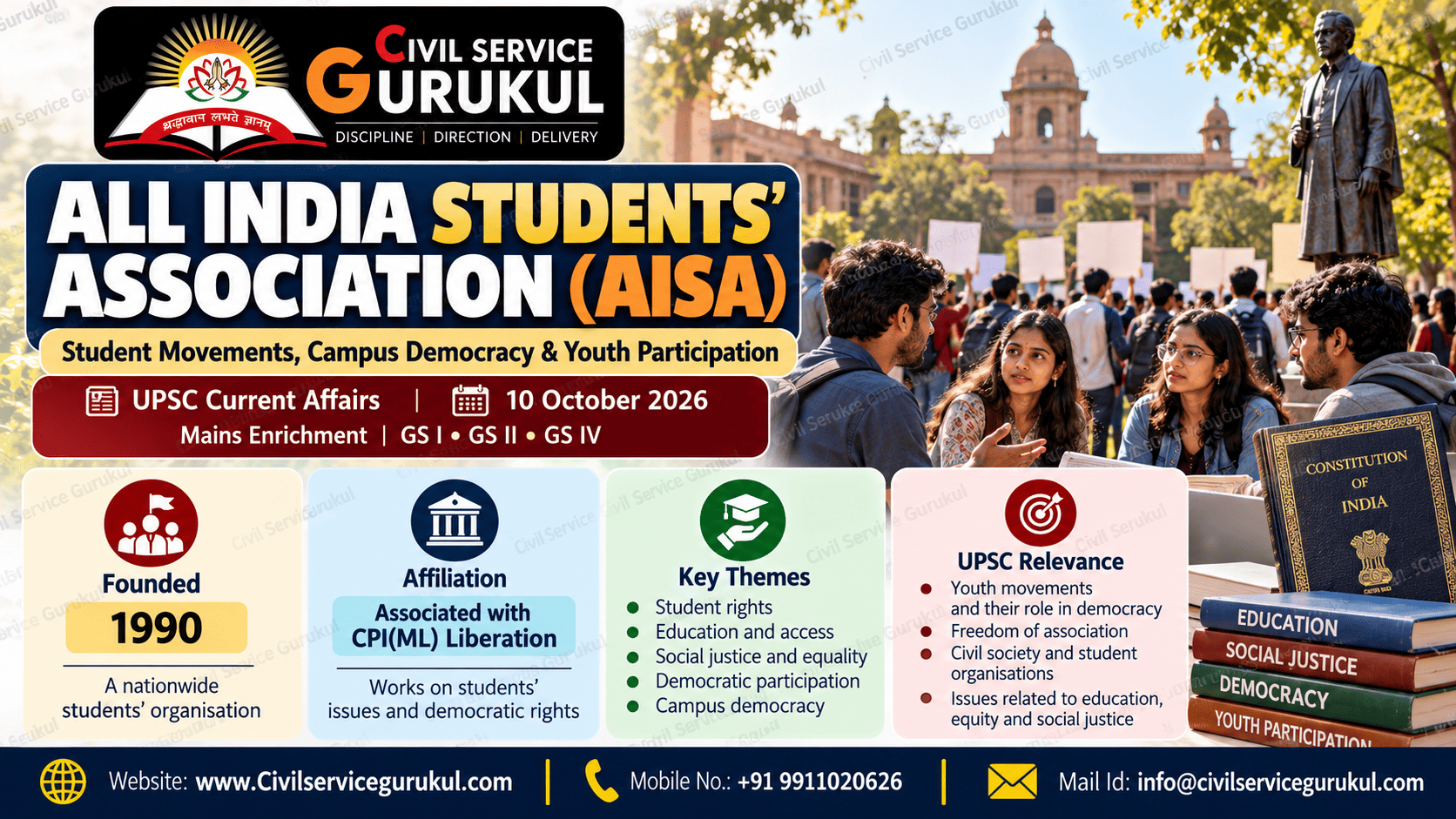
All India Students’ Association (AISA): Origins, Role in Student Politics and UPSC Relevance
The All India Students’ Association (AISA), established in 1990 and associated with CPI(ML) Liberation, is a Left-oriented student organisation active in campus politics, student-rights campaigns, social-justice issues and democratic mobilisation. For UPSC, AISA provides a useful case study to understand youth participation, student movements, civil society, political socialisation and constitutional freedoms.
Project Seabird: India's Strategic Naval Powerhouse at Karwar | UPSC 2026
Project Seabird is one of India's most significant naval infrastructure initiatives, developing INS Kadamba at Karwar, Karnataka, into a major strategic naval base. This UPSC-focused article explains the project's historical background, Phase IIA expansion, strategic location, defence preparedness, maritime security, indigenous infrastructure, and importance for India's naval presence in the Indian Ocean Region.
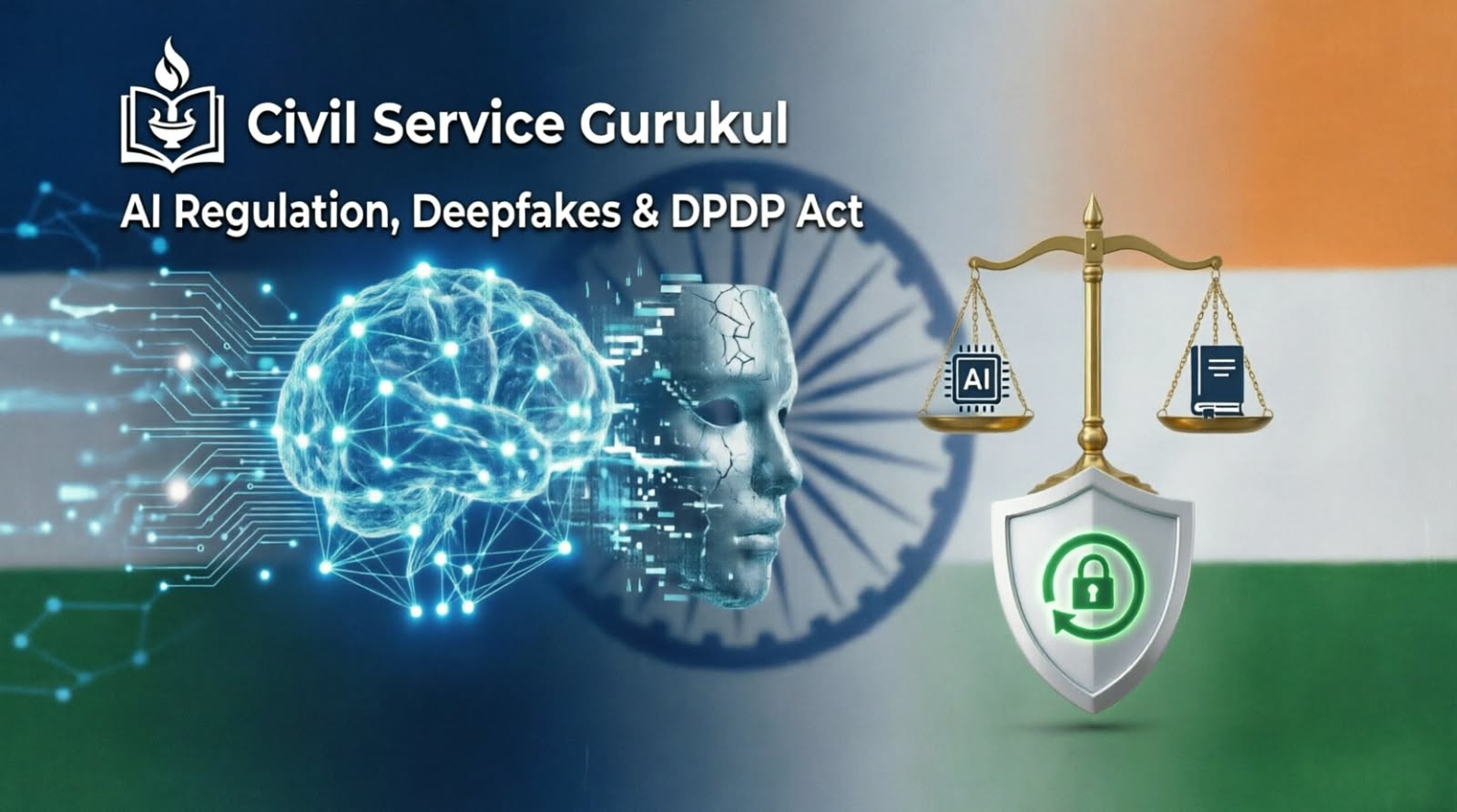
AI Regulation, Deepfakes & the DPDP Act: A UPSC GS-3 & GS-4 Current Affairs Guide
Master the UPSC current affairs topic of AI Regulation and Deepfakes. Learn how to link the DPDP Act, IT Rules, and GS-4 Ethics for Mains 2026.
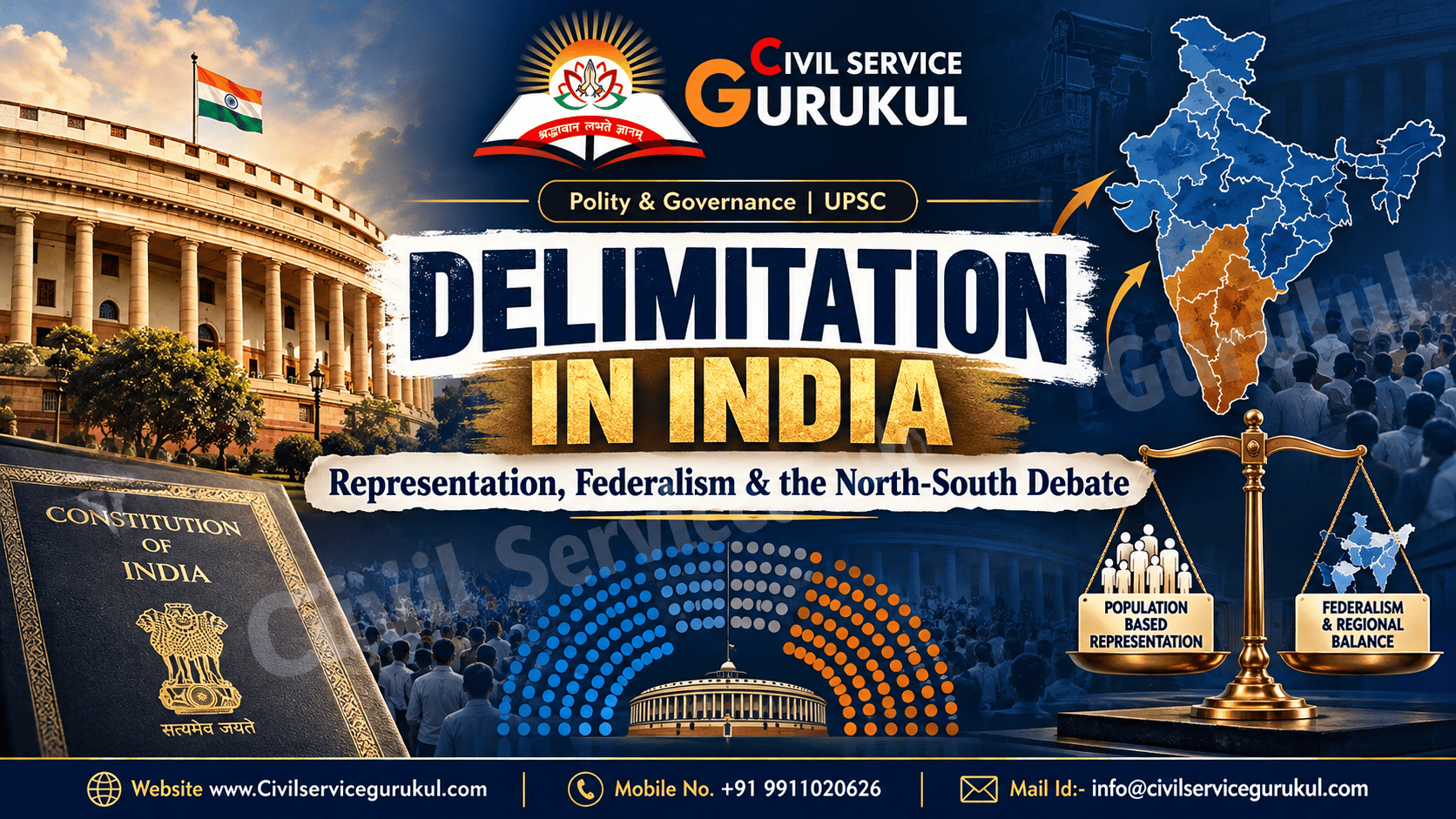
India’s Delimitation Debate: Balancing Democracy, Population and Federalism After 2026
India’s delimitation debate raises critical questions about equal political representation, population control, and cooperative federalism. Explore the constitutional provisions, Delimitation Commission, Supreme Court judgments, North–South concerns, international practices, and possible reforms after 2026. Comprehensive UPSC Prelims and GS Paper II notes by Civil Service Gurukul.