
Daily Current Affairs & News Analysis
Our daily news analysis consists of two integral parts — Daily News Analysis and Important Editorials curated rigorously from The Hindu, The Indian Express, LiveMint, PIB, and Sansad TV debates. Content is mapped directly to UPSC CSE and State PCS syllabi.
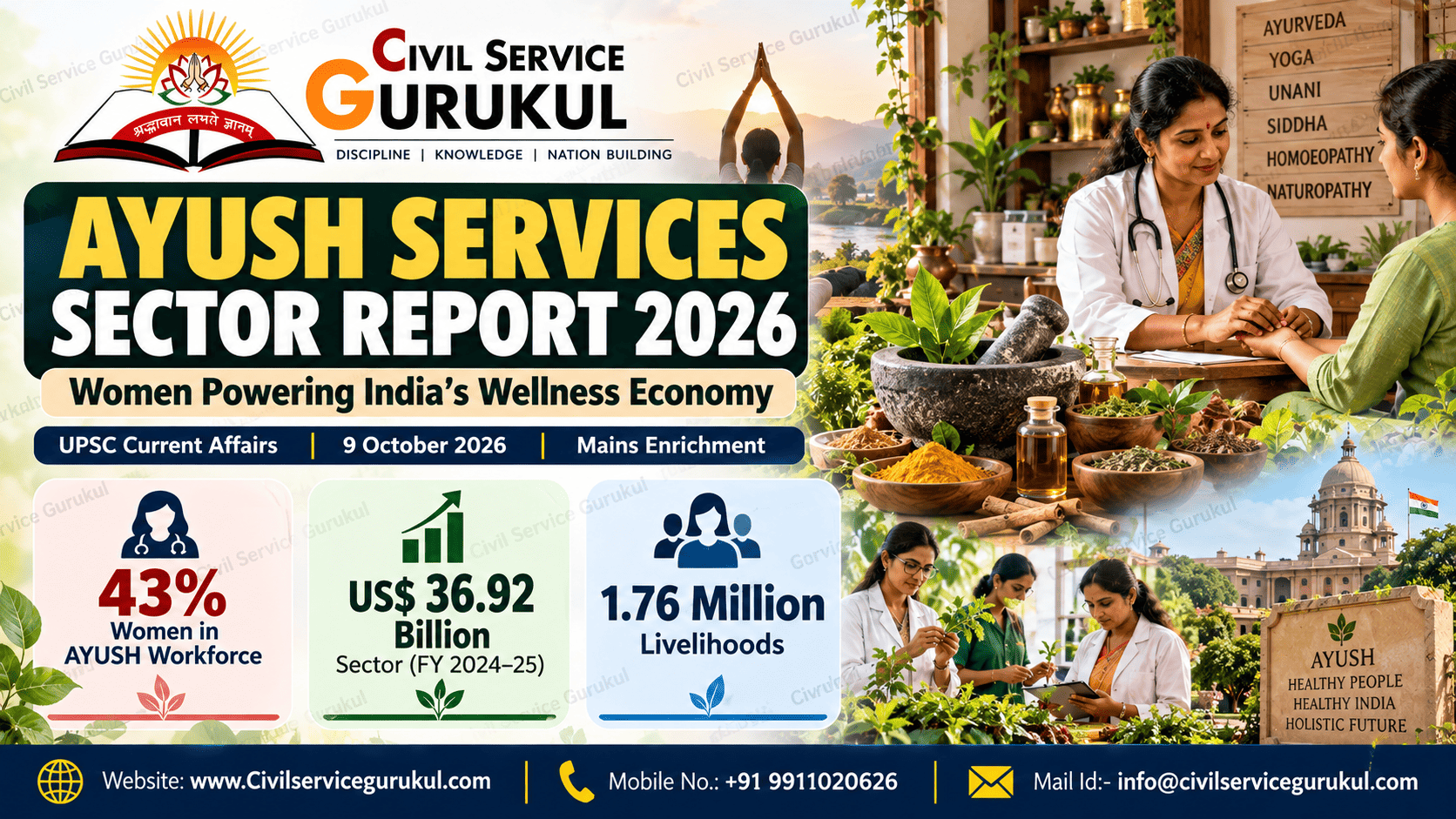
Ayush Services Sector Report 2026: Women, Wellness and India’s Traditional Healthcare Economy
The Ayush Services Sector Report 2026 highlights the growing economic and social importance of India’s traditional healthcare ecosystem. Women account for 43% of the overall workforce, the sector supports around 1.76 million livelihoods, and its economic size reached about US$36.92 billion in FY2024-25. Strong growth in Ayurveda, wellness and medical tourism makes the sector important for women’s empowerment, employment, entrepreneurship and India’s healthcare economy.
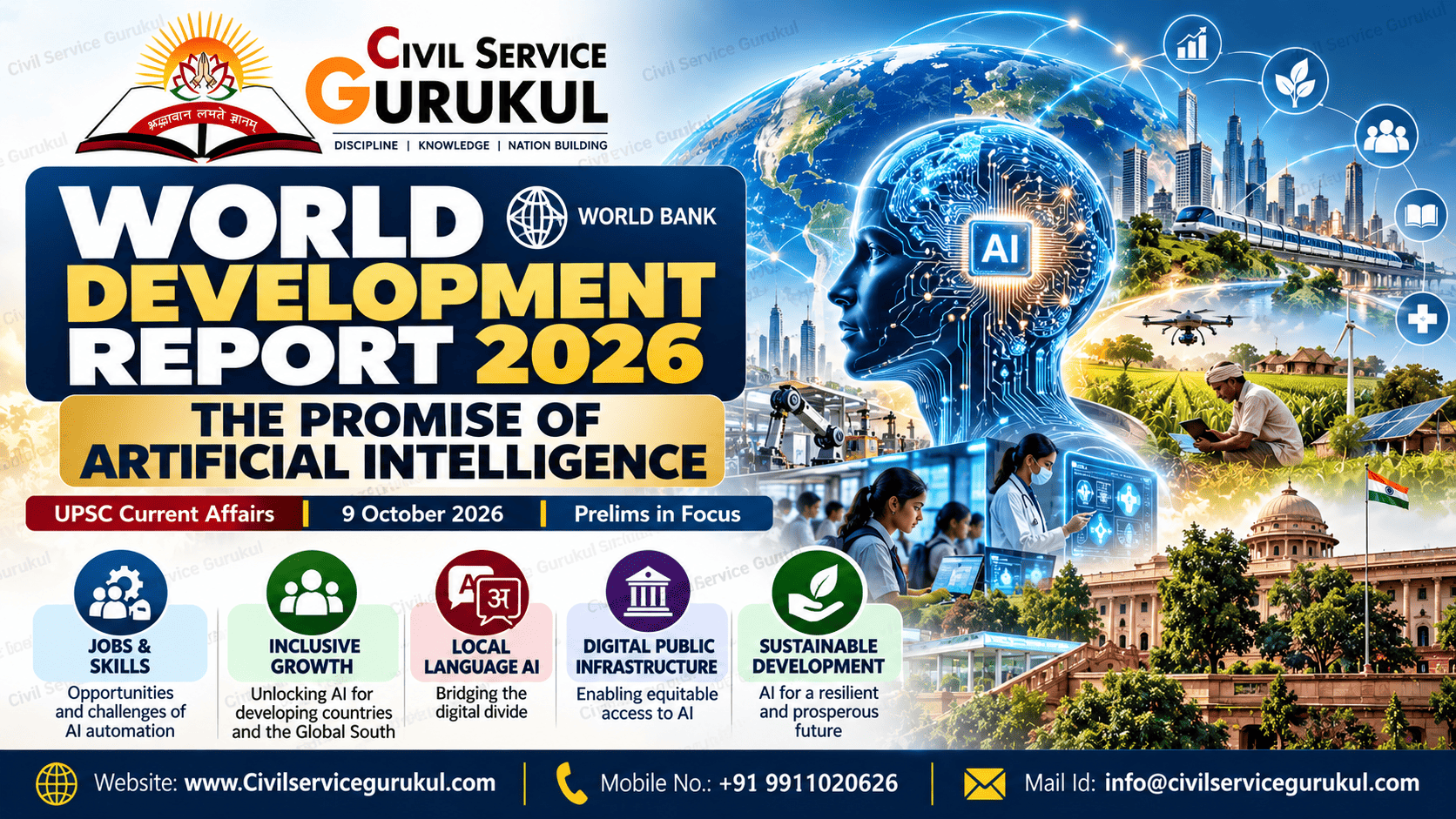
World Development Report 2026: Can Artificial Intelligence Bridge the Global Development Divide?
The World Bank's World Development Report 2026, titled "The Promise of Artificial Intelligence," examines how AI can transform economic growth, employment, education, healthcare and public service delivery in developing economies. The report highlights opportunities for India through affordable AI adoption, multilingual innovation and Digital Public Infrastructure, while warning about job displacement, AI talent migration, infrastructure dependence and widening digital inequality. This Civil Service Gurukul analysis covers the report's major findings, India's AI strategy, challenges, policy recommendations and important facts for UPSC Prelims and GS Mains.
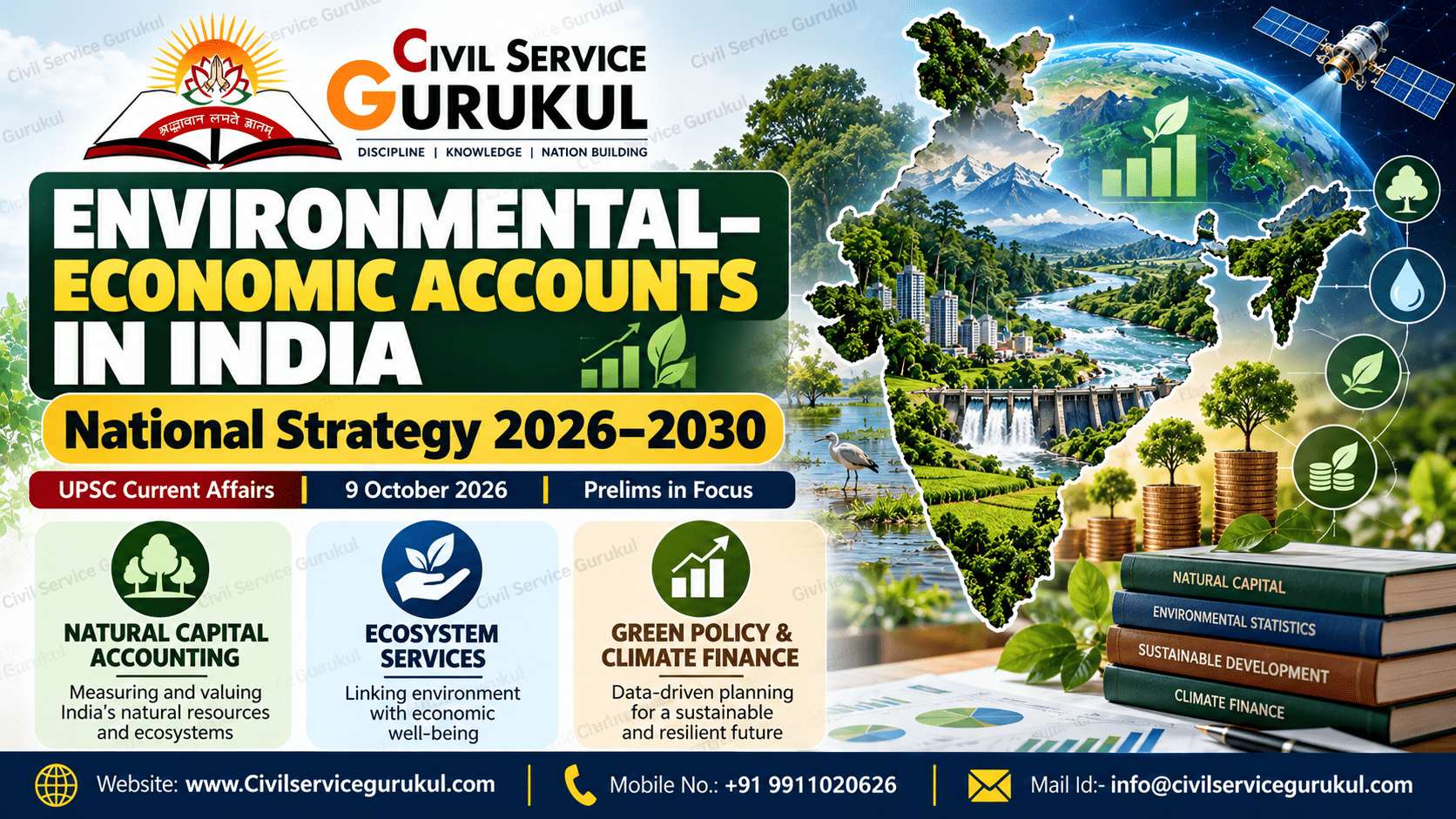
Environmental-Economic Accounting in India: Why the 2026–2030 Strategy Matters for Green Growth
India’s Strategy for Environmental-Economic Accounts 2026–2030 seeks to integrate natural capital, ecosystem services and environmental degradation into national economic statistics. The roadmap expands accounting for water, land, minerals, soil, carbon stocks, pollination, forests and biodiversity, helping policymakers assess whether economic growth is environmentally sustainable and strengthening evidence-based green policymaking and climate finance.

How to Decode UPSC Mains Trends Using PYQs (2015-2025): A Strategic Guide for 2026 Aspirants
Master the UPSC Mains 2026 exam by decoding a decade of PYQs. Learn our step-by-step strategy for GS 1 to GS 4, identify repeating themes, and boost your score.
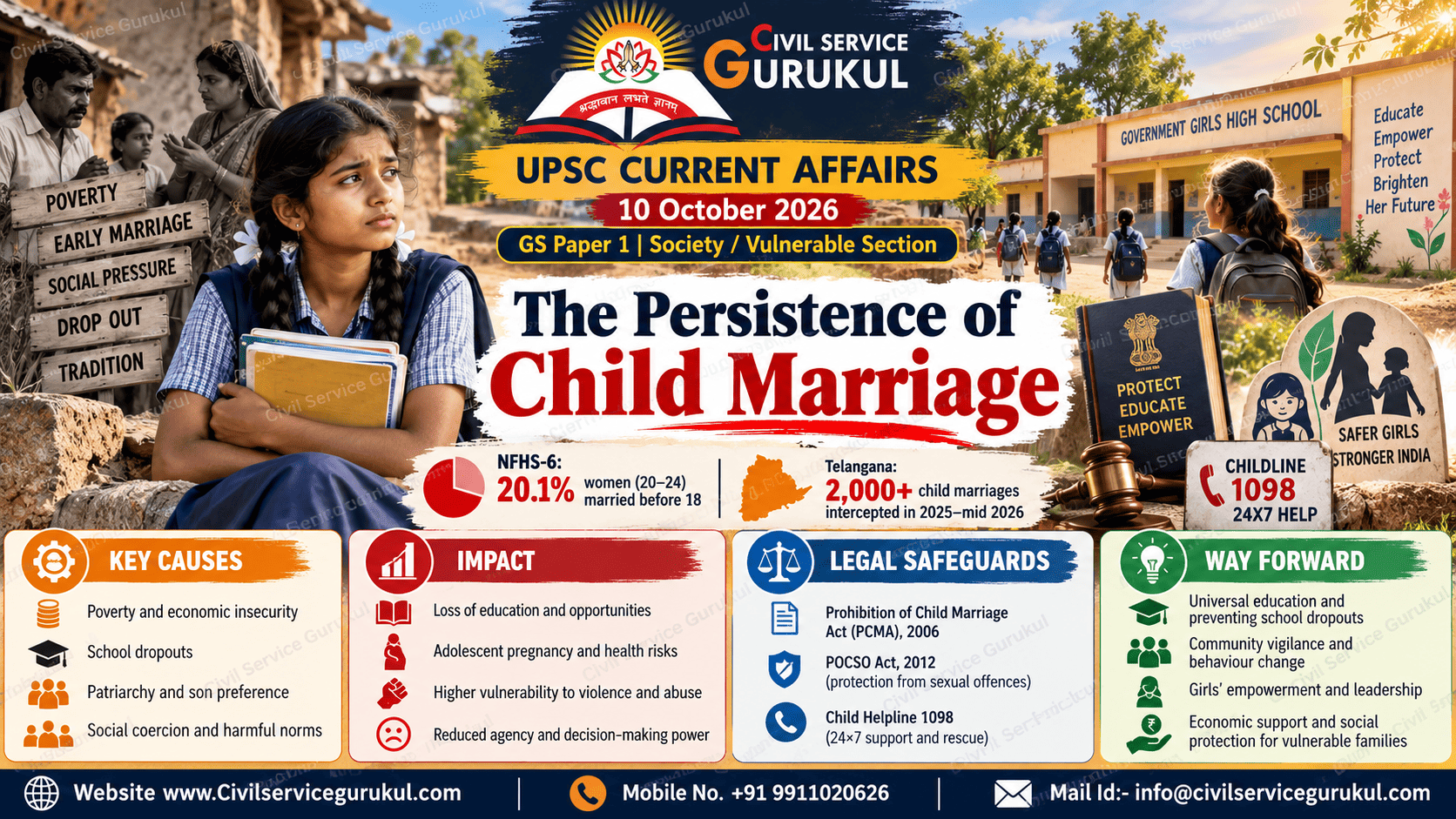
Why Child Marriage Persists in India: Poverty, Patriarchy and the Missing Social Protection
Child marriage has declined in India but continues because of poverty, school dropout, parental distress, patriarchy, family honour and social coercion. Recent interventions show that stopping a wedding alone is not enough; sustainable prevention requires girls’ education, stronger social protection, community-level behaviour change and effective legal enforcement.
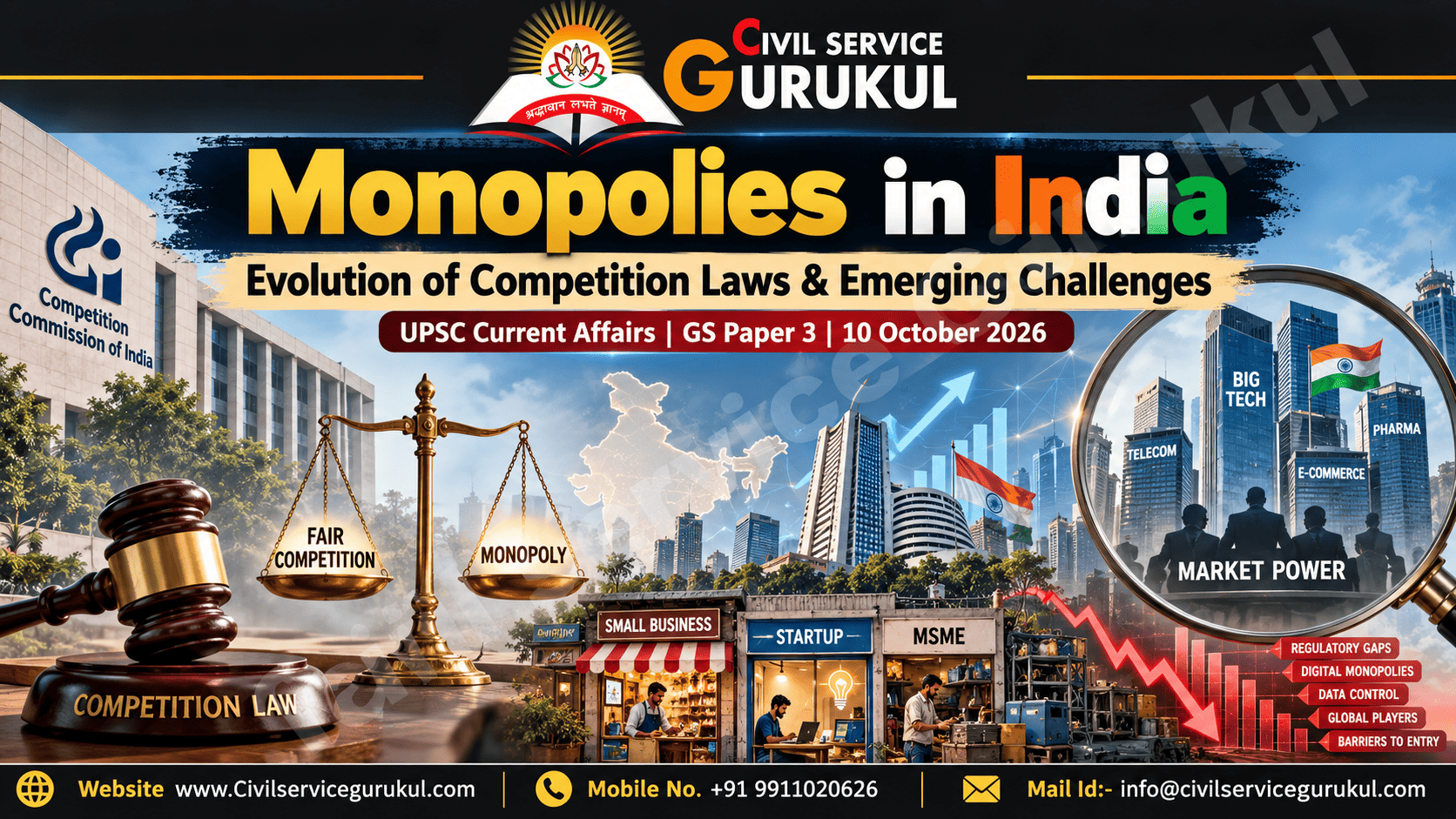
Monopoly vs Competition in India: From Licence Raj to Big Tech Regulation | UPSC GS Paper III Analysis
Explore the evolution of monopolies and competition laws in India, from the Licence Raj and MRTP Act, 1969 to the Competition Act, 2002 and Big Tech regulation. This UPSC GS Paper III analysis examines the role of the Competition Commission of India (CCI), digital market dominance, satellite communication, constitutional provisions, economic reforms and challenges to fair competition. Includes exam-ready notes, key facts, Prelims MCQs and Mains answer-writing practice for UPSC Civil Services Examination 2027.
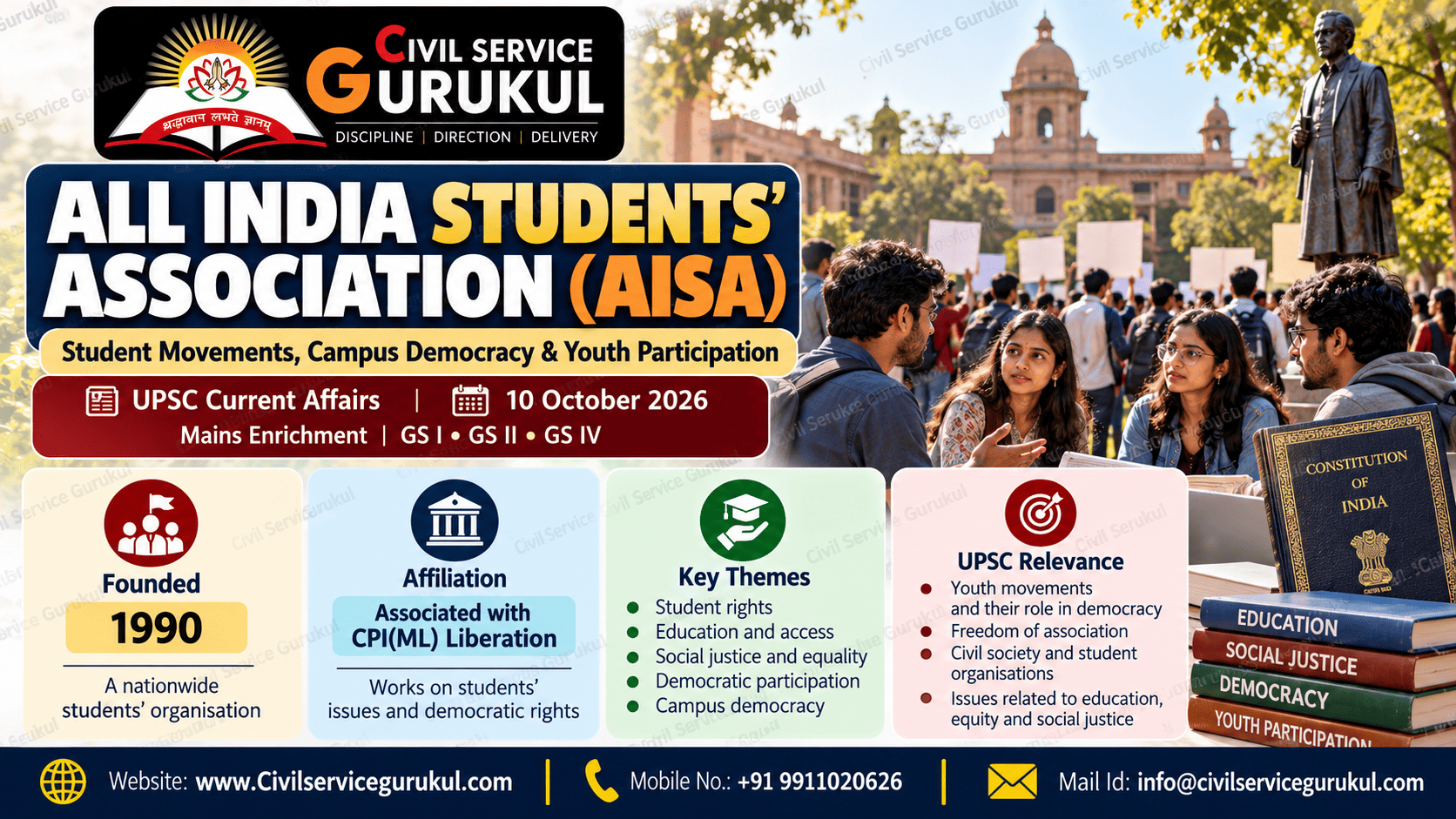
All India Students’ Association (AISA): Origins, Role in Student Politics and UPSC Relevance
The All India Students’ Association (AISA), established in 1990 and associated with CPI(ML) Liberation, is a Left-oriented student organisation active in campus politics, student-rights campaigns, social-justice issues and democratic mobilisation. For UPSC, AISA provides a useful case study to understand youth participation, student movements, civil society, political socialisation and constitutional freedoms.
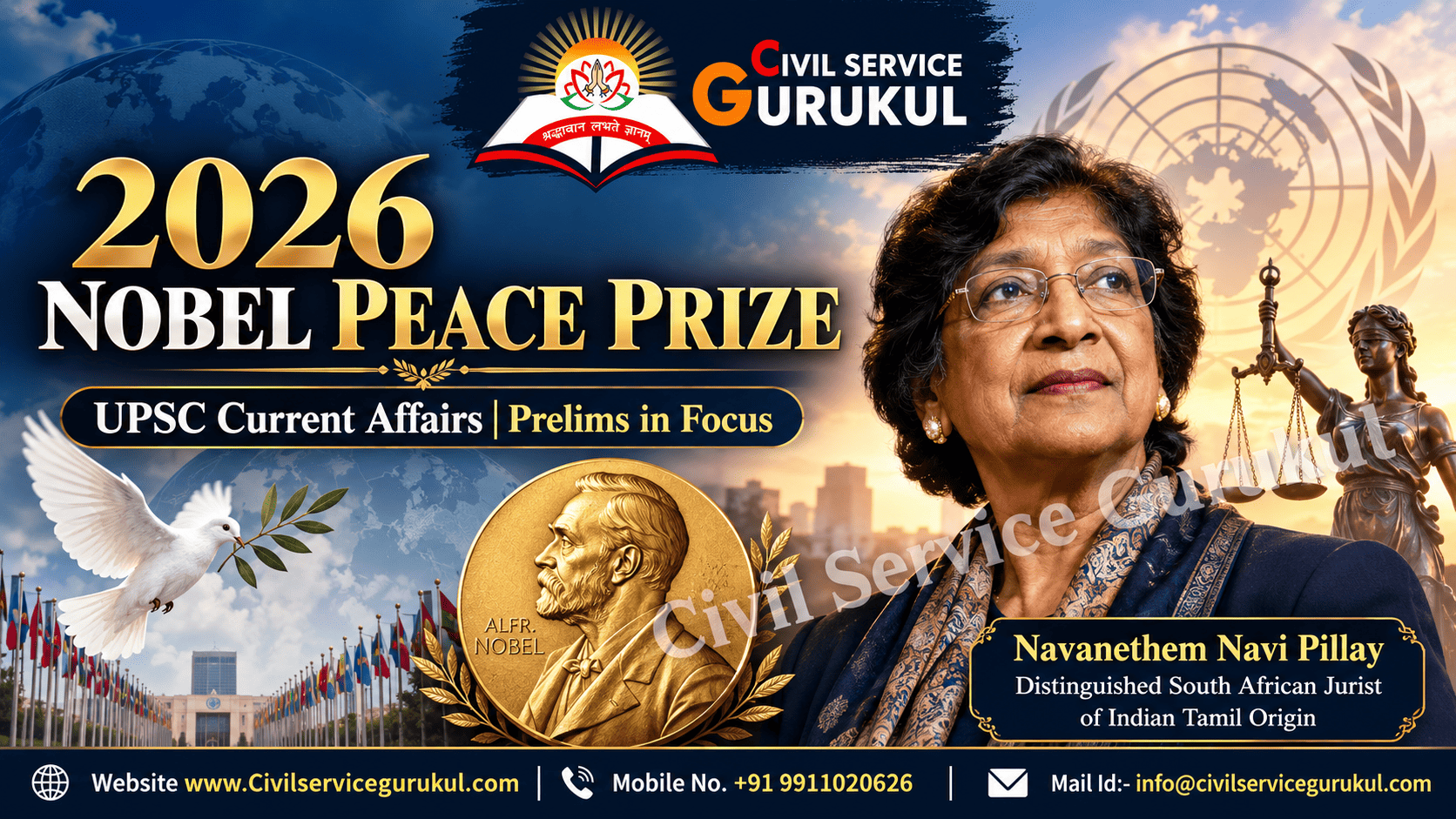
Project Seabird: India's Strategic Naval Powerhouse at Karwar | UPSC 2026
Project Seabird is one of India's most significant naval infrastructure initiatives, developing INS Kadamba at Karwar, Karnataka, into a major strategic naval base. This UPSC-focused article explains the project's historical background, Phase IIA expansion, strategic location, defence preparedness, maritime security, indigenous infrastructure, and importance for India's naval presence in the Indian Ocean Region.
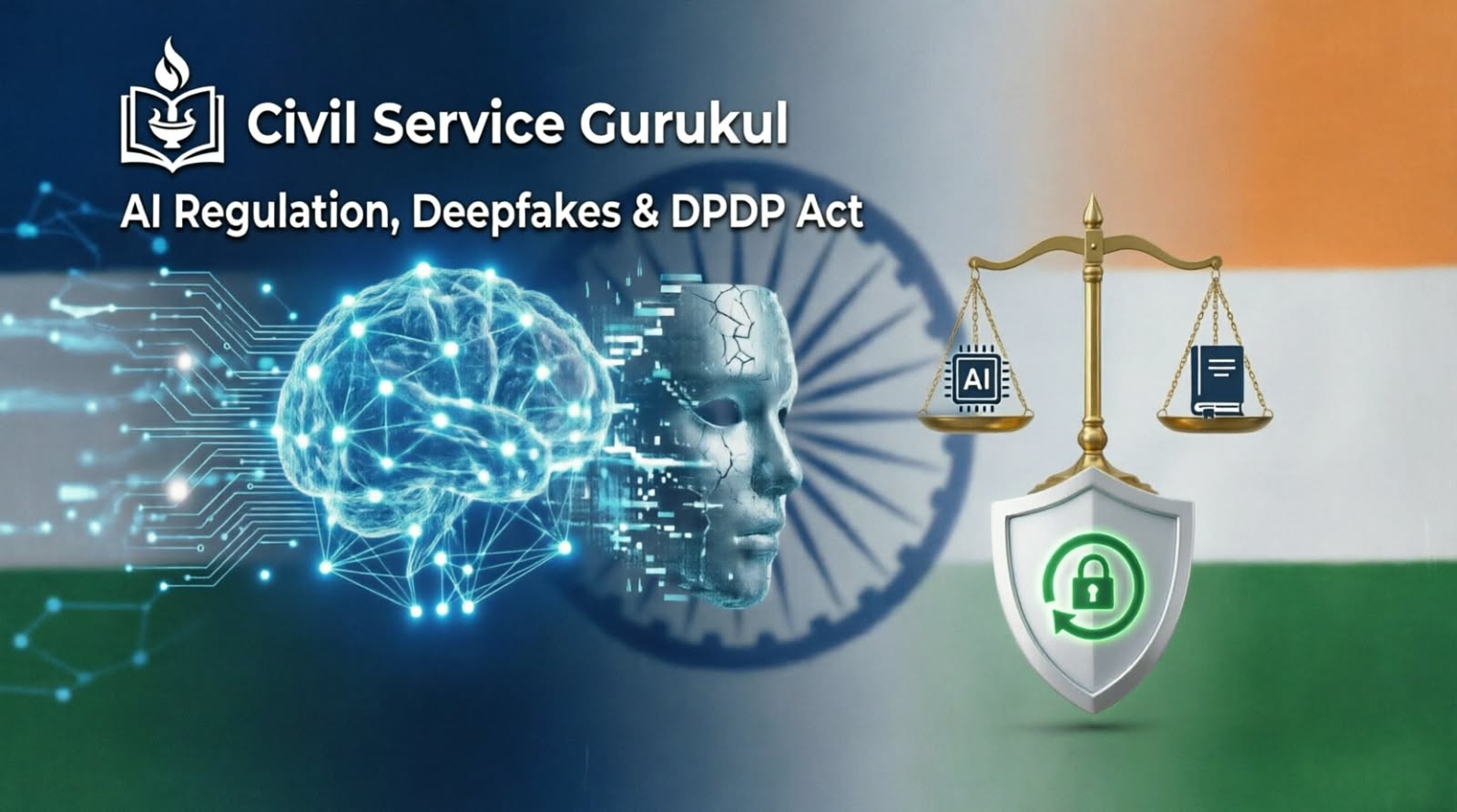
AI Regulation, Deepfakes & the DPDP Act: A UPSC GS-3 & GS-4 Current Affairs Guide
Master the UPSC current affairs topic of AI Regulation and Deepfakes. Learn how to link the DPDP Act, IT Rules, and GS-4 Ethics for Mains 2026.
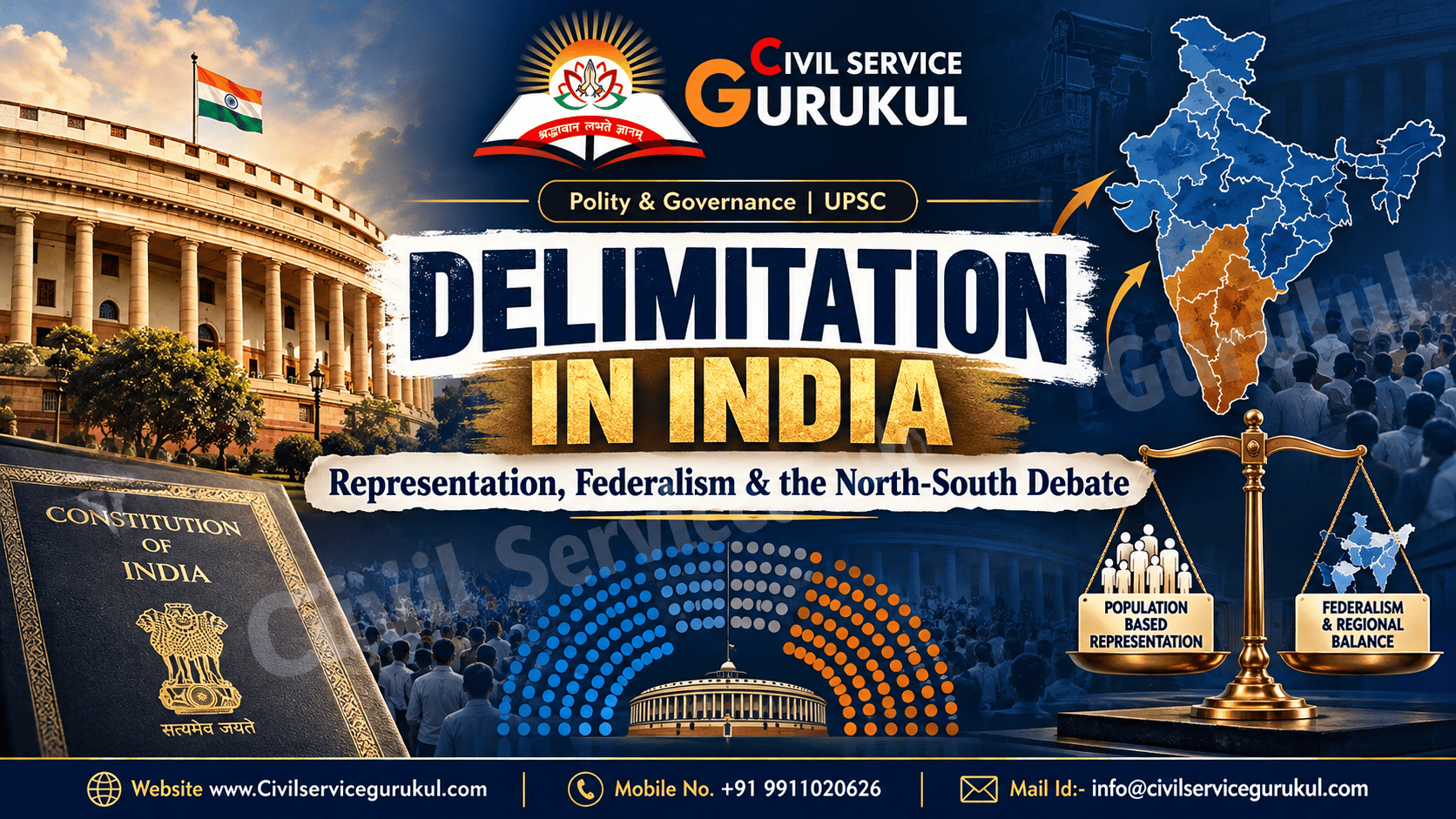
India’s Delimitation Debate: Balancing Democracy, Population and Federalism After 2026
India’s delimitation debate raises critical questions about equal political representation, population control, and cooperative federalism. Explore the constitutional provisions, Delimitation Commission, Supreme Court judgments, North–South concerns, international practices, and possible reforms after 2026. Comprehensive UPSC Prelims and GS Paper II notes by Civil Service Gurukul.
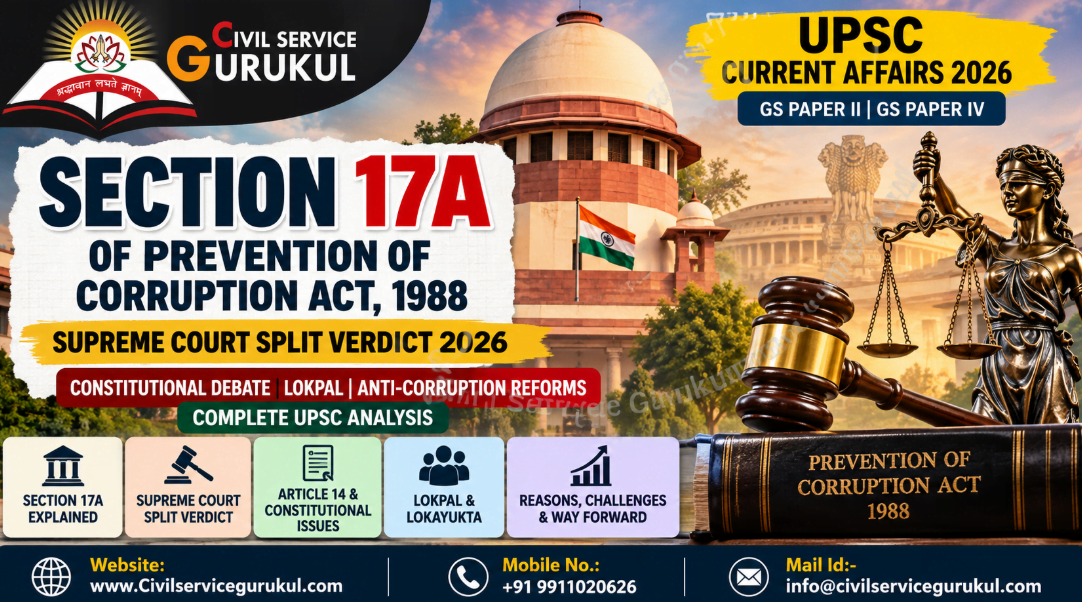
Prevention of Corruption Act 1988: Section 17A & Supreme Court Verdict | UPSC 2026
The Supreme Court's 2026 split verdict on Section 17A of the Prevention of Corruption Act, 1988, has renewed debate over protecting honest public officials while ensuring accountability for corruption. Explore the constitutional issues, judicial precedents, anti-corruption institutions, governance challenges and UPSC Prelims and Mains examination perspectives.
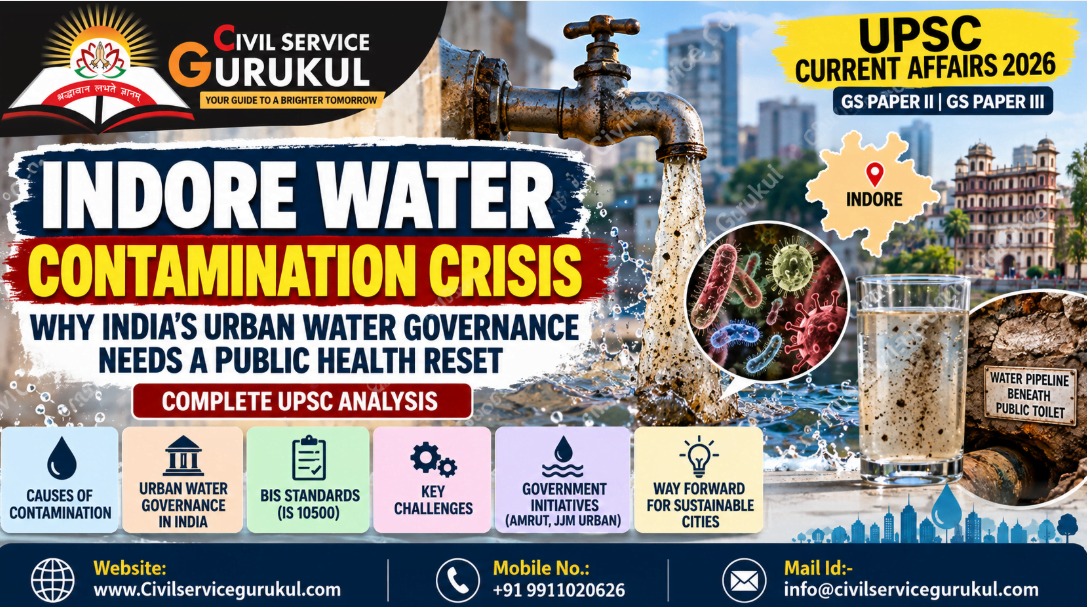
Indore Water Contamination Crisis: Why India's Urban Water Governance Needs a Public Health Reset
The Indore contaminated drinking water crisis has exposed critical weaknesses in India's urban water governance, including ageing pipelines, inadequate water quality monitoring, fragmented institutions and poor sanitation infrastructure. This UPSC-focused analysis examines the NHRC's intervention, BIS drinking water standards, constitutional responsibilities, AMRUT 2.0, groundwater stress and sustainable solutions for safe and equitable urban water supply.
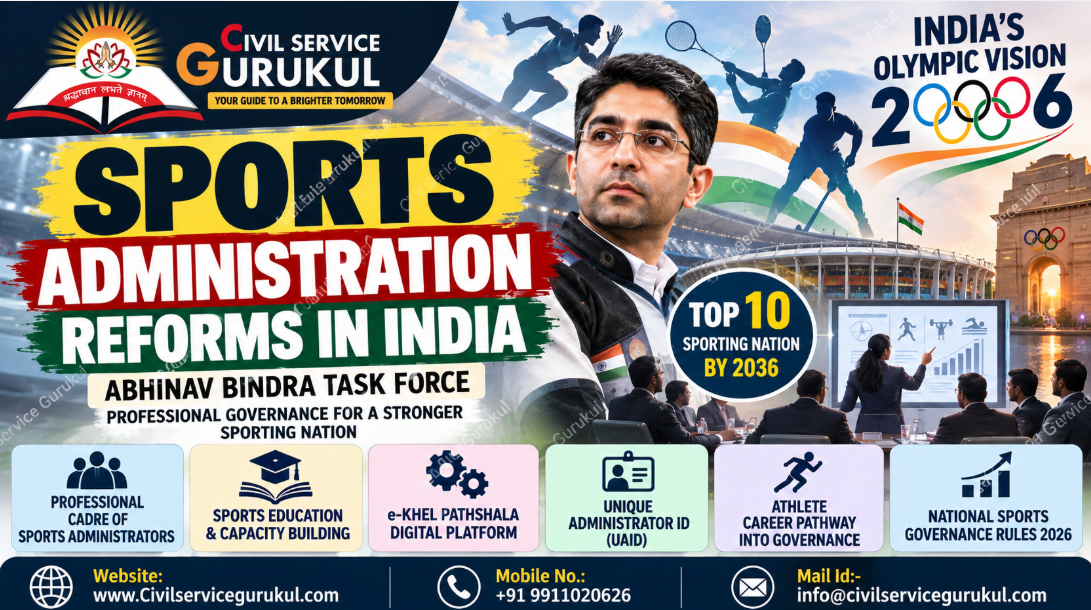
India's Sports Governance Revolution: Abhinav Bindra Task Force, Professional Sports Administration and Olympic Vision 2036
India's sports governance is undergoing an important transformation through the Abhinav Bindra-led Task Force on Capacity Building of Sports Administrators under Khelo Bharat NITI 2025. This UPSC-focused analysis examines the proposed National Council for Sports Education, e-Khel Pathshala, Unique Administrator ID, athlete leadership pathways, digital governance, National Sports Governance Rules 2026 and India's ambition to emerge as a top sporting nation by 2036.
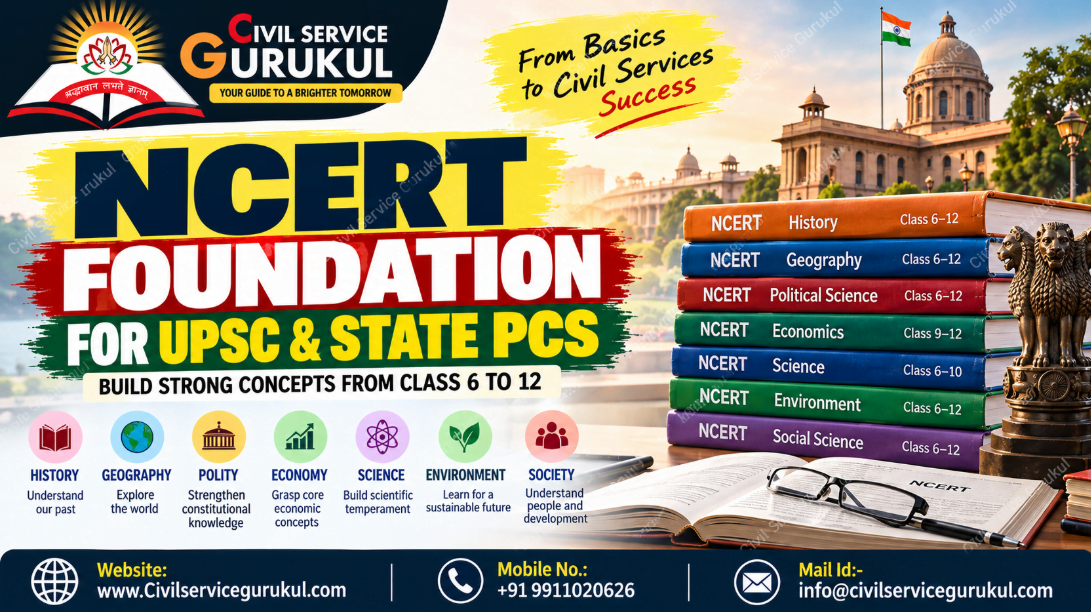
NCERT Foundation for UPSC & State PCS | Complete Preparation Guide 2026–27
Build a strong foundation for UPSC Civil Services and State PCS examinations with Civil Service Gurukul's NCERT-based learning approach. Designed for beginners, college students, and serious aspirants, this comprehensive guide covers essential Class 6–12 NCERT subjects, including History, Geography, Indian Polity, Economy, Science, Environment, and Society. Discover effective study strategies, subject-wise preparation, prelims MCQ practice, mains answer-writing fundamentals, and a structured roadmap to strengthen your conceptual understanding for competitive examinations.
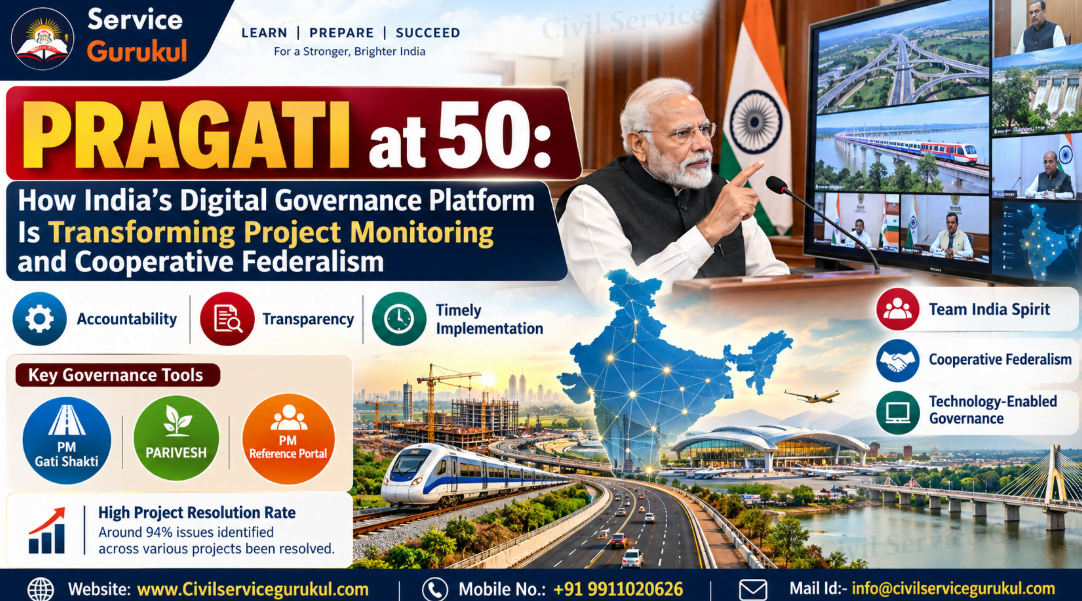
50th PRAGATI Meeting: Digital Governance & Federalism for UPSC
The 50th PRAGATI Meeting marks a significant milestone in India's technology-enabled governance and infrastructure monitoring. Launched in 2015, PRAGATI (Pro-Active Governance and Timely Implementation) promotes administrative accountability, transparency, cooperative federalism and timely project implementation. This comprehensive UPSC-focused article examines its key features, reported achievements, major infrastructure projects, constitutional significance, governance challenges and previous year questions from UPSC Prelims and Mains. Essential reading for GS Paper II, governance and current affairs preparation.
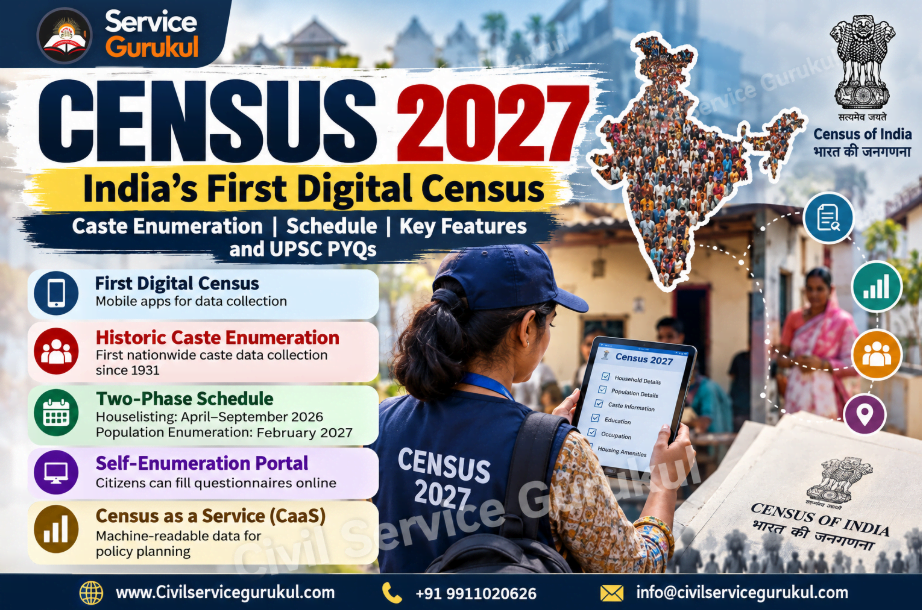
Census 2027: India's First Digital Census, Caste Enumeration & UPSC PYQs
Census 2027 marks a major transformation in India's population data collection system, introducing mobile-based enumeration, a self-enumeration portal, digital mapping and nationwide caste enumeration. The 16th Census will be conducted in two phases, with houselisting during 2026 and population enumeration in 2027, subject to special arrangements for snow-bound regions. This UPSC-focused guide explains its schedule, digital tools, constitutional and socio-economic significance, challenges, evidence-based policymaking and relevant previous year questions with answers and explanations.
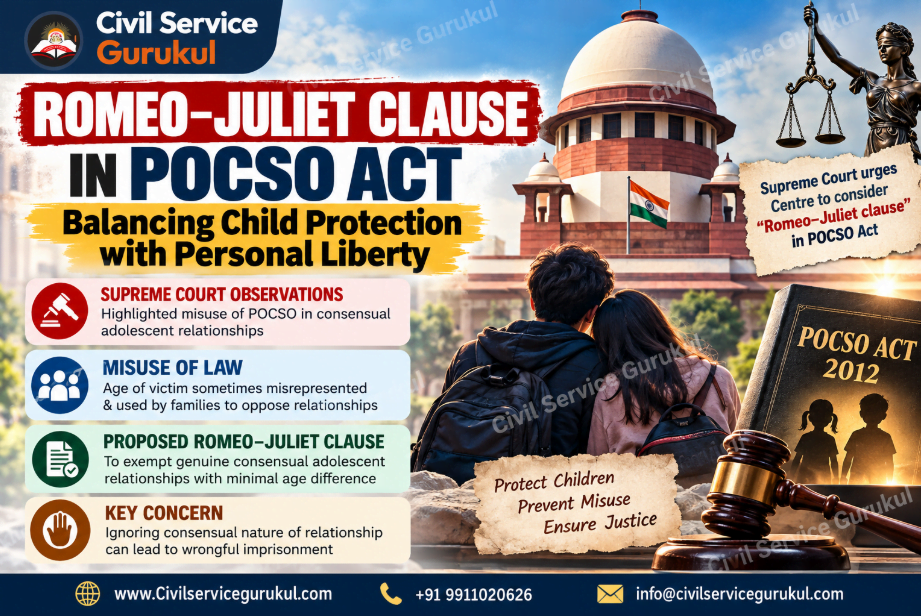
Romeo–Juliet Clause in POCSO Act: Supreme Court's Observations, Child Protection and Adolescent Rights
The Supreme Court has highlighted concerns about the application of the POCSO Act to consensual adolescent relationships and suggested consideration of a narrowly framed Romeo–Juliet clause. Such an exception could address cases involving adolescents close in age while maintaining strong safeguards against sexual exploitation, coercion, and abuse. This UPSC-focused article explains the POCSO Act, the proposed legal reform, constitutional dimensions, judicial concerns, implementation challenges, and its relevance to GS Paper II, social justice and child rights.
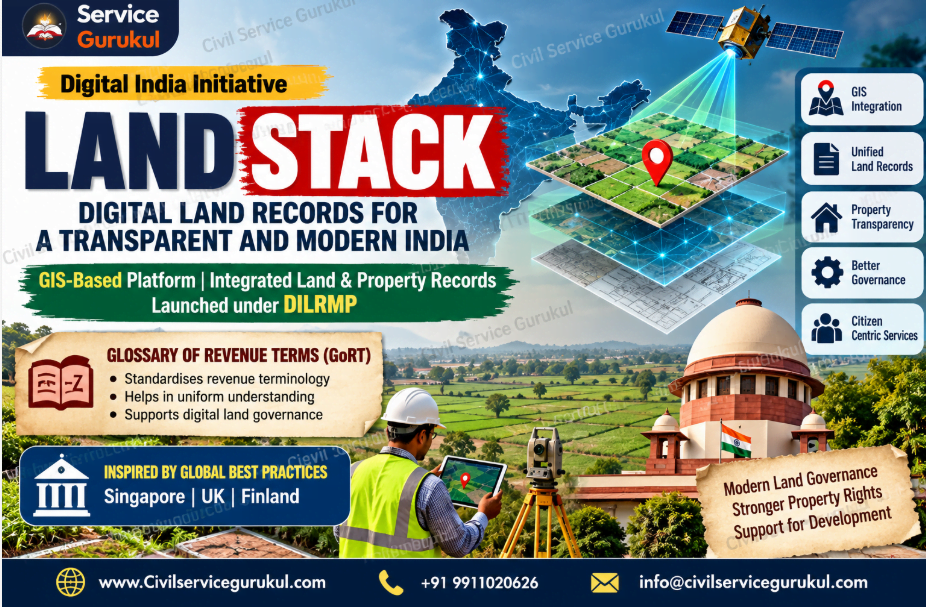
Land Stack & Glossary of Revenue Terms: India's Next Step in Digital Land Governance
Land Stack is an integrated GIS-based digital platform for land and property records, introduced alongside the Glossary of Revenue Terms under India's Digital India Land Records Modernization Programme (DILRMP). Drawing inspiration from international land administration practices, the initiative aims to support better integration, accessibility, and management of land information. This UPSC-focused article explains its objectives, potential benefits, implementation challenges, constitutional significance, and connections with governance, land reforms, and economic development.
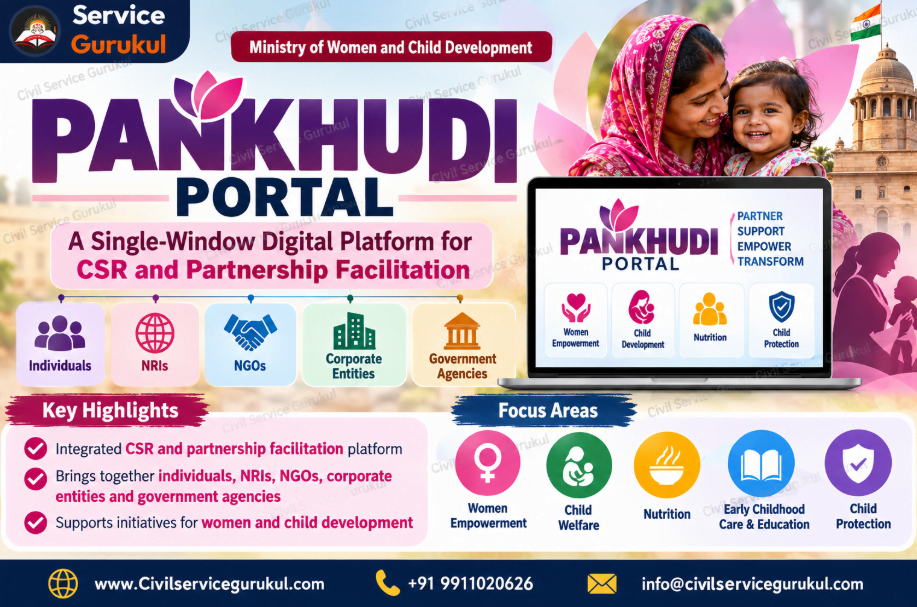
PANKHUDI Portal 2026: Transforming CSR Partnerships for Women and Child Development in India
The Ministry of Women and Child Development launched the PANKHUDI Portal on 8 January 2026 as a single-window digital platform to facilitate transparent CSR and voluntary partnerships. It connects individuals, NRIs, NGOs, corporate entities, and government agencies to support nutrition, early childhood education, child protection, and women's empowerment. This UPSC-focused article examines its objectives, features, links with Mission Shakti, Mission Vatsalya, and Poshan 2.0, constitutional relevance, governance challenges, and previous-year questions.
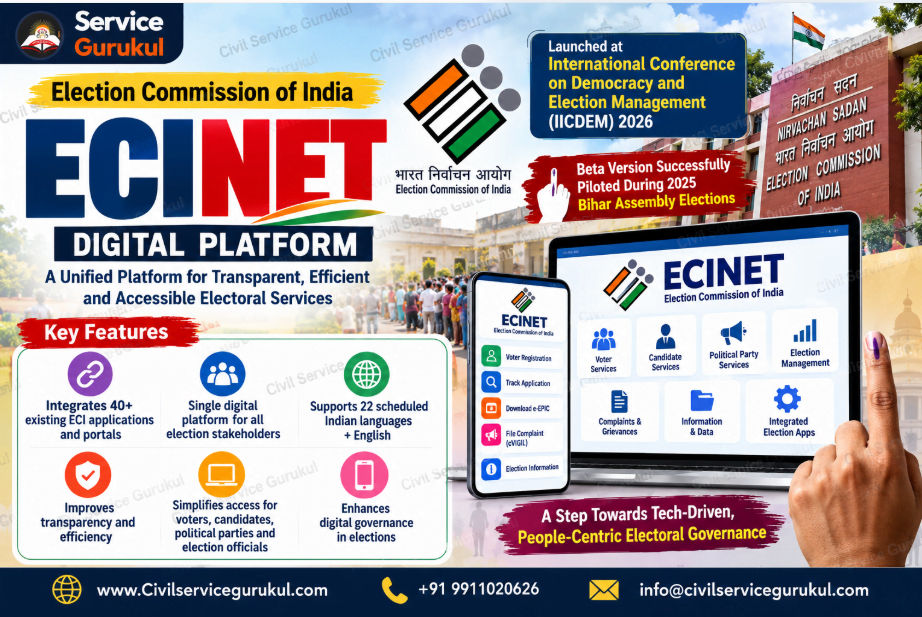
ECINET 2026: India's Unified Digital Election Platform and the Future of Electoral Governance
The Election Commission of India launched ECINET at IICDEM 2026 after piloting its beta version during the 2025 Bihar Assembly Elections. Designed as a unified digital platform for election-related services and information, ECINET aims to simplify access for voters, candidates, political parties, and election officials. This UPSC-focused article examines its features, constitutional relevance, potential benefits, challenges, electoral reforms, and previous-year questions with explanations.